

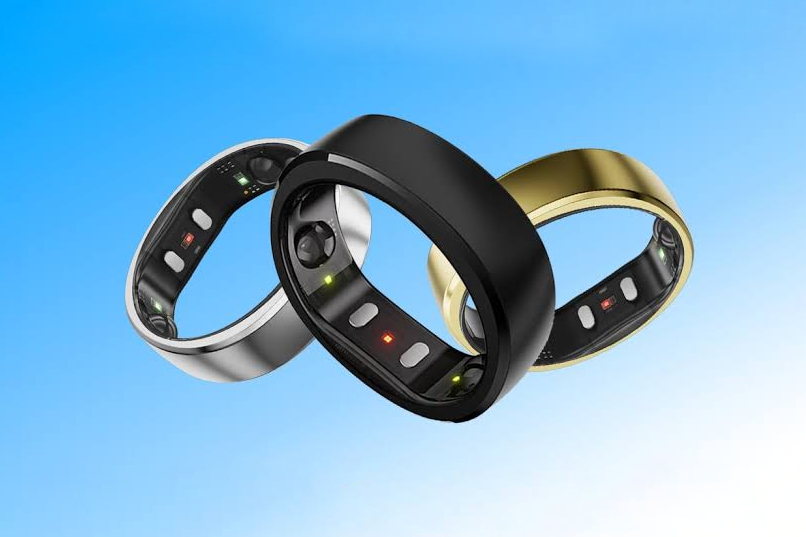
The smart ring category has one problem that every review eventually gets to: the Oura Ring costs $349 and then charges you $5.99 a month forever to access your own health data. Over four years that’s $637 in subscription fees on top of the hardware cost. For a device tracking your sleep and heart rate.
RingConn entered this market with a specific counter-proposal: buy the ring, get all your data, pay nothing further. No subscription. No premium tier. No paywall on your own health metrics.
After a year of testing, here’s whether the health tracking actually holds up.
Quick Highlights
- ✅ No subscription fee — full data access from day one, forever
- ✅ Sleep apnea detection — the first smart ring with this feature at 90.7% claimed accuracy
- ✅ Up to 14-day battery life (Gen 3) — significantly longer than Oura’s 7-day average
- ✅ IP68 waterproof — up to 328 feet depth
- ✅ Titanium construction — lightweight, durable, scratch-resistant
- ✅ Heart rate, SpO2, skin temperature, HRV, sleep stages, stress index — comprehensive tracking
- ✅ Starting at $199 — significantly less than Oura Ring 4 at $349
- ❌ App is less polished than Oura’s — fewer coaching features and data visualizations
- ❌ Accuracy on exercise tracking specifically is weaker than wrist-based wearables
- ❌ Newer brand — less long-term track record than Oura’s years of refinement
- ❌ No third-party app integration depth — limited connection to Apple Health and Google Fit compared to Oura
- ❌ Customer service documentation is less established than established brands
Best for: Sleep-focused health trackers, anyone tired of subscription fees, people who want discreet wearable health monitoring without a smartwatch on their wrist.
About RingConn
RingConn is a smart wearable brand that has released the Gen 1, Gen 2, and Gen 3 smart rings — with each generation adding meaningful technology improvements. The Gen 2 added sleep apnea detection (a world first in the smart ring category), the Gen 3 added vascular tracking and extended battery life to 14 days.
The brand positions itself as a premium-feature, no-subscription alternative to the Oura Ring — the category benchmark — at a meaningfully lower hardware price with no ongoing costs.
RingConn Review: Full Breakdown
Health Tracking — What It Actually Measures
The sensor array on the RingConn Gen 2 and Gen 3 covers: heart rate (continuous all-day), blood oxygen saturation (SpO2), skin temperature, heart rate variability (HRV), respiratory rate, steps, calories, and sleep stage analysis including deep, light, REM, and awake periods.
The Gen 3 adds vascular monitoring — analyzing blood circulation trends over time for cardiovascular health insights — and extended battery life to 14 days.
Sleep tracking is where RingConn’s most distinctive feature lives: sleep apnea detection. The Gen 2 launched as the first smart ring to offer sleep apnea screening, with a claimed 90.7% accuracy rate. For buyers who suspect they might have sleep apnea but haven’t sought clinical evaluation, this feature provides a screening indicator that’s genuinely useful — though it’s not a clinical diagnosis and shouldn’t replace professional evaluation if the data raises concerns.
A Cybernews reviewer who wore the ring for a full year describes it as fundamentally changing how they track recovery, sleep, and stress. The “set it and forget it” nature of the ring (as opposed to a watch that requires regular interaction) is specifically praised.
Accuracy — The Honest Assessment
Sleep tracking accuracy is generally strong for a consumer device. Multiple reviews describe sleep stage data that aligns with subjective experience — tracking actual sleep quality rather than just hours in bed.
Heart rate accuracy during rest and moderate activity is reliable. During vigorous exercise, ring-based heart rate tracking is inherently less accurate than wrist-based optical sensors or chest straps because finger movement during exercise creates more motion artifact than wrist movement. RingConn is not a dedicated fitness ring in the way that Oura positions itself.
SpO2 accuracy during sleep (the most relevant context for most buyers) performs well. The vascular tracking on the Gen 3 is newer — long-term independent accuracy validation is still accumulating.
The No-Subscription Advantage
This is the most practically significant differentiator in the market. At $199 for the Gen 2 Air (the base model), RingConn provides full data access with no additional fees. The Oura Ring 4 at $349 requires $5.99/month for premium membership — without which most advanced insights are unavailable.
Over a 3-year ownership period:
- RingConn total cost: $199
- Oura total cost: $349 + ($5.99 × 36) = $565
That $366 difference buys meaningfully better data visualization and coaching in Oura’s app. Whether that’s worth $366 is a personal judgment. For buyers who want health data without recurring costs: RingConn makes the case clearly.
Best RingConn Products Worth Buying
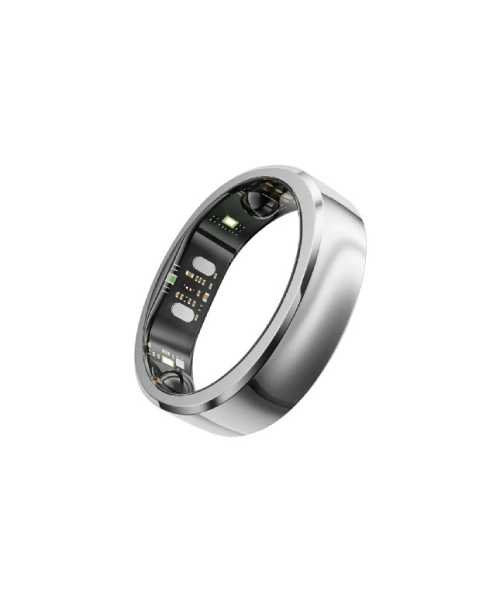
Best for: Buyers who want the most current RingConn technology — vascular tracking, 14-day battery, comprehensive health monitoring.
Top Features:
- Vascular monitoring tracks blood circulation trends for cardiovascular health insights — a Gen 3 exclusive
- 14-day battery life significantly extends the convenience advantage over Oura’s 7-day average
- Sleep apnea detection carried forward from Gen 2 with improved accuracy
One Honest Drawback: At $279, the price gap versus Oura Ring narrows. Compare the app experience carefully before choosing.
Verdict: The best current RingConn for buyers who want the latest technology and longest battery life.
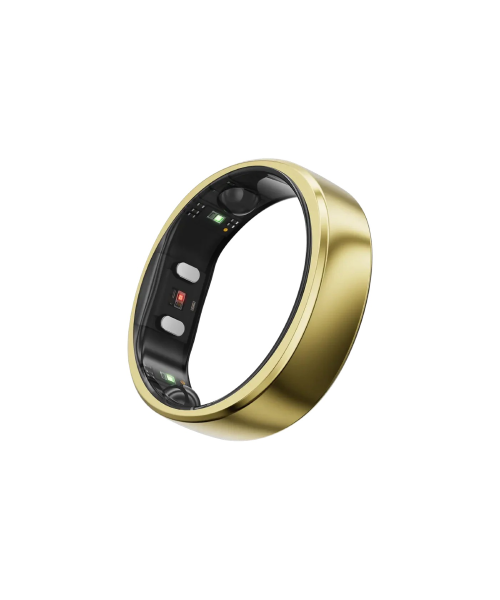
Best for: Sleep-focused health trackers who specifically want the sleep apnea detection feature at the most competitive price point.
Top Features:
- Sleep apnea detection at 90.7% claimed accuracy — the defining Gen 2 feature
- Up to 12-day battery life
- Full feature set with no subscription from purchase
One Honest Drawback: Gen 3 is now available at a similar price on sale — worth comparing before defaulting to Gen 2.
Verdict: The value sweet spot in the RingConn lineup. Sleep apnea detection plus no subscription is a compelling combination at this price.
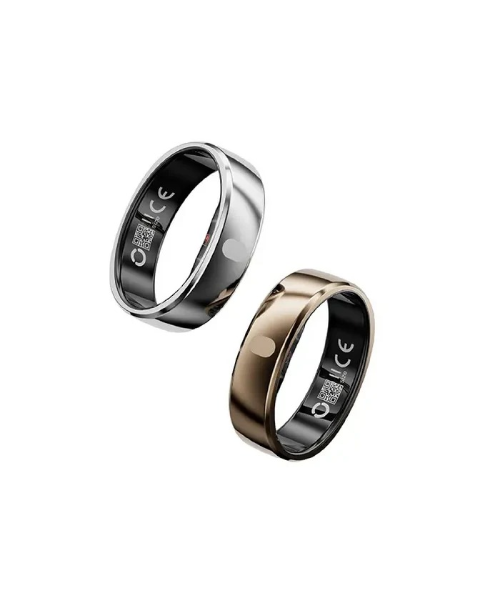
Best for: First-time smart ring buyers who want to enter the category at the most accessible price with core features.
Top Features:
- Most lightweight RingConn model — designed specifically for comfortable 24/7 wear
- Core health tracking features including sleep apnea detection and HRV
- The most accessible price in the current RingConn lineup
One Honest Drawback: Slightly fewer sensors than the full Gen 2 — check current spec comparison before ordering.
Verdict: The right starting point for buyers new to smart rings who want to evaluate the category without overpaying.
What Customers Actually Think
Long-term users — people who’ve worn RingConn for 6–12+ months — describe the ring as becoming a seamless part of daily life in a way that wrist-based wearables don’t achieve. The “forget you’re wearing it” quality of a ring versus a watch is consistently mentioned.
Sleep data specifically receives praise for relevance — buyers describe using sleep stage data to adjust bedtime, evaluate alcohol’s effect on sleep quality, and identify patterns they hadn’t consciously noticed.
The app quality gap versus Oura is acknowledged by most honest reviewers — Oura’s app provides richer visualizations and more actionable coaching. Whether that justifies Oura’s price premium is personal.
Real accounts paraphrased:
- “The RingConn has fundamentally changed how I track my recovery. The lightweight titanium design and charging case make it genuinely set-it-and-forget-it health tracking.”
- “No subscription is the reason I chose this over Oura. After a year, I’m genuinely satisfied with the sleep data and have no plans to switch.”
- “Gen 3 vascular tracking is interesting but I wish the app showed me more clearly what to do with the data.”
- “Exercise tracking is weak compared to my Apple Watch. But for sleep and recovery — this is exactly what I wanted.”
Is RingConn Worth It?
For sleep-focused health tracking without subscription fees: yes, clearly.
For serious exercise athletes who want accurate workout HR tracking: consider pairing with a wrist-based device for workouts.
For buyers debating RingConn vs Oura: evaluate the app quality difference versus the price difference. If you want richer data visualization and coaching, Oura’s extra cost may be justified. If you want solid health data with no ongoing fees, RingConn wins.
RingConn vs Oura Ring 4
RingConn Gen 3 | Oura Ring 4 | |
Price | $279 | $349 |
Subscription required | ❌ None | $5.99/month |
3-year total cost | ~$279 | ~$565 |
Battery life | ✅ 14 days | 7 days |
Sleep apnea detection | ✅ Yes | Limited |
App quality | Good | ✅ Superior |
Data coaching | Basic | ✅ More developed |
Track record | Newer | ✅ More established |
Best for | No-subscription value | App richness, brand trust |
Final Verdict
RingConn solves the smart ring subscription problem in a way that materially changes the value calculation. The health tracking is solid. The sleep apnea detection is genuinely distinctive. The no-subscription model makes the total cost of ownership significantly lower than Oura over multi-year ownership.
The app is less polished than Oura. The brand track record is shorter. And for exercise tracking, a wrist-based device is still superior.
Buy it for sleep tracking and recovery monitoring without subscription anxiety. Don’t expect it to replace a fitness wearable for serious training.
Overall Rating: 8.5 / 10
Category | Score |
Sleep Tracking | 9 / 10 |
Health Monitoring Breadth | 8.5 / 10 |
No-Subscription Value | 9.5 / 10 |
Battery Life | 9.5 / 10 |
App Quality | 7 / 10 |
Exercise Tracking | 6.5 / 10 |
Overall | 8.5 / 10 |

