

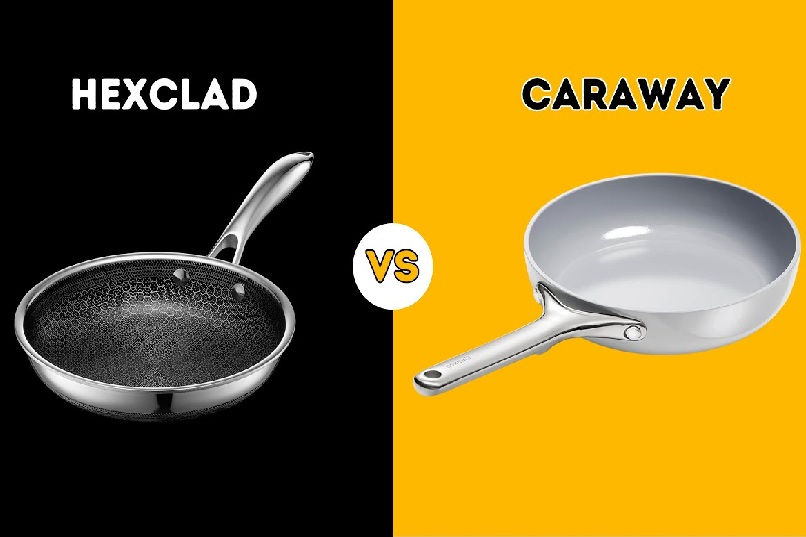
There’s a specific type of cookware decision that a lot of people are making right now. They’ve decided they want to upgrade what they’re cooking with. They’ve done enough research to know that Caraway and HexClad are both serious options. And then they’ve gotten stuck, because both are expensive, both have devoted fans, and both get recommended with equal confidence by people who clearly haven’t used the other one.
I’ve used both. Here’s what actually separates them.
They're solving different problems
This is the thing that makes a direct comparison tricky and also the thing that resolves the decision once you understand it. Caraway and HexClad are not competing versions of the same product. They’re designed around fundamentally different cooking philosophies.
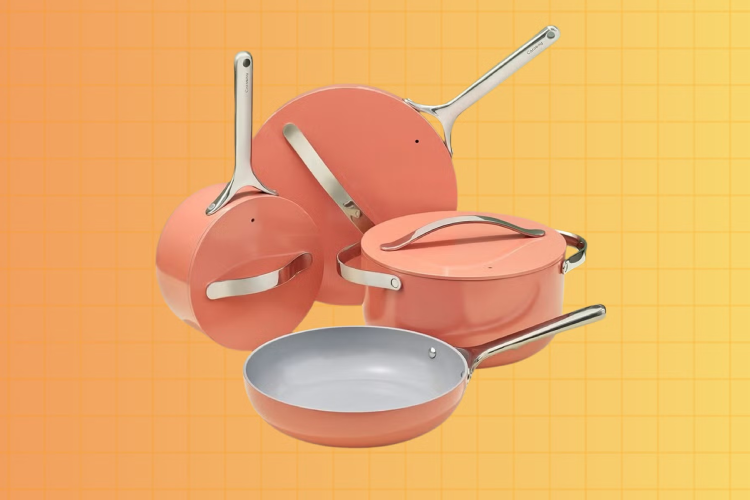
Caraway is a ceramic nonstick pan. The pitch is clean cooking — PTFE-free, PFAS-free coating, beautiful design, storage system included. It’s built for the cook who wants something that looks good in the kitchen, releases food easily, cleans up without effort, and doesn’t contain the chemicals that older nonstick coatings were made with.
HexClad is a hybrid pan. The cooking surface uses laser-etched stainless steel peaks with PTFE-coated valleys between them. The pitch is versatility — sear like stainless steel, clean up more easily than pure stainless, use it for everything. It’s built for the cook who wants one pan that handles the full range of cooking tasks without switching between a nonstick and a stainless pan.
Once you understand that, the choice becomes clearer than most comparison articles make it seem.
The searing question
This is where HexClad has a real advantage. The stainless steel peaks on the cooking surface get genuinely hot and create proper contact between the food and the heat. A steak cooked in HexClad develops an actual crust — the deep brown Maillard reaction crust that makes seared meat taste the way it does.
Caraway’s ceramic coating prevents this. The coating creates a barrier between the food and the surface that stops the browning reaction from fully developing. You can cook a steak in a Caraway pan. It won’t have the same crust. If proper searing matters to you regularly, this is a meaningful difference.
The nonstick question
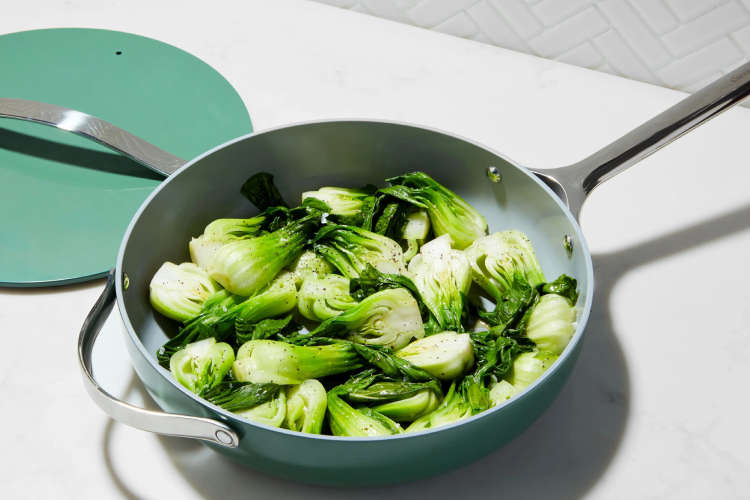
Here Caraway has the advantage. The ceramic surface is genuinely smooth and food releases cleanly — eggs slide, fish doesn’t stick, anything delicate handles well. The cooking experience for that category of food is better in Caraway than in HexClad, where the textured stainless peaks create a slightly uneven surface that isn’t quite as frictionless.
HexClad’s nonstick is more durable than Caraway’s over time — the stainless peaks protect the coated valleys from direct abrasion — but in terms of pure nonstick performance when the pan is new, Caraway wins.
The durability question
Honest answer: both have finite lifespans, but for different reasons.
Caraway’s ceramic coating degrades with use and heat exposure. With good care — low to medium heat, soft utensils, handwashing — most people get two to three solid years. Some get more. Push the heat higher regularly and you’ll see degradation faster.
HexClad’s PTFE coating in the valleys will eventually wear, but the stainless peaks mean the pan continues to function as a stainless steel surface even when the coating goes. In that sense HexClad has a longer functional lifespan — it just changes from hybrid to pure stainless over time rather than becoming useless.
The price question
Both are expensive. HexClad significantly more so — a single 12-inch pan runs around $150-180, and a full set climbs well above $600. Caraway’s four-piece set is around $395.
For that money you could buy excellent dedicated stainless steel and a separate quality nonstick that would outperform HexClad at both individual tasks. The HexClad premium is specifically for the convenience of not switching pans. Whether that convenience is worth the significant price difference is a personal calculation.
Which one is actually for you
Buy Caraway if you primarily cook eggs, fish, delicate proteins, and anything that needs clean easy release. If the design matters to you — and Caraway does genuinely look beautiful — that’s a real consideration. If you specifically want PTFE-free, Caraway is the clear choice.
Buy HexClad if you sear meat regularly and want one pan that handles both searing and easier cleanup. If the idea of maintaining separate nonstick and stainless pans genuinely bothers you and you’d rather have one versatile option. If you cook a wide enough variety of things that the hybrid surface genuinely earns its place.
Don’t buy either if budget is a real constraint and you haven’t owned quality cookware before. A Tramontina stainless pan and an Anolon nonstick will cost you a third of what HexClad costs and perform better at their respective jobs.

