

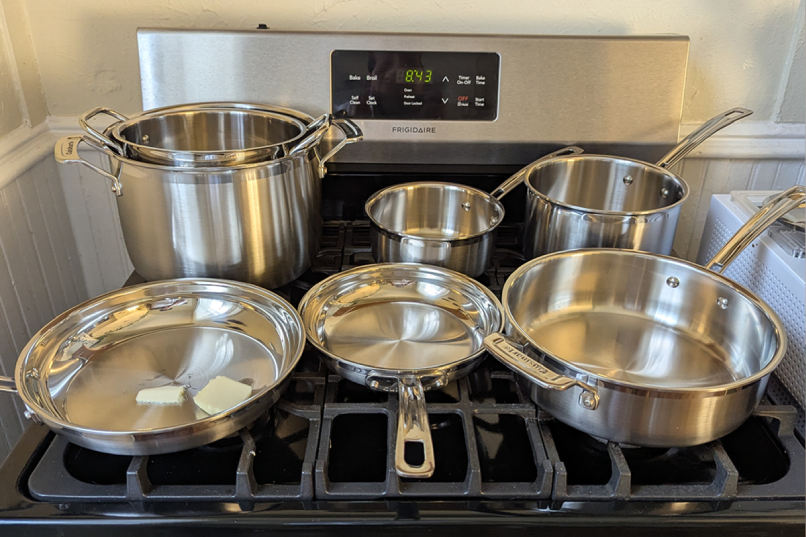
The relationship between cookware quality and cooking results is more direct than most people account for when buying kitchen equipment. The pan that heats unevenly produces the chicken thigh that’s burnt on one side and raw in the centre. The nonstick that’s degraded produces the scrambled eggs that stick and the specific morning frustration of food that requires effort to dislodge. The saucepan with poor heat distribution produces the pasta sauce that catches at the base before the top has reduced.
Good cookware doesn’t make average cooks excellent — technique matters more than equipment at every skill level. But good cookware makes correct technique easier and compensates slightly for incorrect technique in a way that poor cookware amplifies every error.
Understanding Cookware Materials
Stainless steel clad (layers of stainless steel and aluminium) provides even heat distribution without hot spots, is durable indefinitely, and handles high heat without any coating concerns. The learning curve: stainless requires correct preheating and fat addition before food goes in to prevent sticking. The water droplet test — a drop of water should bead and roll in a preheated pan rather than evaporating instantly or sitting still — indicates the correct temperature for fat addition.
Cast iron holds heat exceptionally well, produces excellent sears, and lasts indefinitely with correct care. The limitations: heavy, requires seasoning maintenance, not suitable for acidic foods cooked for extended periods (the acid can degrade the seasoning and impart metallic flavours).
Ceramic nonstick produces excellent nonstick performance for eggs, fish, and delicate proteins at low to medium heat. The limitation: ceramic degrades under high heat, with cooking spray (aerosol oil) and metal utensils being the specific factors that accelerate degradation. Maximum medium heat, silicone or wooden utensils, hand washing — these requirements must be followed consistently for the ceramic to maintain quality.
The Best Cookware Worth Buying
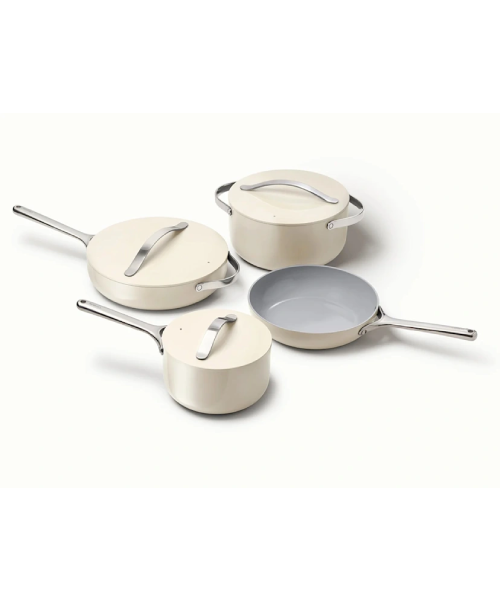
Available at: Caraway Home (carawayhome.com), Williams Sonoma, Crate & Barrel
Best for: Those who cook primarily at low to medium heat and want ceramic nonstick with design quality that makes the kitchen look and feel better.
Caraway’s ceramic nonstick set is the recommendation for those who cook eggs, fish, sautéed vegetables, sauces, and the range of lower-heat cooking that defines most home cooking situations. The ceramic coating on new Caraway performs better than any nonstick I’ve used — eggs release cleanly with a minimal amount of butter, fish lifts without catching, and the cleanup is genuinely effortless.
The storage system included with the set is the specific quality detail that most changes daily kitchen use. The magnetic pan rack stores three pans vertically with each pan individually accessible without moving others — the specific change from stacked storage that makes reaching the right pan immediately rather than mining through a stack. The lid holder keeps lids organised separately. The whole system sits on the counter and reads as a design decision rather than functional storage.
The care requirements that must be followed: medium heat maximum, no cooking spray (aerosol oil creates a polymerised residue that degrades ceramic coating faster than any other single misuse), silicone or wooden utensils only, hand wash only. These requirements maintained consistently produce a ceramic nonstick that lasts years rather than months.
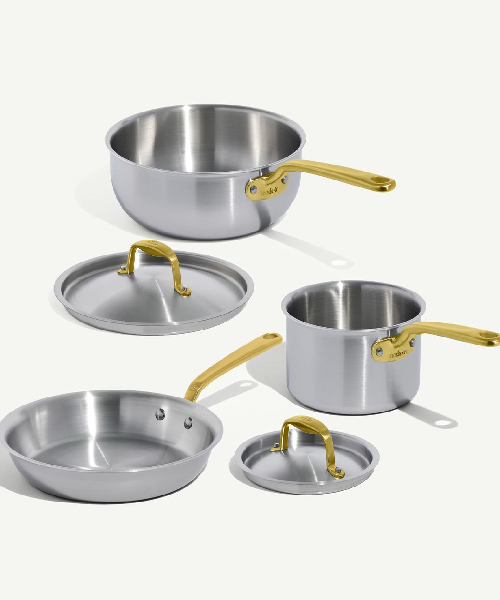
Available at: Made In Cookware (madeincookware.com)
Best for: Those who want professional-grade stainless clad cookware for the full range of cooking techniques including high-heat searing.
Made In’s direct-to-consumer model produces stainless clad cookware at prices that professional equipment quality would otherwise require commercial suppliers to access. The five-ply fully clad construction — alternating stainless and aluminium layers throughout the sidewalls and base — produces heat distribution that single-ply or base-only alternatives don’t achieve.
The specific Made In advantage becomes apparent in the cooking that requires even heat throughout the pan rather than just at the base: sauces that develop evenly up the sides, sautéed vegetables that cook at the same rate across the pan surface, braises where the liquid maintains consistent temperature without hot spots at the base.
The lifetime warranty is the commercial commitment that substantiates the quality claim — a pan that can be replaced if it fails isn’t the company’s response to expected failure, it’s confidence that failure won’t occur.
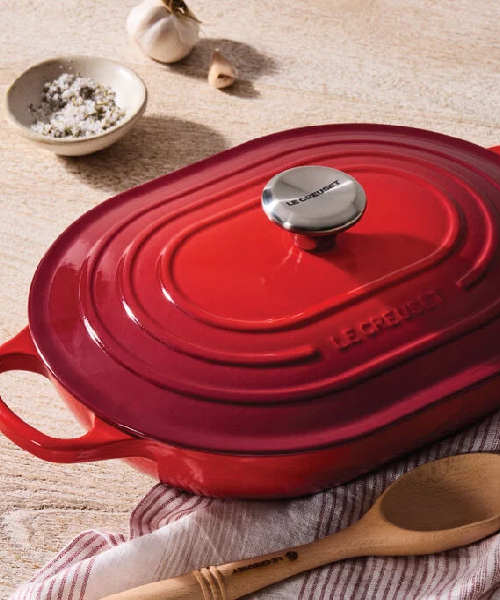
Available at: Le Creuset (lecreuset.co.uk), John Lewis, department stores
Best for: Those who want one genuinely excellent cast iron pot for soups, stews, braises, and bread baking that will last indefinitely.
Le Creuset’s enamel-coated cast iron is the cookware investment that most clearly earns the word “investment” — the pots have been made in France to the same standard since 1925 and routinely appear in estate sales and second-hand markets in full working condition decades after purchase. The enamel coating means no seasoning maintenance is required (the advantage over bare cast iron), the colour range allows choosing something that suits the kitchen aesthetic, and the heat retention produces the specific slow-cook results that thin pans can’t achieve.
A 26cm casserole handles most family cooking quantities for braising, stewing, and soup making. The 22cm suits smaller households. Both handle oven temperatures to 260°C and induction, gas, and electric hobs.
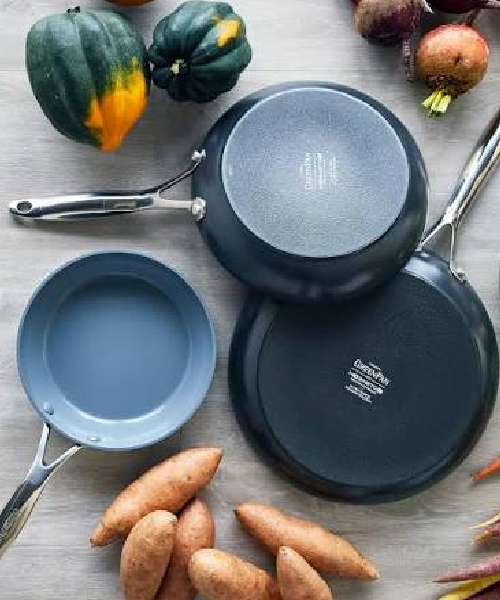
Available at: GreenPan (greenpan.com), Amazon, Williams Sonoma
Best for: Those who want Caraway-comparable ceramic nonstick performance at a lower price point.
GreenPan pioneered PTFE-free ceramic nonstick before most brands entered the space, and the Valencia Pro uses their Thermolon coating in a hard-anodised aluminium body that heats efficiently. The performance in daily use at low to medium heat is genuinely comparable to Caraway in the first year of use, at a price typically £100–150 lower for an equivalent set.
The honest quality comparison: the coating performance and longevity is slightly below Caraway at equivalent care standards, particularly in the second year of consistent use. For those for whom the Caraway price is the consideration, GreenPan is the accessible quality alternative rather than a compromise.
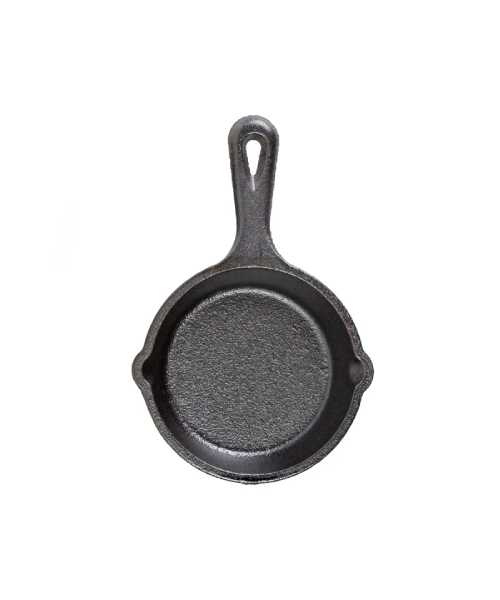
Available at: Lodge (lodgemfg.com), Amazon, Target, Walmart, most kitchenware retailers
Best for: Those who want genuine cast iron at the most accessible price from the oldest American cast iron manufacturer.
Lodge has been producing cast iron cookware in South Pittsburg, Tennessee since 1896 and the 10-inch skillet is the most democratically priced genuinely good piece of cookware available. Pre-seasoned from the factory, it develops better seasoning with every use — the cast iron that performs better after fifty cooks than after five, and better still after 500.
The specific Lodge advantage: at $25–45, the financial barrier to trying cast iron cooking is minimal. The learning curve (correct preheating, correct fat use, correct cleaning — no soap, dry thoroughly) is the only barrier, and it’s overcome within the first month of regular use.
Conclusion
The right cookware is matched to how you actually cook. Caraway for the beautiful ceramic nonstick that suits most daily cooking at low to medium heat. Made In for the professional stainless clad that suits the full range of cooking techniques including high-heat work. Le Creuset for the one genuinely investment pot that lasts indefinitely for soups, stews, and braises. GreenPan for accessible ceramic quality. And Lodge for the cast iron entry at the most accessible price available. Whatever you buy — follow the care requirements for the specific material. The ceramic that’s treated correctly lasts years. The ceramic that’s pushed to high heat with cooking spray lasts months.

