

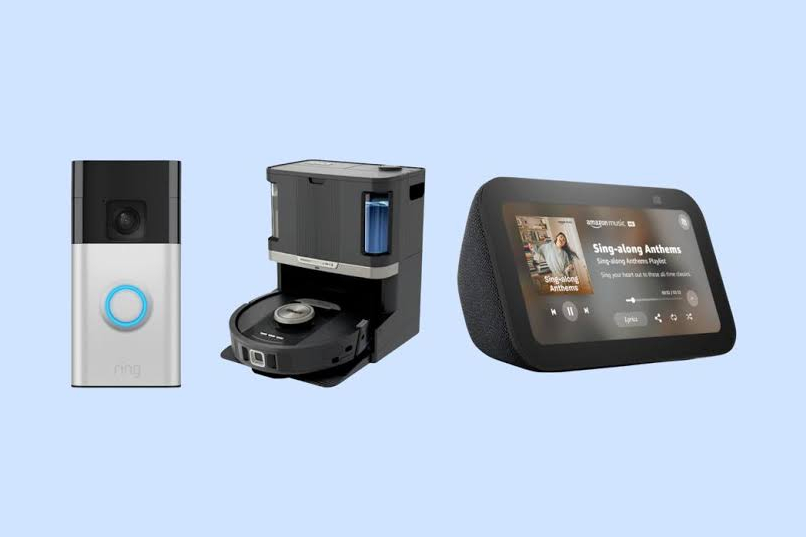
Smart home technology has been both overpromised and undersold simultaneously — overpromised in terms of the seamless, intelligent home that responds to every need, undersold in terms of the specific, daily improvements that a few well-chosen smart devices genuinely produce. The gap between the aspiration of a “smart home” and the reality of a home where specific technology solves specific problems is where the useful products live.
The smart home products worth buying are those that remove a daily friction point or add a daily convenience that’s genuinely useful rather than impressive-sounding. The device that makes switching off every light in the house before bed a single button press. The thermostat that learns the household schedule and stops heating an empty house. The doorbell that allows answering the door from anywhere. These are the changes that make daily life measurably easier in the specific way that the smart home conversation frequently overpromises and underdelivers.
What Smart Home Products Actually Worth Having
Automation potential. The smart device that requires as much manual interaction as the “dumb” device it replaces provides no practical benefit beyond novelty. The smart light that turns on automatically when you enter a room, the thermostat that adjusts automatically based on schedule, the lock that unlocks when your phone arrives — these are the automations that produce genuine daily convenience.
Reliability. A smart home device that requires troubleshooting before it does the thing it’s supposed to do is worse than the device it replaced. Reliability is the specification that distinguishes smart home products that improve daily life from those that add complexity without benefit.
Privacy consideration. Smart home devices collect data about domestic behaviour — when people are home, what temperature they keep the house, how often they use appliances. Understanding the data policies of the brands in the smart home system is appropriate consideration before filling the home with sensors.
The Best Smart Home Products Worth Buying
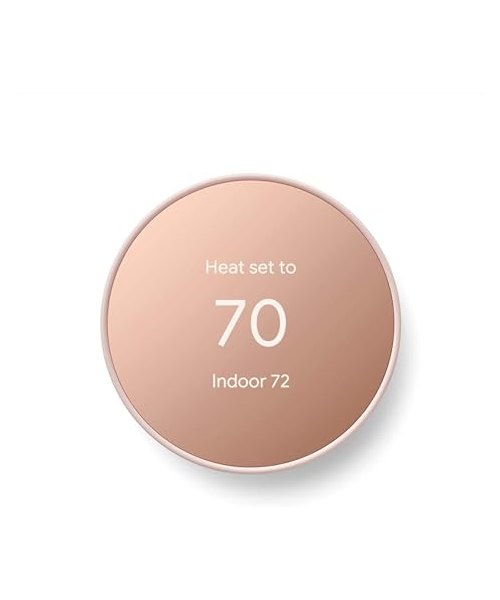
Available at: Google Nest (store.google.com/uk), John Lewis, Currys
Best for: Those who want a thermostat that genuinely learns their schedule and reduces heating bills through automatic adjustment.
The Nest Learning Thermostat is the smart home product with the clearest, most documented financial return — Google’s own data, supported by independent analyses, shows average heating bill reductions of 10–15% for Nest users. The learning algorithm establishes a household’s schedule and temperature preferences within a week of installation and then adjusts heating automatically rather than requiring manual programming. An unoccupied house stops being heated while the household is at work and warms before the first person returns.
The specific Nest advantage over programmable thermostats: it learns rather than requiring programming. The household that can’t be bothered to programme a weekly schedule into a conventional thermostat and therefore never uses the programming feature gains the full benefit of schedule-based heating from the Nest without any programming effort.
After two winters with a Nest: the heating bills compared to the same period the previous year are measurably lower. The house is warm when we arrive home and not heating an empty building during the day. The specific savings vary by house, insulation, and previous thermostat use — but the directional improvement is consistent.
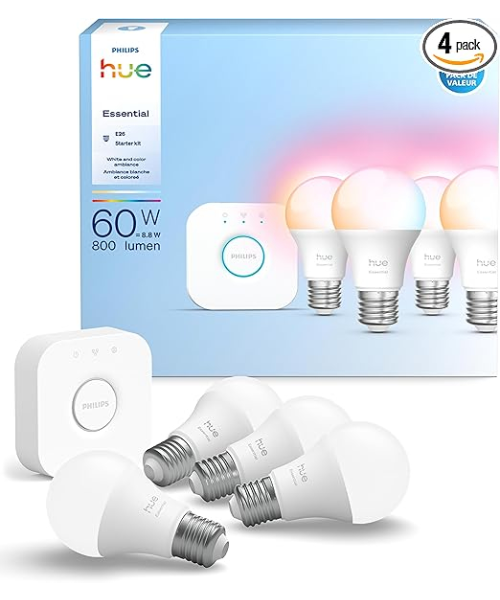
Available at: Philips Hue (philips-hue.com), John Lewis, Amazon, Currys
Best for: Those who want smart lighting control — dimming, colour temperature scheduling, and scene setting — across multiple rooms.
Philips Hue is the smart lighting ecosystem that provides the most comprehensive and reliable control of home lighting. The specific daily value: the “Good morning” routine that gradually brightens the bedroom light over thirty minutes before the alarm, helping the wake cycle with light rather than the abrupt alarm alone. The “Good evening” scene that dims all lights to 20% at 9pm automatically. The “Away” mode that randomly turns lights on and off to simulate occupancy.
Each of these automations addresses a specific daily interaction with lighting that manual switching doesn’t serve. The Hue Bridge connects up to 50 Hue bulbs and allows controlling all of them from a single app or through voice assistants.
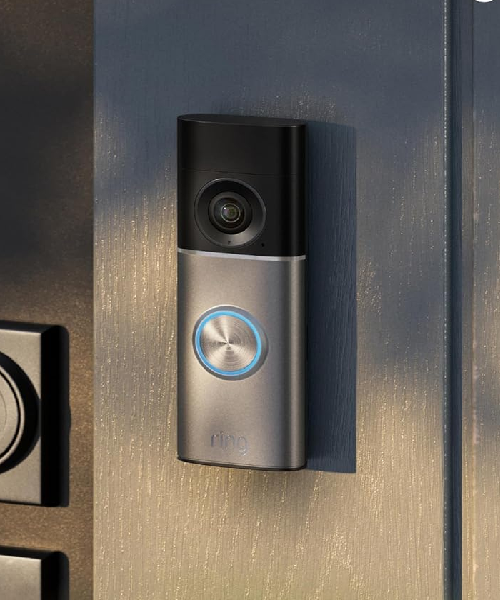
Available at: Ring (ring.com), Amazon, Currys, John Lewis
Best for: Those who want to see and speak to whoever is at the door from anywhere, and who want motion-triggered recording.
The Ring Video Doorbell solves a genuinely daily problem — the delivery that’s missed because nobody was available to answer the door, the unknown visitor when you’re occupied elsewhere in the house, the security concern about who has approached the front door overnight. The motion-triggered recording with cloud storage and the two-way audio allow interacting with visitors from anywhere with a phone signal.
The specific Ring advantage that justifies the subscription (Ring Protect at £35/year): video history that allows checking who was at the door at any point in the previous thirty days, which is the feature most used in practice rather than the live view.
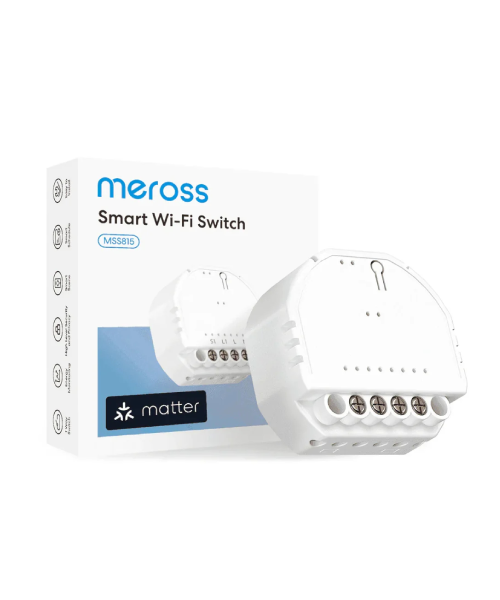
Available at: Amazon, Meross (meross.com)
Best for: Those who want to control existing appliances remotely or on a schedule without replacing those appliances with smart versions.
The smart plug is the specific smart home product that works without replacing the existing appliances it’s connected to. A standard floor lamp connected through a Meross smart plug becomes a lamp controllable from a phone and includable in “away” mode automation. A slow cooker on a smart plug starts from work in time for dinner to be ready on arrival. A dehumidifier starts when the home humidity sensor (connected through the same app) exceeds a set level.
At £12–20 per plug, building a connected home for existing appliances costs significantly less than replacing those appliances with smart versions.
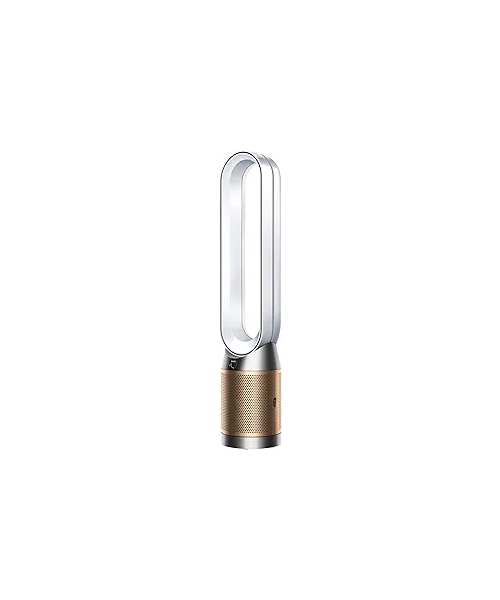
Available at: Dyson (dyson.co.uk), John Lewis, Currys
Best for: Those in urban environments who want combined air purification, cooling fan, and air quality monitoring in one device.
The Dyson Purifier Cool Formaldehyde is the air quality device recommendation for those with air quality concerns — the HEPA H13 filter removes 99.97% of particles as small as 0.1 microns, the catalytic filter destroys formaldehyde (a volatile organic compound commonly off-gassed by new furniture, flooring, and building materials), and the real-time air quality monitoring provides data on what the indoor air quality actually is at any moment.
The smart capabilities — schedule programming, air quality alerts, and control through the Dyson Link app — add the automatic operation that makes the device genuinely useful rather than manually operated.
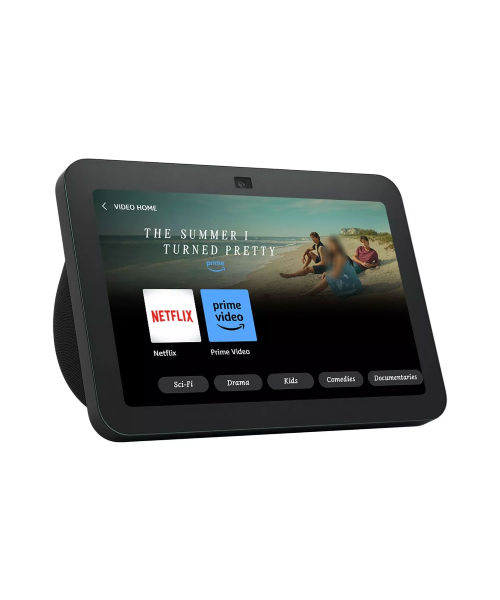
Available at: Amazon (amazon.co.uk), John Lewis, Currys
Best for: Those who want a centrally placed voice assistant with a screen for smart home control, video calls, and information.
The Echo Show provides the voice assistant capability of the Amazon Echo in a format with a visual display — relevant for smart home control (seeing the Ring doorbell camera feed on the screen rather than on a phone), for video calls, and for recipe following in the kitchen where seeing the instructions as well as hearing them reduces errors.
The integration with Alexa smart home skills means any smart home device with Alexa compatibility can be controlled through the Echo Show — lights, thermostat, locks, plugs.
Conclusion
Smart home technology produces genuine daily value when it’s chosen for specific friction points rather than for comprehensive home automation. Nest for the thermostat that learns and reduces heating bills automatically. Philips Hue for lighting automation that changes how the home feels at different times of day. Ring for door security and delivery management. Meross smart plugs for adding smart control to existing appliances. Dyson Purifier for urban air quality management. And Amazon Echo Show as the smart home hub that consolidates control. Whatever you buy — choose devices that automate something that happens daily rather than something that sounds impressive. The smart home that makes daily life measurably easier is the smart home worth building.

