

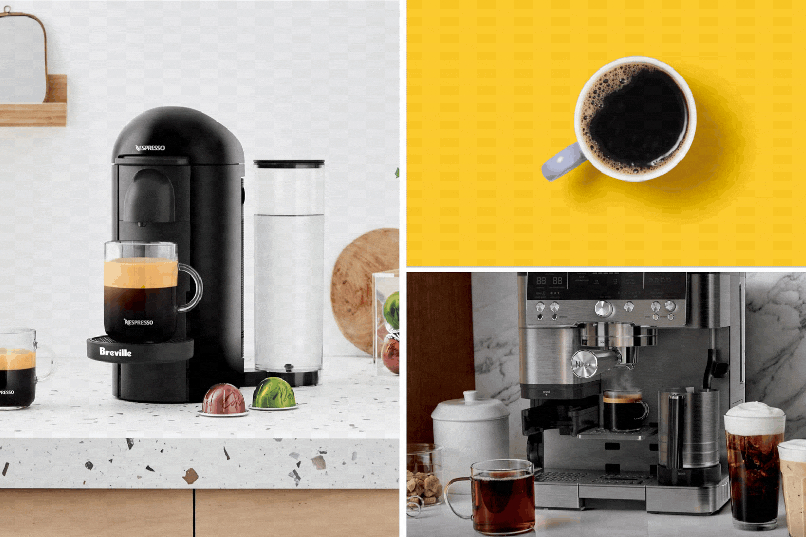
Coffee is the daily ritual that most people take seriously in theory and invest in inconsistently in practice. The good coffee machine sitting next to the cheap coffee beans. The quality beans ground on a blade grinder that destroys the particle consistency that makes extraction work. The pour-over setup used twice before the kettle takes over permanently.
Getting coffee right at home requires understanding which part of the system produces the most improvement for the specific situation — because the system has multiple components and the investment in the wrong one produces less improvement than the investment in the right one.
The most important variable in home coffee quality is the beans. Freshly roasted beans from a specialty roaster, consumed within four weeks of roasting, produce better results on any brewing method than stale beans on the best equipment available. This is the hierarchy: beans first, grinder second, brewer third.
With that established — here is the brewing equipment worth buying.
Understanding Coffee Brewing Methods
Espresso is the extraction of concentrated coffee through pressurised hot water — requiring specific equipment (pump pressure of 9 bar) and a specific grind (very fine). The base for lattes, flat whites, cappuccinos, and all milk-based coffee drinks. The learning curve for manual espresso is significant — grind setting, tamping pressure, and extraction time all affect the result and all require calibration.
Filter coffee (pour-over, drip, Aeropress, French press) extracts coffee without pressure, using gravity and immersion. More forgiving than espresso, easier to produce consistently good results without professional equipment, and the method that most clearly expresses the specific flavour characteristics of the bean. Specialty coffee culture has moved significantly toward filter methods precisely because they communicate the bean’s qualities most clearly.
Bean-to-cup machines automate the grinding, dosing, and extraction of espresso — reducing the skill requirement while producing results above what most manual beginners achieve quickly. The right choice for those who want good espresso daily without the learning investment.
The Best Coffee Makers Worth Buying
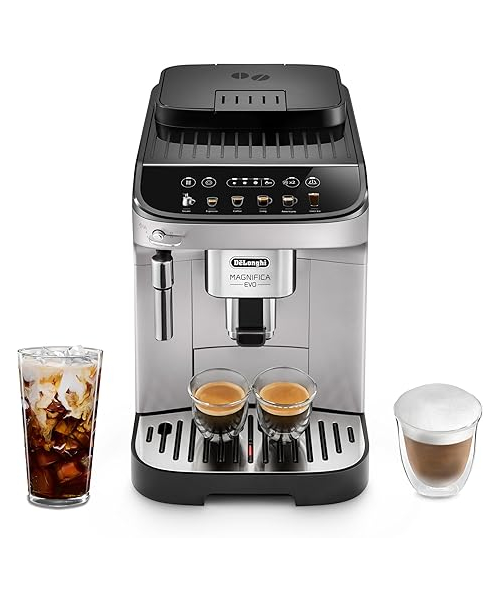
Available at: De’Longhi (delonghi.com), John Lewis, Currys, Amazon
Best for: Those who want genuinely good espresso-based coffee every morning without the learning curve of manual espresso.
The De’Longhi Magnifica Evo is the bean-to-cup machine recommendation for those whose primary requirement is consistently good espresso with minimal morning effort. Beans go in the hopper, water goes in the reservoir, press a button — the machine grinds, doses, tamps, extracts, and rinses between shots automatically. The result is espresso quality above what most beginners achieve manually within the first six months of trying.
The 13-step grinder allows adjusting for different bean varieties and freshness levels — fresher beans require a finer grind, older beans a coarser one, and the ability to adjust means the machine produces consistent results across the variable of bean freshness rather than delivering a fixed extraction regardless of what the beans require.
The milk steam wand produces adequate microfoam for flat whites and lattes with a small amount of practice — not at the level of a skilled barista, but at the level of most coffee shops. For household daily use, this is the machine that changes the morning in a way that capsule machines and drip coffee makers don’t.
Used twice daily in our home for fourteen months: the extraction quality is consistent, the cleaning process on schedule takes about ten minutes per week, and the coffee quality justifies every pound of the investment.
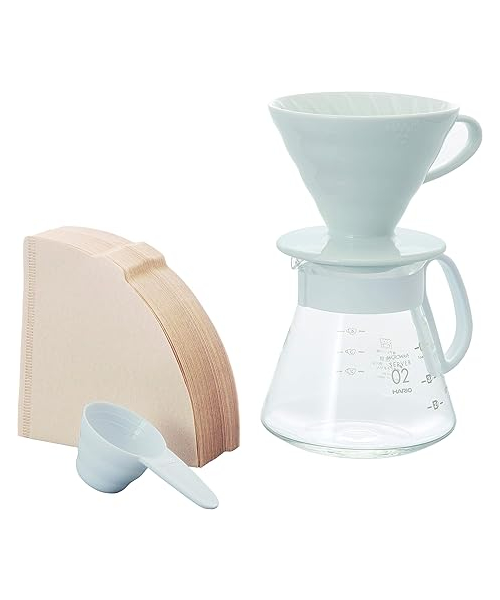
Available at: Hario (hario.co.jp), Amazon, specialty coffee retailers
Best for: Those who want to engage with coffee as a morning ritual and who want to taste the specific character of their beans.
The Hario V60 is the pour-over brewer used by specialty coffee shops globally as the standard for filter coffee. The specific design — the conical shape with spiral ridges and a large single hole at the base — produces a specific extraction pattern when used with the correct technique that brings out the brightness and complexity of quality beans in a way that other brew methods don’t.
The technique is the part worth learning: a 40g bloom (initial pour to saturate the grounds and allow CO2 to escape for thirty seconds), then a steady pour in circular motions over three to three and a half minutes. The gooseneck kettle (Fellow Stagg EKG is the recommendation at £60–75) provides the controlled pour rate that makes the technique consistent. Inconsistent pouring produces inconsistent extraction.
Once learned — which takes two to three weeks of morning practice — the V60 produces coffee that makes the De’Longhi’s espresso seem like a different drink category. Both are excellent for what they are. The V60 reveals what the bean actually tastes like. The De’Longhi reveals what an espresso-based drink tastes like. Both are worth knowing.
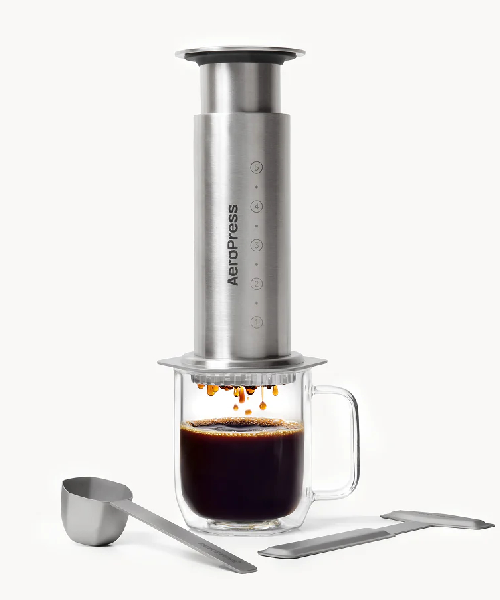
Available at: Aeropress (aeropress.com), Amazon, specialty coffee retailers
Best for: Those who want a versatile, travel-friendly brewer that produces excellent coffee across multiple brewing styles.
The Aeropress is the brewing method that coffee professionals most consistently use when they want good coffee in situations where their usual setup isn’t available — hotels, travel, offices — and the reason is that it produces consistently excellent results with more technique forgiveness than any other quality brewing method. The immersion-then-pressure extraction produces a smooth, low-acidity cup that suits most coffee preferences.
The compact size, durability (the plastic is virtually indestructible), and compatibility with airline carry-on makes it the specific recommendation for those who want good coffee while travelling without checking luggage for equipment.
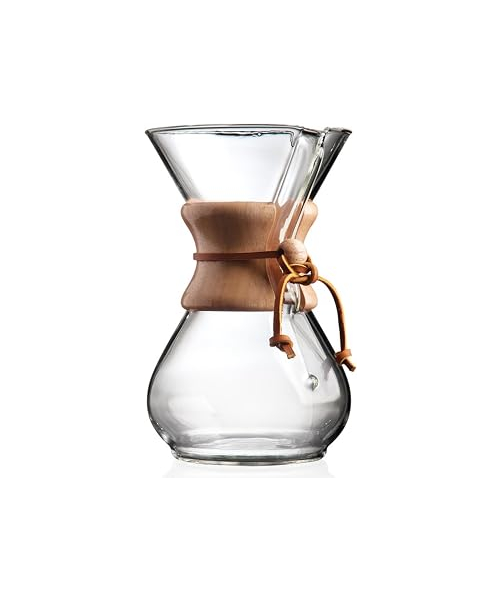
Available at: Chemex (chemexcoffeemaker.com), Amazon, specialty coffee retailers
Best for: Those who want a pour-over method that produces clean, bright coffee and looks beautiful doing it.
The Chemex produces one of the cleanest coffee cups available from any brewing method — the thick bonded paper filters remove almost all the coffee oils that French press and metal filter methods retain, producing a very clean, bright, complex cup with no sediment. The glass carafe design, unchanged since 1941, is in the permanent collection of the Museum of Modern Art in New York.
For those who host and want a brewing method that functions as a kitchen counter object as much as a brewing device, the Chemex earns its place on both counts.
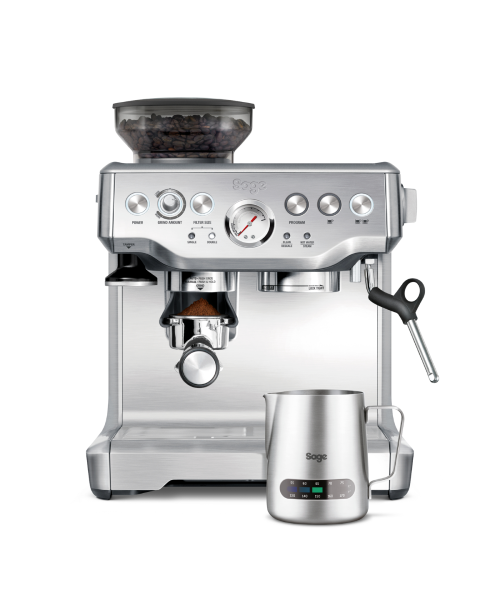
Available at: Sage (sageappliances.com), John Lewis, Currys, Amazon
Best for: Those who want to learn and practice manual espresso with integrated grinding and the best home espresso machine at this price.
The Sage Barista Express is the manual espresso machine with an integrated grinder — the combination that removes the separate grinder purchase and the coordination between two separate devices. The semi-automatic operation (the machine controls extraction time, the user controls grind and tamping) produces better espresso than the De’Longhi’s automation for those willing to invest the learning time, while the integrated grinder makes the setup more accessible than separate machine-plus-grinder alternatives.
For those who want to develop home barista skills seriously, the Barista Express is the correct starting equipment — capable of producing genuinely excellent espresso as skill develops, without requiring premium investment before skill justifies it.
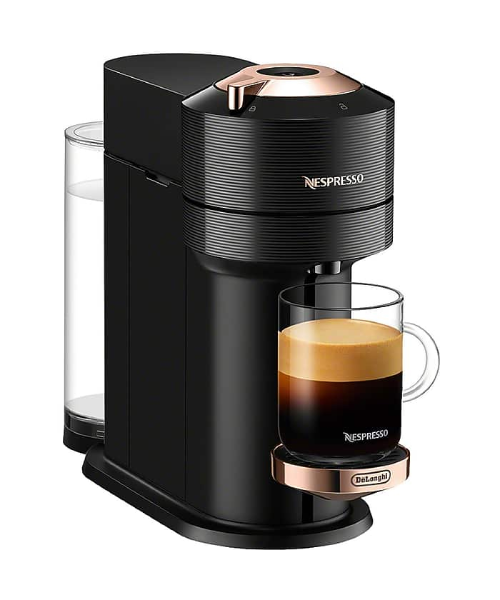
Available at: Nespresso (nespresso.com), John Lewis, Currys
Best for: Those who want the simplest possible coffee with above-average capsule quality.
The Nespresso Vertuo is the recommendation for the simplest coffee brewing situation — the office, the holiday home, the situation where simplicity is the primary requirement and quality is a secondary consideration. The coffee quality is above standard drip coffee and below espresso-machine quality. The capsule cost makes it more expensive per cup than ground coffee but more convenient than any other brewing method.
For those who want great coffee, the capsule machine is the wrong category. For those who want convenient, reasonably good coffee with zero setup and zero technique, Nespresso is the honest recommendation.
Conclusion
The right coffee setup depends entirely on how engaged you want to be in the brewing process. De’Longhi Magnifica Evo for consistently good espresso with minimal morning effort. Hario V60 for those who want to engage with coffee as a ritual and taste what their beans actually are. Aeropress for the versatile, travel-friendly method with the most technique forgiveness. Chemex for the elegant, clean cup that also functions as a kitchen object. Sage Barista Express for those who want to develop genuine espresso skill. And Nespresso for maximum simplicity at the cost of cost-per-cup. Whatever you choose — invest in the beans first. The best brewer with mediocre beans produces mediocre coffee. The modest brewer with exceptional fresh beans produces exceptional coffee.

