

The European city break is the specific travel format that most people take most frequently and that most travel content addresses least specifically. The generic “things to do in Barcelona” article that covers the Sagrada Família and the Boqueria and nothing that requires actual knowledge of the city. The “best restaurants in Amsterdam” list that changes nothing from the year before.
What makes a city break genuinely worthwhile is not the obvious landmarks — those exist in every city and are the starting point, not the destination — but the specific quality of the experience of being in a particular place. The light at a specific time of year. The neighbourhood that reads as the city’s actual character rather than its tourist surface. The specific meal in the specific context that the city makes possible and nowhere else does.
Here is the honest guide to the European city breaks worth taking specifically.
The Best European City Breaks In 2026
Lisbon, Portugal — The Undeniable Value Case
When to go: March to May, September to November
Fly from: Most UK airports direct, approximately 2.5 hours
Best for: Those who want a beautiful, characterful European capital at significantly lower costs than comparable alternatives.
Lisbon is the European capital that most consistently receives the “why haven’t I been before” response from first-time visitors — the specific combination of an exceptionally beautiful city built on hills with ocean light, a food culture that’s understated and outstanding, and prices that remain significantly below comparable capitals make it the European city break with the clearest value proposition.
The specific Lisbon experience worth building a trip around: Alfama, the historic Moorish neighbourhood of winding streets and tiled buildings, in the morning before the tourist groups arrive. Pastéis de Belém for the specific custard tart that the neighbourhood produces and that all others derive from. The Miradouros (viewpoints) at sunset, particularly São Pedro de Alcântara and Santa Catarina. A day trip to Sintra — 40 minutes by train — for the palace-scattered hills that look like somewhere from a fairy tale and are genuinely remarkable.
Stay at: Bairro Alto Hotel for the view and the neighbourhood. 1908 Lisboa Hotel for the historic building and the location. Budget: any of Lisbon’s independent guesthouses in Alfama or Bairro Alto.
Bologna, Italy — For Food Specifically
When to go: April to June, September to October
Fly from: UK airports to Bologna direct, approximately 2 hours
Best for: Those who want the best food city in Italy and the experience of a city that tourists underestimate relative to its quality.
Bologna has the highest concentration of exceptional food per square mile of any Italian city — which, in Italy, is a significant claim. The city that invented ragù, tortellini, and mortadella is not the city that tourists visit first, which produces the specific quality of a genuinely remarkable Italian city without the overwhelming tourism that Florence and Rome bring.
The Quadrilatero — the medieval market quarter — for the specific sensory experience of Italian food culture at its most dense: the deli counters with hanging prosciutto and stacked parmesan, the fresh pasta shops with handmade tortellini made that morning, the narrow streets with food stalls operating as they have for centuries.
A cooking class at a local school — La Vecchia Scuola Bolognese is the most respected — produces the specific knowledge of Bolognese pasta making (the sfoglia, the ragu) that changes how you cook Italian food at home indefinitely after.
Stay at: I Portici Hotel in the historic centre. Art Hotel Novecento for design-forward independent accommodation. Budget: the numerous B&Bs in the historic centre.
Bruges, Belgium — For Beauty Without The Amsterdam Crowds
When to go: March to May, September to November
Fly from: London by Eurostar to Brussels, then train to Bruges — 2.5 hours door-to-door from London
Best for: Those who want a genuinely beautiful preserved medieval city without the overcrowding that makes comparable Dutch alternatives harder to enjoy.
Bruges is among the most beautiful cities in Europe by any objective measure of medieval urban preservation — the canal network, the market square, the medieval architecture that survived the wars that destroyed comparable European cities. The tourism is significant, but the off-peak timing (early morning, late afternoon in shoulder season) provides the specific experience of the city without the cruise ship crowds that overrun it in summer peak.
The specific Bruges experience: walking the canals at dawn before anyone else is out — the reflection of the spires in the still water is the photograph that defines the city for a reason. The Groeninge Museum for Flemish Primitive art. De Halve Maan brewery (in the city since 1564) for the specific pleasure of drinking Belgian beer in the building it’s been made in for four centuries.
Stay at: The Pand Hotel in the centre. Hotel Heritage for the historic building. Budget: the B&Bs in the streets just outside the main tourist concentration.
Valencia, Spain — The Underrated Spanish City
When to go: March to May, September to November
Fly from: Most UK airports direct, approximately 2.5 hours
Best for: Those who want Spain without the Barcelona crowds, with excellent food, beautiful architecture, and a beach.
Valencia is the Spanish city that most residents of other Spanish cities quietly agree is the one they’d most want to live in — the combination of excellent food (paella was invented here, and the Valencian version bears no resemblance to the tourist approximation served elsewhere), beautiful modernist and Gothic architecture, a former riverbed converted to a linear park running through the city, and a beach within twenty minutes of the centre.
The City of Arts and Sciences — Santiago Calatrava’s futuristic complex at the riverbed’s end — is genuinely worth the photographs that every visitor takes. The Central Market, one of the largest covered markets in Europe, for the specific quality of Valencian produce — the oranges, the vegetables, the seafood — in an extraordinary art nouveau building.
Stay at: Room Mate Julio for design and location. Caro Hotel for historic building in the Gothic quarter. Budget: the numerous design-conscious hostels and guesthouses in Ruzafa, the neighbourhood that best reflects contemporary Valencian life.
Porto, Portugal — The Second Portuguese City Worth Visiting
When to go: April to June, September to October
Fly from: Most UK airports direct, approximately 2.5 hours
Best for: Those who’ve been to Lisbon and want the second Portuguese city, or those who want a more intimate, less-visited version of what Lisbon offers.
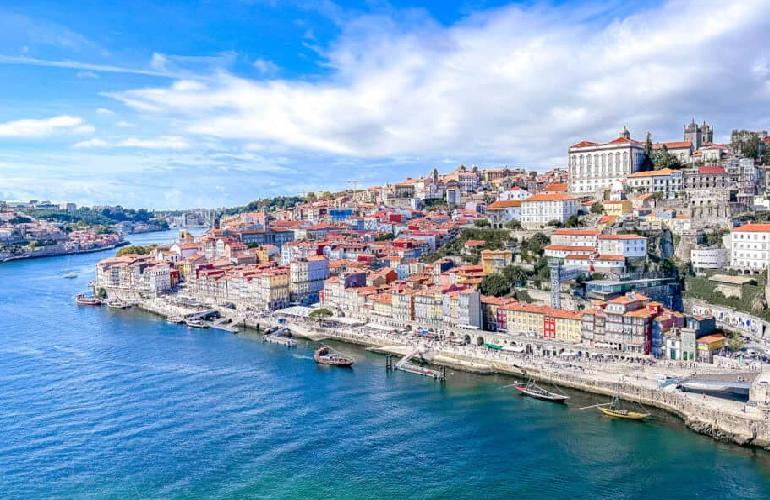
Porto occupies the specific position of the city most often described as “better than expected” by first visitors — the stacked riverfront buildings, the azulejo tile facades, the port wine caves of Vila Nova de Gaia visible across the Douro, and the specific character of a city that takes pride in being working rather than touristic.
The Livraria Lello bookshop — the inspiration for Harry Potter’s Flourish and Blotts — is worth visiting for the architecture rather than the fiction mythology. The train station of São Bento for the tile panels depicting Portuguese history. A port wine tasting in the caves of Vila Nova de Gaia for the education in the wine that the Douro valley produces.
Ljubljana, Slovenia — The Small Capital Worth Discovering
When to go: May to September
Fly from: Limited direct UK connections — hub through Vienna or Munich is typical
Best for: Those who want a beautiful, walkable, genuinely discovery-level European capital with no crowds.
Ljubljana is the smallest European capital city and one of the most consistently described as charming by visitors who discover it — the castle on the hill, the triple bridge over the Ljubljanica, the outdoor café culture, and the specific quality of a city that feels like it’s for its residents rather than its visitors. The tourist infrastructure is adequate without being overwhelming. The food scene has improved dramatically over the past decade and is now genuinely worth building a trip around.
Conclusion
The European city break produces the most distinct travel experience from the capitals and cities that offer something genuinely their own — a food culture, an architectural character, a light — rather than simply a concentration of broadly European experience in an accessible format. Lisbon for the light, the tiles, the pastéis and the value. Bologna for the food specifically. Bruges for medieval beauty in off-peak quiet. Valencia for the Spanish city that rivals Barcelona without the crowds. Porto for the second Portuguese discovery. And Ljubljana for the small capital with genuine character. Whatever you visit — go in shoulder season, walk without a plan for one morning, and eat where the menus are only in the local language. The specific experience of a city reveals itself in these conditions more completely than any itinerary produces.

