

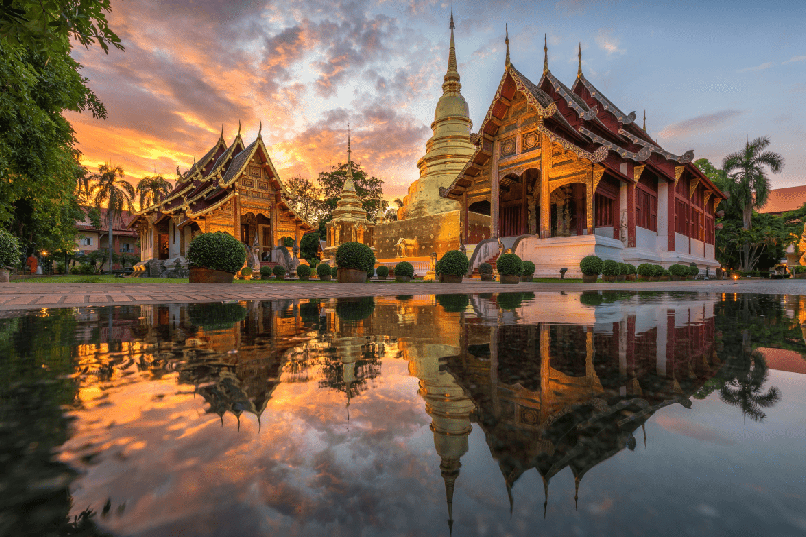
Long-haul travel requires a different investment calculation from city breaks — the jet lag, the flight cost, the time away from work and family all represent a commitment that a weekend in Lisbon doesn’t require. The long-haul destination worth travelling to is the one that produces an experience genuinely unavailable in closer alternatives — the specific landscape, the specific food culture, the specific historical depth that justifies crossing multiple time zones rather than simply flying to a more accessible alternative.
Here are the long-haul destinations that earn the journey specifically in 2026 — not because they’re trending, but because they produce the experience that makes the investment worthwhile.
What Makes A Long-Haul Destination Worth It
The honest question before any long-haul trip: what does this destination provide that somewhere closer can’t? Japan provides a cultural experience with no adequate European or American equivalent. New Zealand provides a landscape that’s genuinely without parallel for accessible outdoor adventure. Vietnam provides a food culture and historical depth at a price that makes a three-week trip financially comparable to a week in Paris.
The long-haul destination that’s been chosen because it’s on the “must visit before you die” list without a specific, personal reason why is the trip that produces the polite “it was amazing” response without the specific, vivid detail that characterises genuinely transformative travel.
The Best Long-Haul Destinations In 2026
Japan — For Cultural Depth Unlike Anywhere Else
When to go: March to April (cherry blossom) or October to November (autumn colour)
Best for: Those who want a genuinely distinct cultural experience — the aesthetics, the food, the specific quality of Japanese attention to detail — that has no equivalent elsewhere.
Japan is the long-haul destination that most consistently produces the specific response of wanting to return before the current trip is over. The combination of aesthetic coherence (the relationship between cleanliness, precision, and beauty that permeates Japanese design from architecture through food presentation), the food culture (the specific knowledge accumulated around every ingredient and preparation method that produces the best version of whatever is being made), and the landscape (the mountains, the bamboo forests, the specific Japanese garden aesthetics) creates an experience with no adequate description until experienced.
The Tokyo base: Shibuya and Shinjuku for the specific density of contemporary Japanese urban life. Yanaka for the surviving old-city neighbourhood that escaped the bombing and redevelopment that cleared most of Tokyo’s historic fabric. Tsukiji outer market for the sushi breakfast that resets expectations about what the most common Japanese food can taste like.
The Kyoto layer: The temples and shrines that provide Japan’s historical architecture in a city that retained its pre-war fabric. Fushimi Inari — the thousands of torii gates on the mountain — in the early morning before the tourist groups. A ryokan stay (traditional inn) for the specific experience of Japanese hospitality and the kaiseki dinner that represents one of the world’s most considered culinary traditions.
The smaller places: Naoshima Island for contemporary art in a transformed fishing village. Kanazawa for the samurai and geisha districts. Hakone for Mount Fuji views and an onsen at the mountain base.
Vietnam — For Food, History, And Value
When to go: Variable by region — December to April in the south, November to April in the centre, October to April in the north
Best for: Those who want an exceptionally food-rich travel experience, significant historical depth, and extraordinary value relative to the quality of the experience.
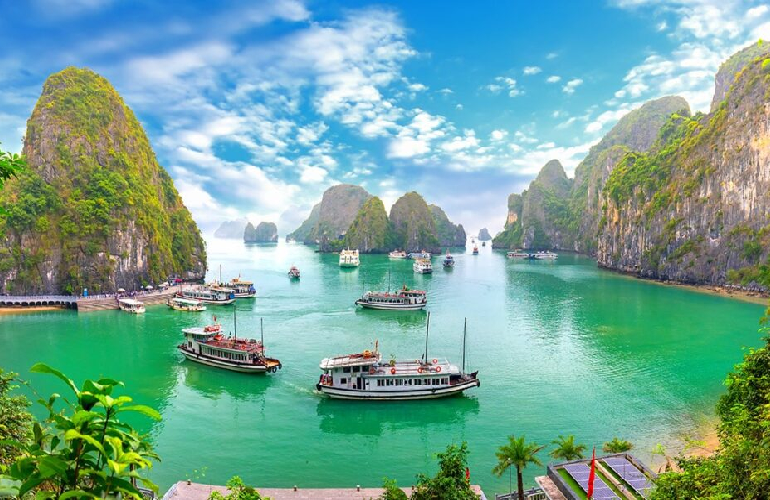
Vietnam is the long-haul destination where the quality of the travel experience is most disproportionate to the cost — the food culture (arguably the most varied, most precise, and most herb-forward of any Southeast Asian country), the landscape (the karst limestone scenery of Halong Bay and Ninh Binh, the rice terraces of Sapa, the beaches of Hoi An), and the historical layering (the French colonial architecture, the American War sites, the older Cham and Vietnamese kingdoms) produce a country with more to understand than a typical two-week trip accommodates.
The food specifically: Pho eaten at 6am from a street vendor in Hanoi whose family has been making the same broth for three generations. Banh mi from the Bánh Mì Phương stall in Hoi An — the sandwich that Anthony Bourdain described as the “best sandwich in the world.” Bún Bò Huế in Huế, the imperial former capital that produces its own distinct cuisine. The specific revelation of Vietnamese coffee — the condensed milk-based iced version that the French influence produced — for those who assumed coffee was already a settled category.
New Zealand — For Landscape Without Parallel
When to go: November to April (austral summer)
Best for: Those who want outdoor adventure in landscapes that are genuinely extraordinary — the mountains, the fjords, the beaches — without the infrastructure difficulty of comparable alternatives.
New Zealand’s landscape has been described as having more variety per square mile than any other country on earth — the claim is contested but the feeling of it, travelling through the South Island specifically, is genuine. The Southern Alps, the fjords of Milford Sound (a flight is the worthwhile approach), the lake districts, and the volcanic plateau of the North Island produce a landscape sequence that produces the continuous “how is this real” response that genuinely extraordinary travel provides.
The South Island specifically: The drive from Queenstown to Milford Sound through the Fiordland is among the most beautiful roads in the world. The Routeburn Track for those who want a multi-day walk through the mountains without the demanding preparation of Fiordland’s more remote options. Nelson and the Abel Tasman coast for the combination of brilliant sea-kayaking and accessible golden beaches.
Morocco — For Close Proximity And Genuine Difference
When to go: March to May, September to November
Best for: Those who want a genuinely different cultural experience within four hours of the UK, without the long-haul time and cost commitment.
Morocco technically qualifies as long-haul only by its cultural distance rather than its flight time — Marrakech is four hours from most UK airports, making it the most accessible genuinely different travel experience available. The medinas, the souks, the riads, the Atlas Mountains within an hour’s drive, the Sahara within a day’s travel — Morocco is the destination that produces the strongest disorientation (in the best sense, the specific feeling of being genuinely somewhere else) per hour of travel time.
The Marrakech specific: The Djemaa el-Fna square at dusk — the storytellers, the food stalls, the musicians — is one of the most extraordinary public spaces on earth. Yves Saint Laurent’s Jardin Majorelle for the garden and the Berber Museum it now contains. A hammam for the specific Moroccan bathing experience that’s older than most European cities.
Colombia — For South America Without The Safety Concerns Of Its Neighbours
When to go: December to March, June to August
Best for: Those who want South America’s cultural and landscape richness without the security concerns that make Venezuela and some parts of Brazil more complex for first-time South America visitors.
Colombia has undergone a transformation in the decade since its most difficult security period and Medellín and Cartagena have become two of the most discussed travel destinations on the continent. Medellín’s story — from the world’s most dangerous city in the 1990s to a city of transformational urban innovation — is itself worth understanding, and the city’s cable cars, escalators, and public parks installed to connect the hillside communities to the city centre are the specific infrastructure of that transformation.
Cartagena’s walled colonial city is among the best preserved in the Americas. The coffee region (the Zona Cafetera) for the specific experience of Colombian coffee culture in the landscape that produces it. And the Tayrona National Park for beaches set against the Sierra Nevada mountains in one of the continent’s most striking juxtapositions.
Conclusion
Long-haul travel earns its investment when the destination provides a genuinely distinct experience rather than simply a longer journey to a broadly similar travel experience. Japan for the cultural depth that has no equivalent anywhere closer. Vietnam for food, history, and value that justify crossing time zones. New Zealand for landscape that exists nowhere else on earth in this combination. Morocco for maximum cultural difference within minimum flight time. And Colombia for South America’s richness with more accessible infrastructure for first-time visitors. Whatever you choose — give yourself enough time to arrive into the experience rather than rushing through it. The long-haul destination visited for five days produces a fraction of the return that the same destination visited for twelve days delivers.

