

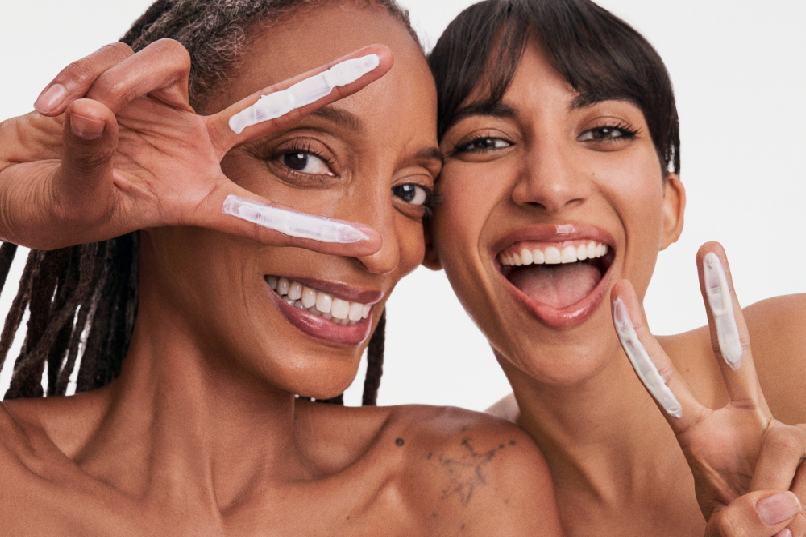
If I could give one piece of skincare advice that would make the most difference to the most people, it would be this: wear SPF on your face every day. Not on beach days. Not on summer days. Every day, year-round, regardless of the weather.
The evidence behind daily SPF is the most robust in skincare. UV radiation — from both UVA (the ageing rays that penetrate glass and cloud cover) and UVB (the burning rays) — is the primary environmental driver of visible skin ageing, hyperpigmentation, and skin cancer. The clinical trials demonstrating that daily SPF use measurably reduces the visible signs of ageing, improves skin tone, and reduces skin cancer risk are consistent, large-scale, and spanning decades.
Most people who care about skincare spend significant money on serums, treatments, and moisturisers designed to address concerns that daily SPF use would prevent more effectively than any treatment addresses. The order of operations in skincare is protection first, then correction. Most people have it backwards.
What SPF Actually Means
SPF (Sun Protection Factor) measures protection against UVB rays specifically. SPF 30 filters approximately 97% of UVB rays. SPF 50 filters approximately 98%. The mathematical difference is less dramatic than the marketing suggests — what matters most is wearing adequate SPF consistently, not finding the highest possible number.
UVA protection is separately measured and separately labelled. The PA system (used in Asian markets, appearing increasingly on global products) rates UVA protection from PA+ to PA++++. The “broad spectrum” label on Western products indicates UVA protection is included without specifying the level. For daily use, broad spectrum SPF 30 minimum is the recommendation.
The application quantity that matters: most people apply approximately one quarter of the quantity needed to achieve the stated SPF protection. The recommendation for face application is approximately a quarter teaspoon — a visible film on the face rather than a sheer layer. The SPF protection achieved with under-application is significantly lower than the label states.
Mineral vs Chemical Sunscreen
Mineral sunscreen (using zinc oxide and/or titanium dioxide) creates a physical barrier on the skin surface that reflects and scatters UV radiation. Immediately effective upon application. Generally better tolerated by sensitive and reactive skin. Traditional disadvantage: white cast on the skin, particularly on deeper skin tones. Modern mineral formulations have reduced this significantly.
Chemical sunscreen (using filters like avobenzone, octinoxate, octisalate, and newer filters like tinosorb and uvinul) absorbs UV radiation and converts it to heat. Requires twenty minutes after application before it’s fully active. Generally wears more cosmetically elegantly under makeup. Some chemical filters cause irritation in sensitive skin types.
Hybrid formulations combine mineral and chemical filters to capture the benefits of both approaches — the skin tolerance of mineral with the cosmetic elegance of chemical.
The Best Face SPF Worth Buying
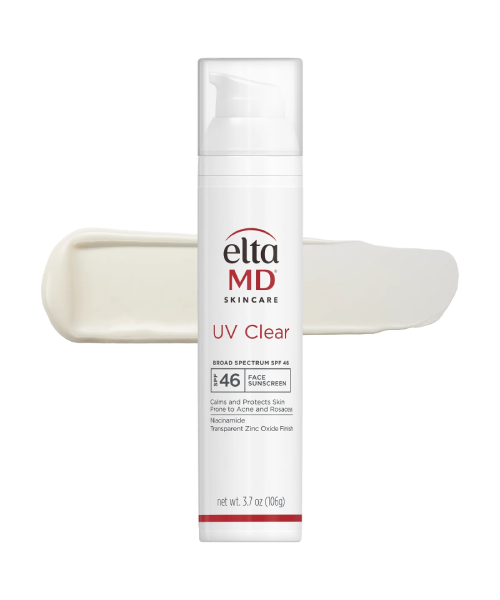
Available at: EltaMD (eltamd.com), Dermstore, Amazon, skincare retailers
Best for: Daily face SPF, particularly for acne-prone, sensitive, or post-procedure skin.
EltaMD UV Clear is consistently the SPF that appears when dermatologists are asked what they personally use or what they recommend without brand restrictions. The zinc oxide base (9%) provides mineral broad-spectrum protection with the skin tolerance that makes it appropriate for the most sensitive and reactive skin types. The niacinamide at 5% provides skin barrier support and sebum regulation alongside the UV protection. The finish is matte enough to wear under makeup without interference.
The clear formulation (no white cast in the name) represents the significant formulation work EltaMD has done to make the zinc oxide lie flat and translucent on the skin. On lighter skin tones it’s genuinely invisible. On medium to deep skin tones, there’s minimal remaining white cast that blends without leaving residue.
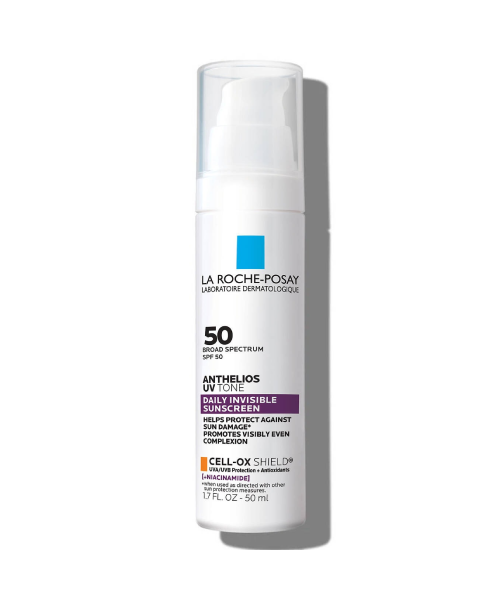
Available at: La Roche-Posay (laroche-posay.co.uk), Boots, Amazon, pharmacies
Best for: Those who want a lightweight, cosmetically elegant daily SPF that works well under makeup.
La Roche-Posay’s Anthelios range is the drugstore SPF recommendation for those who want a product developed by a dermatological brand with a consistent clinical testing track record. The Invisible Fluid formula uses the Mexoryl SX and XL filter combination — La Roche-Posay’s proprietary photostable chemical filters — in a formula that disappears on application and provides an excellent base for makeup.
The Anthelios is the recommendation for those who find mineral sunscreens too heavy or find that zinc oxide-based formulas sit visibly on the skin. The chemical filter combination is appropriate for most skin types and provides consistent broad-spectrum protection.
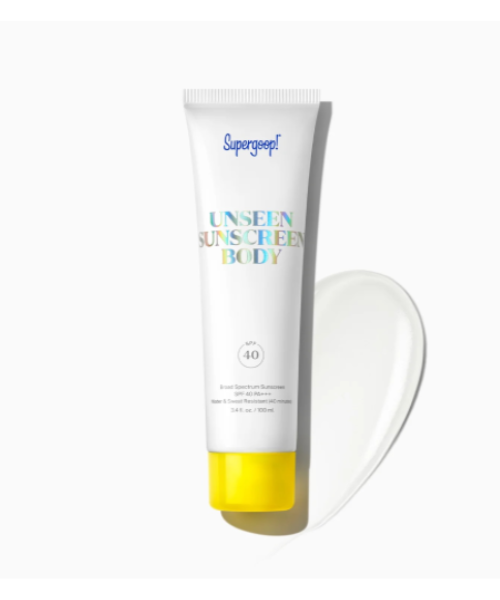
Available at: Supergoop! (supergoop.com), Sephora, Nordstrom, Space NK
Best for: Those who want an SPF that doubles as a makeup primer and creates a smooth base.
Supergoop! has built a brand specifically around making SPF an enjoyable rather than obligatory skincare step. The Unseen Sunscreen is the brand’s hero product — a completely clear, primer-texture formula that creates a smooth, mattified base for makeup while delivering SPF 40 broad-spectrum protection. It has no white cast whatsoever, no discernible sunscreen smell, and a texture that most people actively want to wear regardless of the SPF.
For those who’ve resisted daily SPF because of the texture, the smell, or the white cast of previous SPF products, the Unseen Sunscreen is the specific product that removes all of those objections.
Available at: Amazon, YesStyle, Stylevana, Korean beauty retailers
Best for: Those who want a high-performance, cosmetically elegant SPF at a genuinely accessible price.
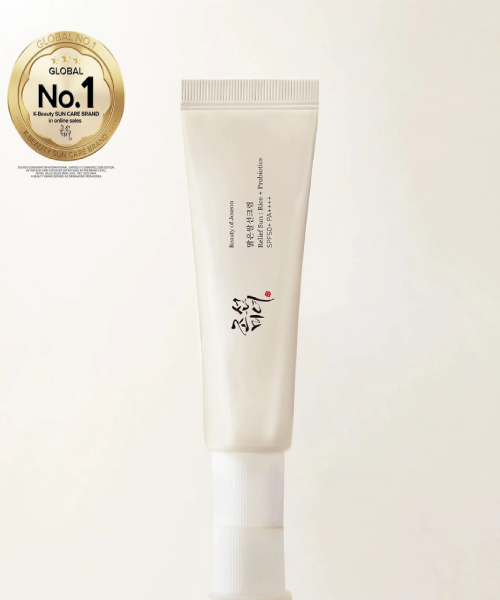
The Korean sunscreen category produces some of the most cosmetically sophisticated SPF formulations available, and Beauty of Joseon’s Relief Sun is the most consistently recommended entry point into this category. The rice extract and probiotic complex provide skincare benefits alongside the PA++++ UVA protection — the highest available rating in the PA system.
The finish is genuinely beautiful — a slight glow rather than a matte finish, appropriate for most skin types, and an ideal base for the no-makeup makeup look. At $15–18, this is the high-performance SPF that makes the daily SPF habit economically effortless.
Available at: Boots, Amazon, Home Bargains, B&M
Best for: Those for whom SPF cost has been a barrier to daily use.
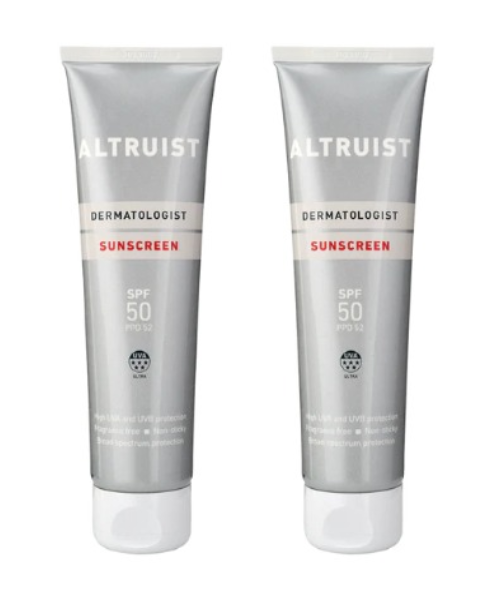
Dr Andrew Birnie established Altruist specifically to make daily SPF accessible at a price that removes the economic barrier to consistent use. The SPF 50 broad-spectrum formula provides genuine, tested protection at a price that makes daily face and body application economically irrelevant. The formula is not as cosmetically refined as EltaMD or Supergoop! — it’s thicker and requires slightly more blending — but the protection is genuine.
For those who’ve been applying SPF only occasionally because the cost of daily use felt prohibitive, Altruist removes the cost objection entirely. Good SPF applied every day is significantly more beneficial than excellent SPF applied occasionally.
Reapplication — The Step Most People Skip
SPF applied in the morning provides approximately two hours of full protection before photodegradation reduces its effectiveness. For those who spend time outdoors, reapplication every two hours is the recommendation. For those who are primarily indoors, the morning application is typically sufficient for commute and office exposure.
Powder SPF products — pressed powder formulas with mineral SPF — are the practical solution for over-makeup reapplication. The Supergoop! DEFENSE Refresh Setting Mist and the La Roche-Posay Anthelios Mineral One SPF powder are the most consistently recommended for over-makeup use.
Conclusion
Daily SPF is the single most impactful skincare decision available. EltaMD UV Clear for the dermatologist-recommended mineral formula that suits the widest range of skin types. La Roche-Posay Anthelios for the lightweight chemical filter formula that works beautifully under makeup. Supergoop! Unseen for the primer-texture formula that makes daily SPF feel like a skin benefit rather than an obligation. Beauty of Joseon for high-performance Korean SPF at genuinely accessible prices. And Altruist for those for whom price has been a barrier to daily application. Whatever you choose — wear it every day, apply enough of it, and reapply when spending extended time outdoors. That is the skincare step that produces more long-term benefit than everything else combined.

