

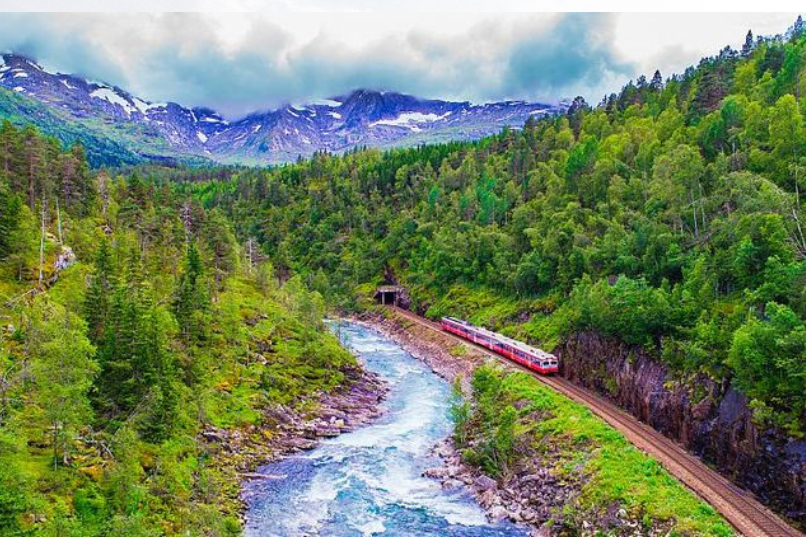
European train travel is the travel format that most clearly embodies the specific philosophy that the journey is as much the destination as the place arrived at. The high-speed train from Paris to Lyon passes through Burgundy — the landscape of vineyards that produces the wine on the dining car menu. The sleeper from Vienna to Rome travels through the Alps overnight — passengers wake to the Italian light arriving into Rome rather than the Austrian light that departed from Vienna. These are not simply transport connections. They’re experiences in their own right.
The train travel that’s worth taking is travel where the journey itself is the experience rather than simply the transfer — where the view from the window, the pace of arrival, or the specific experience of being on a particular train in a particular landscape is part of what makes the trip memorable.
Why European Train Travel Is Experiencing A Renaissance
The combination of direct city-centre-to-city-centre travel (avoiding airport transit time at both ends), the comfort of train travel relative to short-haul flying, the increasing availability of sleeper options that cover distance while providing accommodation, and the growing environmental awareness of the lower carbon impact of rail relative to flying has produced a resurgence in European rail travel that the past decade’s low-cost flying dominance had suppressed.
Several of the routes below are now genuinely competitive with flying on time (including the door-to-door comparison that includes airport transit) and are significantly more comfortable and more interesting as experiences.
The Best European Train Trips Worth Taking
London to Paris by Eurostar — The Classic Standard
Journey time: 2h15m
Trains: Up to 18 departures daily
Available at: Trainline (thetrainline.com), Eurostar (eurostar.com)
Best for: The definitive example of train travel outperforming air travel door-to-door between major European cities.
London to Paris by Eurostar is the specific example most useful for dispelling the assumption that flying is always faster than train travel. The door-to-door comparison: St Pancras to a central Paris hotel by Eurostar takes approximately three hours (including the thirty-minute early arrival for international check-in). The equivalent by air — central London to Heathrow (1h), check-in and security (1.5h), flight to CDG (1h15m), CDG to central Paris (45m) — takes four hours minimum and typically longer with the delays that short-haul airport operations produce.
The Eurostar is faster, more comfortable, more central, and lower in carbon emissions than the equivalent short-haul flight. The case for taking it over flying is comprehensive rather than primarily environmental.
Paris to Barcelona — The High-Speed South
Journey time: 6h30m
Trains: Three to four daily
Available at: Trainline (thetrainline.com), SNCF (oui.sncf)
Best for: The daytime high-speed journey that passes through the Languedoc wine country and over the Pyrenees.
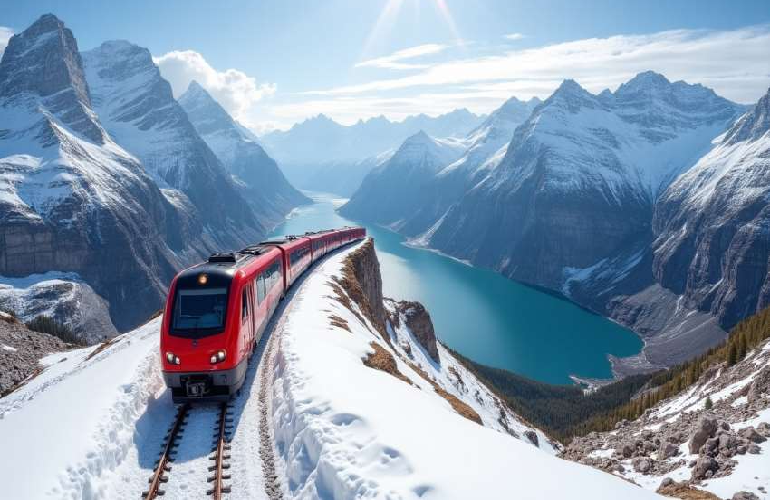
The TGV from Paris Gare de Lyon to Barcelona Sants is the high-speed route that most rewards travelling by day rather than overnight — the specific landscape the train passes through is part of the journey’s quality. The Languedoc vineyards, the Pyrenean approach, and the descent into Catalonia provide a landscape sequence that makes the six and a half hours feel shorter than the equivalent drive.
The TGV from Paris Gare de Lyon to Barcelona Sants is the high-speed route that most rewards travelling by day rather than overnight — the specific landscape the train passes through is part of the journey’s quality. The Languedoc vineyards, the Pyrenean approach, and the descent into Catalonia provide a landscape sequence that makes the six and a half hours feel shorter than the equivalent drive.
Booked in advance, the fares compete with the equivalent budget airline prices once luggage fees, transport to Beauvais or Girona airports, and airport time are included in the comparison. Booked close to travel, the train fares significantly exceed the airline equivalent.
Vienna to Venice — The Alpine Sleeper
Journey time: Overnight (approximately 8 hours)
Trains: The Nightjet operated by ÖBB
Available at: Trainline (thetrainline.com), ÖBB (nightjet.com)
Best for: Arriving in Venice having slept across the Alps, without an airport, without a hotel night, and without the airport early morning that the equivalent flight requires.
The Vienna to Venice Nightjet is the sleeper train route that most clearly demonstrates why overnight trains are having their renaissance. Departing Vienna in the evening in a private couchette (the specific recommendation over the shared compartment for sleep quality), the train crosses Austria through the night, enters Italy at Tarvisio, descends through the Veneto, and arrives in Venice Santa Lucia station — the station built on the edge of the lagoon, with the Grand Canal visible from the entrance — in the morning.
The experience of stepping from a train directly onto the Venetian waterfront, having slept across the Alps, is the specific arrival experience that flying to Venice Marco Polo and taking the water taxi to the island can’t replicate. The sleeping compartment cost includes the accommodation for the night, which changes the price comparison against the equivalent hotel night plus flight.
The Glacier Express — Switzerland's Famous Scenic Route
Journey time: 8 hours (Zermatt to St Moritz)
Available at: Switzerland Tourism (myswitzerland.com), Trainline
Best for: Those who want the most beautiful train journey in Europe as the explicit purpose of the travel.
The Glacier Express is the specific train journey where the journey is unambiguously the destination — a full day crossing the Swiss Alps between Zermatt and St Moritz (or the reverse direction) through landscapes that include mountain gorges, viaducts, valleys, and the specific quality of high Alpine scenery that Switzerland’s railway engineering was specifically designed to reveal.
The reservation is required and the panoramic car upgrade — the carriage with floor-to-ceiling windows specifically designed for the view — is the specific recommendation for those making this journey as an experience rather than simply as transport. The dining car lunch (three courses, table service in the panoramic car, the landscape passing at eye level) is included in the enhanced package and is the way to experience the route most completely.
The Coast Starlight — America's Pacific Scenic Route
Journey time: 35 hours (Los Angeles to Seattle)
Trains: Once daily
Available at: Amtrak (amtrak.com)
Best for: Those who want a long-haul American train journey with Pacific coast scenery as the experience.
Not European, but too good to omit from a train travel guide: the Coast Starlight from Los Angeles to Seattle (or the reverse) passes through the most beautiful section of the American Pacific coast — the California wine country, the Oregon coast, the Cascade mountains — in a journey that rewards the investment of time with the specific experience of American long-haul rail travel that no European equivalent provides.
The Superliner sleeping compartment (a private room with two seats that convert to bunks, a window, and a bathroom) is the specific recommendation — the thirty-five hour journey taken in a private compartment with meals included in the sleeping car price is a genuinely luxurious travel experience at a price significantly below equivalent business class flying.
London to Edinburgh by LNER — The Domestic High-Speed
Journey time: 4h30m from London King’s Cross
Trains: Up to 14 daily
Available at: LNER (lner.co.uk), Trainline
Best for: Those who want to reduce domestic flying within the UK and experience the East Coast main line through the English countryside.
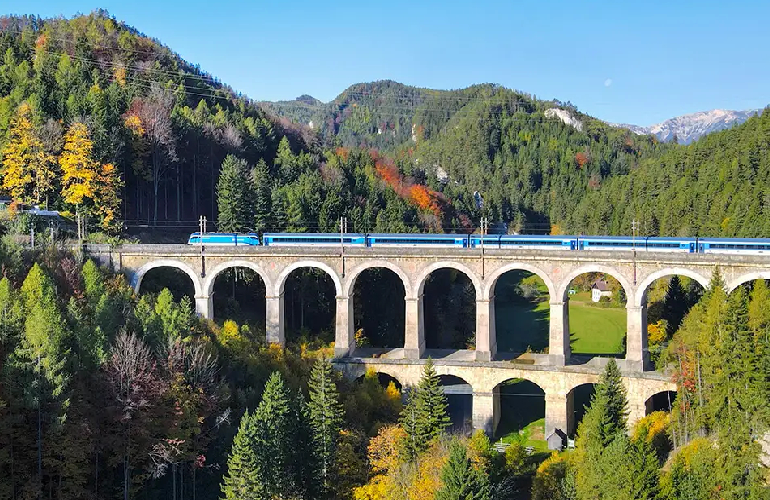
The London to Edinburgh route by LNER on the East Coast main line passes through some of the most beautiful English and Scottish landscape — the Northumberland coast, the Holy Island causeway visible from the train window, the approach through the Firth of Forth. The 4h30m journey time is genuinely competitive with flying door-to-door from central London to central Edinburgh, and the in-seat experience (LNER’s standard class is among the best domestic rail experience in the UK) is significantly better than the equivalent short-haul flight.
Booked eight weeks in advance, the LNER advance fare (typically £30–50 for standard class) competes directly with budget airline prices.
Conclusion
European train travel produces the specific quality of the journey that air travel’s efficiency eliminates — the landscape, the pace, the specific pleasure of arriving somewhere having crossed the ground between rather than having been transferred above it. London to Paris by Eurostar for the definitive door-to-door comparison. Paris to Barcelona for the high-speed journey through wine country and mountains. Vienna to Venice by Nightjet for the sleeper that replaces both a hotel night and a flight. The Glacier Express for the journey that’s explicitly the destination. The Coast Starlight for the American long-haul equivalent. And LNER London to Edinburgh for the domestic alternative to UK short-haul flying. Book in advance, choose a window seat, and allow the journey to be part of the travel rather than simply the transfer between the places you’re going to.

