

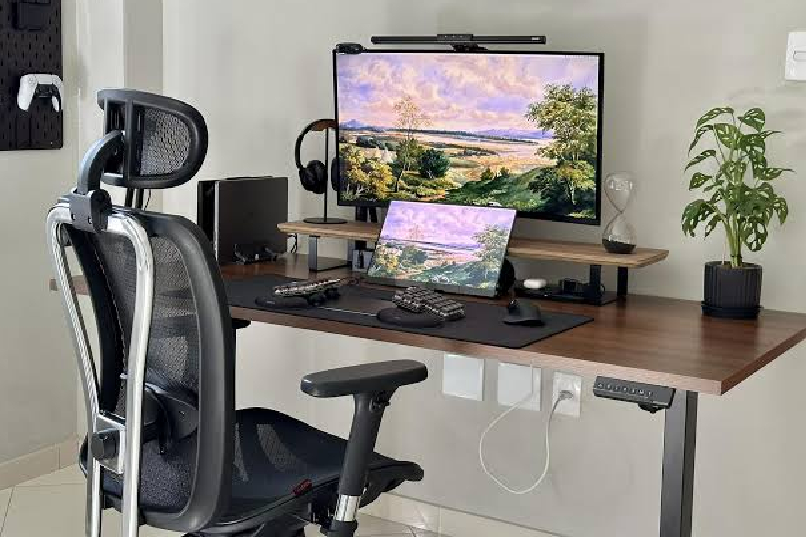
The home office is the room where most people are spending the most work hours of their lives and where most people have made the least thoughtful decisions about the environment. The kitchen table that becomes a desk. The dining chair that becomes a work chair for eight hours a day. The laptop propped on a stack of books because there’s no monitor at the right height. These are not minor inconveniences — they’re daily physical stressors that compound across the years of remote work that the post-pandemic working world has made permanent for a significant proportion of knowledge workers.
The home office worth working in is one where the environment is designed around what working from home actually requires — not just a surface to put a laptop on, but the ergonomic support, the lighting, and the organization that makes sustained productive work possible without the physical and cognitive costs that poorly set up home working environments produce.
Products
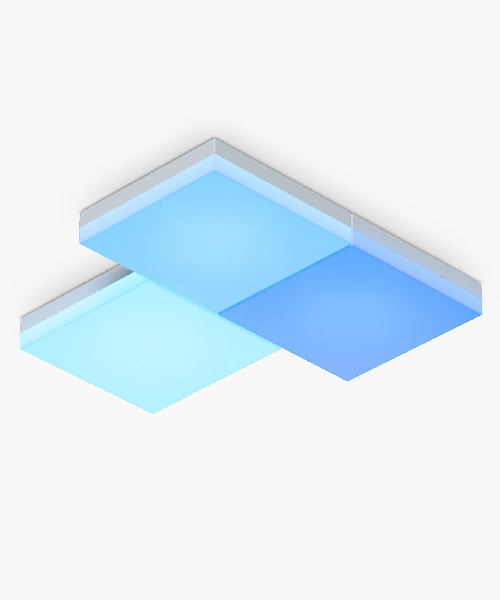
Nanoleaf’s Skylight is a ceiling-mounted smart light that simulates daylight in a room that doesn’t have adequate natural light — specifically designed for home offices and other productivity spaces where light quality affects both mood and cognitive performance. The Matter compatibility allows integration with any smart home platform, and the automatic color temperature scheduling (cooler, brighter light for morning focus, warmer for afternoon, dimmer for evening) addresses the circadian rhythm effects of artificial lighting in spaces without adequate window light.
- Available at: Nanoleaf (nanoleaf.me), Best Buy, Amazon, Apple Store
- Best for: Home offices with limited natural light — the smart lighting solution that simulates daylight and adjusts automatically for both productivity and circadian rhythm throughout the workday
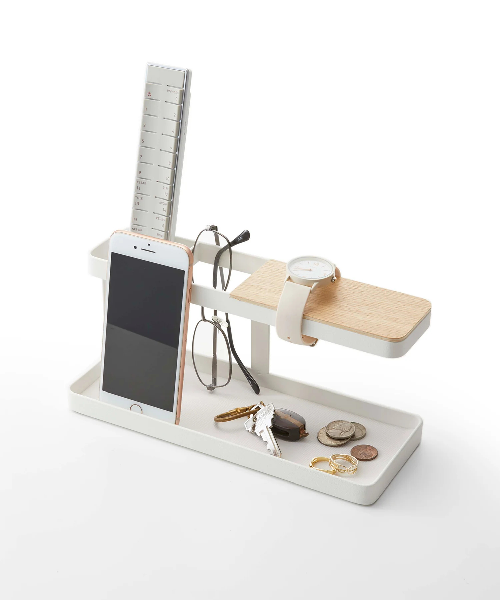
Yamazaki’s minimalist desk organization applies their steel-and-wood aesthetic to the specific objects that accumulate on most home office desks — cables, stationery, devices, notebooks, and the miscellaneous items that make a desk surface gradually unworkable. The Tower desk organizer series includes monitor risers with storage underneath, cable management boxes that hide the tangle of chargers and cables that most home office desks develop, and individual organizers for specific desk items. The consistent aesthetic across the range means everything coordinates without requiring matching.
- Available at: Yamazaki Home (yamazakihome.com), Target, Amazon
- Best for: Desk organization in a consistent, minimalist aesthetic that reduces visual noise and creates clear working surfaces — the desk environment that allows focus rather than distraction
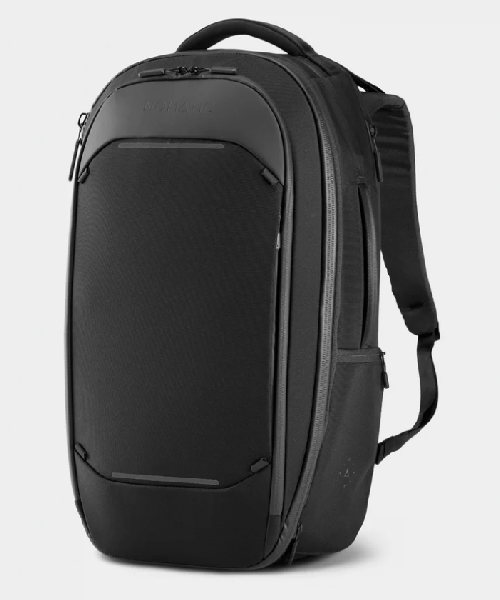
Nomatic’s Navigator is the laptop bag that addresses the specific requirements of the home-office worker who also works from coffee shops, coworking spaces, and client locations — organized, durable, with specific compartments for laptop, accessories, and daily carry items, in a format compact enough to use daily without feeling like luggage. The material is weatherproof, the organization is genuinely functional rather than a collection of undivided pockets, and the design is clean enough to read as professional rather than as specifically a tech bag.
- Available at: Nomatic (nomatic.com)
- Best for: The home office worker who also works in other locations and needs a bag that organizes everything needed for a productive remote workday
The Ergonomic Foundation
The most important home office investment, before any desk organization or lighting purchase, is the chair. Eight hours per day in a chair that doesn’t provide adequate lumbar support, armrest adjustment, or seat height adjustment for your specific body produces the back pain, neck tension, and wrist problems that make remote work a physically costly experience over time.
An ergonomic desk chair from a brand that has invested in genuine ergonomic research — Herman Miller, Steelcase, or similar quality tier — is expensive and worth it for the same reason that a good mattress is worth it for sleep: you spend a third of your life in it and the quality of that investment determines your physical experience throughout the rest of your day. The difference between a proper ergonomic chair and a standard desk chair is not subtle after a full workday.
The desk height matters in relation to the chair — ideally an adjustable height desk that allows switching between sitting and standing reduces the specific physical costs of sustained sitting. Standing desks have become significantly more accessible in price over the past few years, and the documented benefits of alternating between sitting and standing through a workday are sufficient to make this the second most important home office setup investment after the chair.
The Lighting Environment
Cognitive performance is affected by light quality in well-documented ways. Natural daylight-spectrum light supports alertness, focus, and mood in a way that warm incandescent light doesn’t — which is why office buildings have historically used cool fluorescent lighting and why home office spaces without adequate natural light can feel cognitively draining by afternoon in a way that adequately lit workspaces don’t.
The Nanoleaf Skylight addresses this specifically by simulating daylight in a ceiling panel format. The blue-light-rich, higher intensity light of the morning setting is the specific light environment that supports the alertness and focus that morning productive work requires. The gradual shift to warmer, lower intensity light in the afternoon and evening supports the natural cortisol reduction that the body needs to begin the transition out of work mode. This automatic behavior — the light changing with the time of day without any input — is what makes smart lighting genuinely useful in a home office rather than just a novelty.
The CO2 Question in Home Offices
CO2’s effect on cognitive performance is one of the cleaner findings in indoor air quality research. Studies have shown measurable declines in specific cognitive tasks at CO2 levels of 1000 ppm (a level easily reached in an occupied, closed-door room after two to three hours of occupancy) and more significant declines at 2500 ppm (reachable in poorly ventilated spaces). The intervention — opening a window or door when CO2 rises — is simple, free, and immediately effective. The challenge is knowing when CO2 has risen to a level worth addressing, which requires a monitor rather than guessing.
The Oxiline monitor in the home office is the specific purchase that makes this information actionable. The data from a week of monitoring reveals whether CO2 is a consistent issue in the space, how quickly it rises with the door closed, and what the normal ventilation pattern does to the CO2 level. This allows making the opening-the-window response deliberate and well-timed rather than reactive to already-experienced cognitive fatigue.
Conclusion
The home office worth working in is one where the environment has been set up for the actual requirements of sustained productive work — ergonomic seating, appropriate desk height, quality lighting, organized surfaces, and adequate air quality. Nanoleaf’s Skylight provides the daylight simulation that home offices without adequate natural light need for both productivity and circadian rhythm. Oxiline’s CO2 monitor makes CO2 accumulation visible and actionable rather than a background cause of afternoon cognitive fatigue. Yamazaki’s desk organization brings a clear, minimal working surface within reach rather than requiring a major desk overhaul. And Nomatic’s Navigator handles the mobile working reality for those whose home office is one of multiple working locations. The investment in the home office environment is the investment that pays back in every workday it makes better — which is as high a return on investment as any home purchase offers.

