

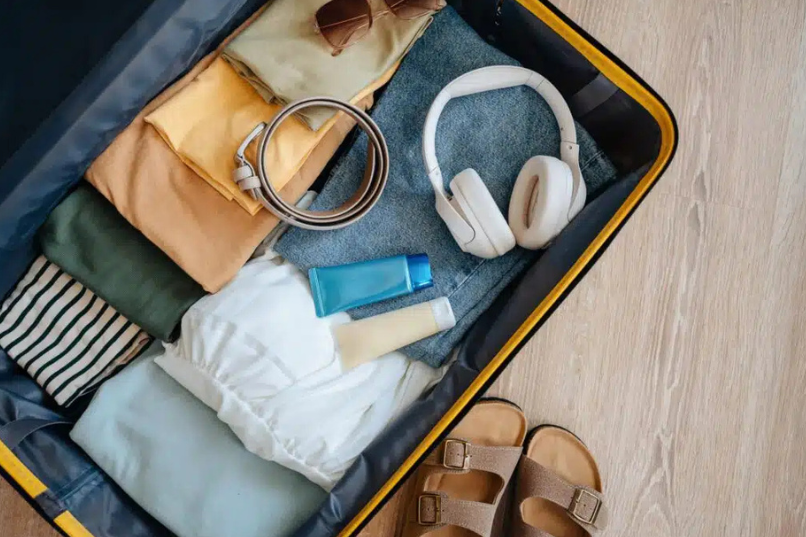
Packing is the part of travel that most people find either genuinely stressful or genuinely enjoyable, with very little middle ground. The stress comes from the combination of uncertainty about what will be needed, the awareness that getting it wrong will be felt every day of the trip, and the specific anxiety of the hour before departure when everything that seemed adequate now seems insufficient.
The enjoyment — for those who find it enjoyable — comes from the puzzle of fitting everything needed into the least space, making decisions that are genuinely constrained in a way that everyday decisions aren’t, and the specific satisfaction of arriving at a destination with exactly what’s needed and nothing more.
What follows is what I’ve learned from enough trips to have made most of the packing mistakes once and learned from them.
Products
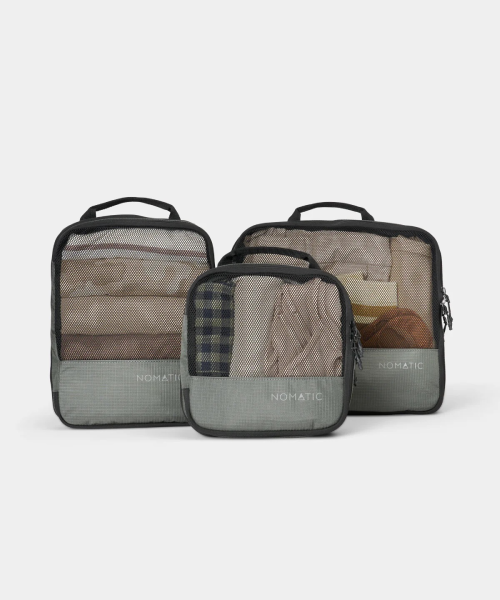
Nomatic’s packing cubes are compression-style cubes with a dual-zipper system that compresses clothing into a standardized form factor that stacks in suitcases and bags without the loose shifting that uncontained packing produces. The cubes are organized by clothing category (top, bottom, underwear/socks, delicate) and compress to uniform dimensions that fit consistently regardless of what’s in them. For those who’ve tried generic packing cubes and found them inadequate, the compression element is the specific functional improvement.
- Price: $79.99 for a set of 4
- Available at: Nomatic (nomatic.com)
- Best for: Those who want packing cubes that genuinely compress clothing and create consistent organization rather than just containing clothing in fabric squares
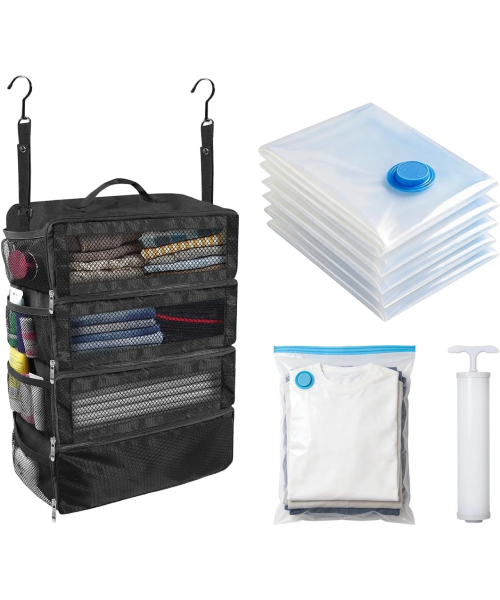
ThighSociety’s packable clothing range — designed specifically around travel’s requirements of wrinkle-resistance, versatility, and packability — addresses the specific clothing decision problem of travel packing. Each piece is designed to work with multiple others, to resist the wrinkles that packing and transit creates, and to pack in less volume than comparable clothing that wasn’t designed for travel.
- Price: $28–$75 per piece
- Available at: ThighSociety (thighsociety.com)
- Best for: Building a travel wardrobe from pieces specifically designed for packability and versatility — the clothing that eliminates the wrinkle and volume problems of packing regular clothes
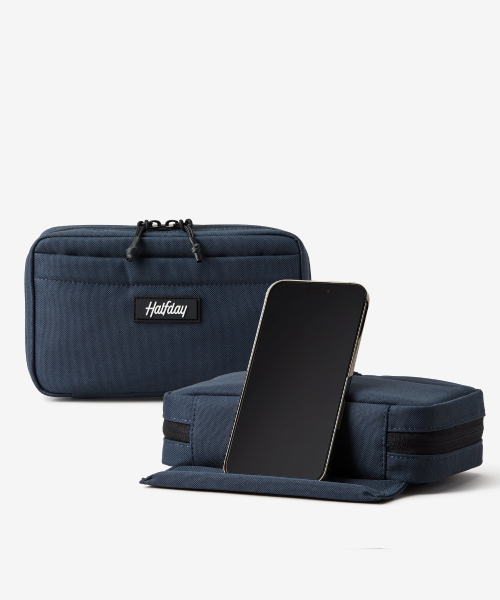
Halfdays produces packable versions of the accessories most needed for outdoor and active travel — the puffer jacket in a stuff sack, the hat that packs flat, the scarf that compresses small. The specific travel value is the packability: accessories that provide the function when needed but take minimal space when not needed.
- Price: $35–$198 depending on the item
- Available at: Halfdays (halfdaytravel.com)
- Best for: The warm-layer and weather-protection accessories that provide genuine function in variable travel conditions without consuming significant packing volume
The Core Packing Principles
The principles that have the most consistent impact on the quality of travel packing:
Pack for the specific trip, not for every possibility. The most common overpacking comes from preparing for contingencies that don’t materialize. Pack for the activities specifically planned and accept that genuinely unexpected needs can almost always be addressed at the destination.
Lay out everything you plan to pack, then remove a third of it. This exercise produces a consistent result: the third removed is almost never missed at the destination and would have been carried for the whole trip without being used. The items that most reliably survive the edit are the ones with multiple uses across the trip.
Choose a color palette rather than choosing outfits. Outfits require packing specific combinations that only work together. A palette — a consistent color range that everything works within — allows mixing and matching in ways that produce more outfit variety from fewer pieces.
Test the bag before the trip. Pack it the night before, carry it to the end of the block and back. The weight is immediately felt in the test that it was abstract on the bedroom floor. What seems fine in planning often feels excessive in practice.
The Liquids and Skincare Packing Challenge
Liquids are the most commonly mishandled packing category for two reasons: the carry-on limit (100ml containers in a 1-litre bag) and the weight and volume that full-size skincare products add to checked luggage.
The solutions that work: decanting regular products into reusable 30ml or 50ml containers rather than buying dedicated travel sizes that may be the wrong product. Concentrating the skincare routine for travel — one cleanser, one moisturizer, one SPF — rather than traveling with the full home routine. And identifying which products are available for purchase at the destination so that only products genuinely unavailable locally need to be carried.
The Luhxe travel kit addresses this by providing the organization structure for whatever the skincare selection is, in containers already sized for the carry-on limit, rather than requiring each individual product to be in a regulation-size container that gets refilled.
Packing for Different Trip Types
The packing list for a beach holiday is completely different from the list for a European city trip, which is different from the list for an outdoor adventure trip. The mistake is using a generic packing list — or the same list from the last trip — rather than a list built specifically for this trip’s activities.
Beach holiday packing priorities: swimwear, cover-ups, sun protection, sandals, one or two casual evening outfits. The biggest beach packing mistake: too many non-beach clothes for days that will be spent entirely in swimwear and cover-ups.
City trip packing priorities: comfortable walking shoes (this is the category worth packing best for city trips — bad shoes make city travel genuinely unpleasant), two or three versatile outfit combinations, a layer for air conditioning extremes, one dressier option if evenings require it.
Outdoor adventure packing priorities: activity-specific technical gear first (the hiking boots, the waterproofs, the base layers), then everyday wear in minimal quantities, then the non-outdoor context clothing for any non-outdoor portion of the trip.
Conclusion
Packing well is a skill that develops over trips and that produces genuinely better travel because traveling light produces fewer friction points than carrying too much. Nomatic’s compression packing cubes are the organizational structure that makes carry-on only packing consistently achievable. ThighSociety’s travel-specific clothing eliminates the wrinkle and volume problems of packing regular clothes. Halfdays’ packable accessories provide genuine weather protection in minimal pack volume. And Luhxe’s travel skincare kit organizes the liquids challenge in the carry-on limit. The packing approach that works is always the more ruthless one — less than you think you need produces the travel experience that more always promised and rarely delivered.

