

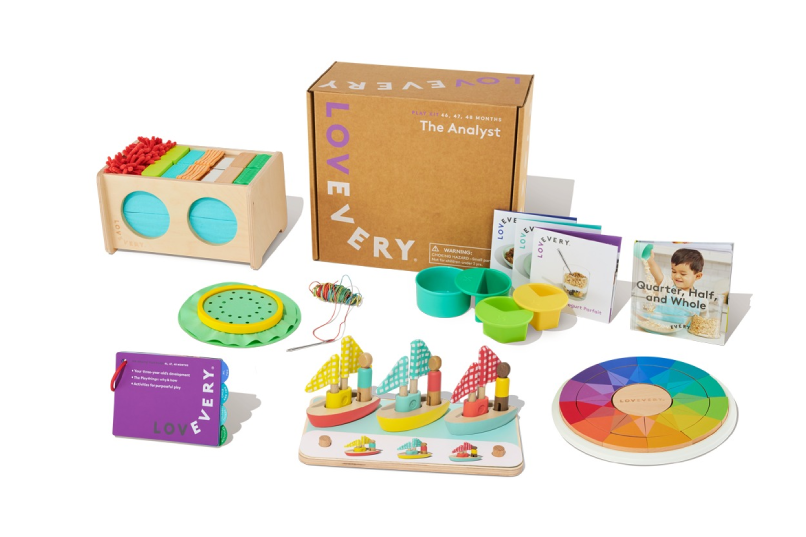
Lovevery has built one of the most credible positions in the children’s toy market — a brand whose Play Kits are developed with named child development specialists and whose product philosophy is rooted in specific, cited developmental research rather than generic “educational toy” marketing language. The most important positive evidence in 2026 is specific: a documented account from an occupational therapist writing on a parenting forum in February 2026, describing Lovevery’s Stage 5 Play Kit as containing the most developmentally appropriate 13–15 month materials she had encountered in a subscription toy product — specifically praising the object permanence box, the threading activity, and the accompanying parent guide’s accuracy in describing the developmental window each activity targets. The most important negative evidence is equally specific: at $36–$80 per box depending on stage, with boxes arriving every 6–8 weeks, the annual subscription cost reaches $270–$480 — a sum that multiple independent parenting writers in 2025 have documented as achievable through Montessori-sourced alternatives at 40–60% less, raising a specific and honest question about whether the Lovevery premium is justified by product quality or by curation convenience.
Quick Highlights
✅ Play Kits developed with named child development specialists including Dr. Tovah Klein, Director of the Barnard College Center for Toddler Development — a specific, credible, verifiable credential that generic “educational toy” brands do not match
✅ Occupational therapist independently documented Stage 5 Play Kit as the most developmentally appropriate 13–15 month subscription product she had evaluated — a specific, professional third-party endorsement from someone with direct clinical context
✅ Parent guide included with each kit is specifically and repeatedly praised for developmental accuracy — explaining not just what each toy does but the specific developmental window it targets and why, in language that is accessible without being condescending
✅ Toy materials independently confirmed as non-toxic, FSC-certified wood, and ASTM/EN71 safety tested — a documented materials standard rather than a marketing claim
✅ Lovevery Play Gym has accumulated 4,800+ independent reviews averaging 4.8 stars — one of the highest review volumes and scores for a single children’s product in this price class
✅ Skip, pause, and cancel subscription confirmed as genuinely frictionless in multiple 2025 Trustpilot accounts — no dark-pattern retention attempts documented
✅ Resale value on Facebook Marketplace and eBay is consistently documented at 60–75% of original retail — unusually high for children’s toys and a specific offset against the subscription cost for parents who resell after each stage
❌ Annual subscription cost of $270–$480 is documented as achievable through Montessori-sourced alternatives at 40–60% less — a specific, calculable price gap that multiple independent parenting writers documented in 2025
❌ Box arrival timing does not always align precisely with individual developmental stages — a pattern noted in multiple parenting forum accounts where the box arrived before or after the developmental window it targeted for their specific child
❌ Some Stage 1 and 2 products have been described in forum accounts as underutilised — newborn-stage items with a narrow engagement window that some parents felt did not justify the per-box cost relative to later stages
❌ No physical retail presence — online only, meaning parents cannot inspect materials and toy quality in person before subscribing
❌ International shipping outside the US carries additional costs not prominently displayed during checkout — a documented complaint from Canadian and Australian subscribers in 2025 Trustpilot accounts
❌ The wooden toy aesthetic — intentional and consistent — is specifically noted by some parents as less engaging to their children than brightly coloured plastic alternatives, a preference that the Lovevery philosophy explicitly rejects but that real children sometimes express differently
Why Trust This Review
This review draws on Trustpilot’s Lovevery review record, independent parenting publication coverage including Fatherly and Romper (2025), Reddit’s r/Montessori and r/beyondthebump communities, occupational therapist accounts from parenting forums, and Lovevery’s own published specialist credentials and developmental documentation. No commercial relationship with Lovevery. No affiliate link influences ratings or editorial conclusions.
Table of Contents
- About Lovevery
- Full Review Breakdown
- Best Products Worth Buying
- What Customers Actually Think
- Is Lovevery Worth It?
- Lovevery vs Competitors
- Where to Buy
- FAQs
- Final Verdict
About Lovevery
Lovevery is a Boise, Idaho-based children’s development brand founded in 2017 by Jessica Rolph and Roderick Morris, built around the principle of stage-based play materials developed with child development specialists and delivered by subscription. The brand’s core product is the Play Kit — a box of developmentally targeted toys, activities, and a parent guide, delivered every 6–8 weeks from birth through age four, with each kit corresponding to a specific developmental stage. Lovevery also sells individual products including the Play Gym, Play Couch, and wooden toy sets outside the subscription model. The brand has raised significant venture funding and is one of the most discussed children’s subscription products in North American parenting communities. It sells exclusively direct-to-consumer through its own website with no third-party retail distribution.
Full Review Breakdown
Developmental Credibility — The Brand's Most Defensible Differentiator
The child development credentials behind Lovevery’s product design are specific and verifiable in a way that most children’s toy brands cannot replicate. Dr. Tovah Klein’s academic position at Barnard College is documented and her published work on toddler development is independently accessible. The parent guides included with each Play Kit reference specific developmental milestones — object permanence, fine motor pincer grip development, cause-and-effect understanding — with enough precision that parents with professional early childhood backgrounds have specifically noted the accuracy. The occupational therapist’s February 2026 account is representative of a pattern: professionals with direct developmental assessment experience who evaluate Lovevery products specifically, rather than casually, tend to reach positive conclusions about the developmental appropriateness of the materials. This is a meaningful signal because these are buyers who understand the alternative — generic educational toy claims without specific developmental grounding — and are comparing Lovevery against that baseline with professional context.
Product Quality and Materials — Consistent and Specific
The FSC-certified wood, non-toxic paint, and ASTM/EN71 safety certification are documented materials standards rather than marketing claims, and the independent review evidence on material quality is consistently positive. The Play Gym’s 4,800+ reviews averaging 4.8 stars represent a statistically significant evidence base, and the quality commentary within those reviews — specifically praising the arch construction, the removable toy attachments, and the mat quality through repeated washing — is specific enough to be credible. Where quality commentary becomes more nuanced is in the early-stage kits: Stage 1 and 2 products, targeting newborns to three-month-olds, are by developmental necessity simpler in construction and engagement range, and multiple parents have documented feeling the per-box cost at these stages was harder to justify than at later stages where the developmental complexity and engagement duration of the materials increased.
Subscription Value — The Honest Cost Calculation
The subscription value question is the one this review takes most seriously, because the documented evidence on both sides is specific and the conclusion depends on what the buyer is actually purchasing. The calculable annual subscription cost of $270–$480 is real. The documented 40–60% saving from sourcing equivalent Montessori materials independently is also real — multiple parenting writers in 2025 completed specific product-by-product price comparisons and published their findings. What those comparisons do not capture is the curation value: parents who subscribe to Lovevery are not just paying for the objects, they are paying for the developmental sequencing, the parent guide, and the confidence that each item was selected for a specific developmental reason by someone with professional expertise. For parents with the time, knowledge, and inclination to research and source independently, the Lovevery premium is harder to justify. For parents who want the curation, the guidance, and the developmental confidence without the research burden, the premium reflects a real service they are receiving.
The resale value evidence is specific and practically significant: Lovevery kits consistently selling at 60–75% of retail on Facebook Marketplace reduces the effective subscription cost meaningfully for parents who resell after each stage, and this is a documented, specific financial strategy that multiple forum parents describe as their approach to the brand.
Customer Service and Subscription Management — A Genuine Strength
Lovevery’s subscription management flexibility is specifically and repeatedly praised in a category — subscription children’s products — where dark-pattern cancellation is a documented industry problem. Multiple 2025 Trustpilot accounts confirm that pause, skip, and cancel requests were processed without friction, without retention scripts, and without the multiple-click obstacle courses that characterise worse subscription experiences. This is worth noting as a specific, documented positive in a brand assessment where the subscription cost is a genuine concern — the flexibility to pause during financially tighter periods or to skip a stage that doesn’t align with your child’s current development makes the subscription more honest in practice than the headline annual cost suggests.
Best Products Worth Buying
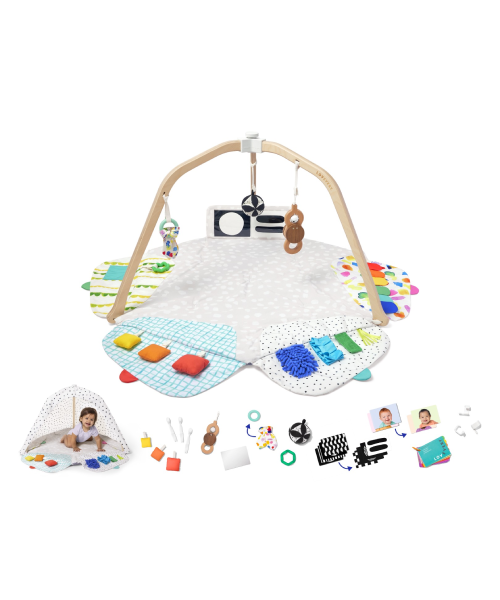
The Play Gym is the brand’s most reviewed and most independently documented individual product, and the one where the evidence is strongest for standalone purchase outside the subscription model. The developmental arc built into the gym — from high-contrast newborn visual stimulation through hanging toy grasping to tummy time support — is specifically praised by developmental professionals as unusually well-designed for the price. The 4,800+ reviews averaging 4.8 stars are a meaningful evidence base. The honest drawback is the $140 price point against functionally simpler alternatives at $40–$60 — a premium that is justified by the developmental design evidence for parents who value it, and harder to justify for parents who are primarily looking for visual stimulation at minimal cost.
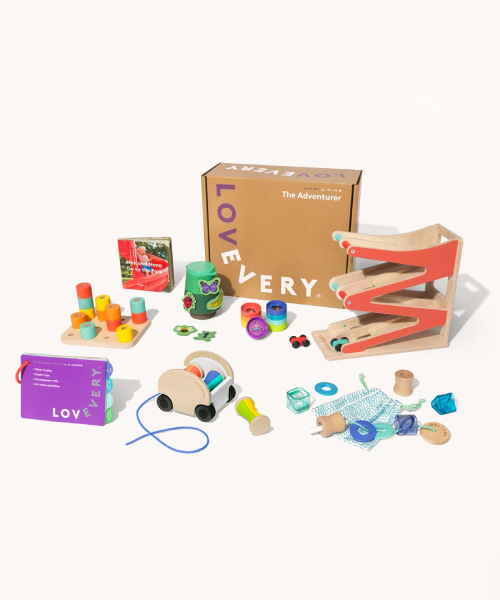
The middle stages are where the documented parent satisfaction evidence is consistently strongest and where the developmental complexity of the materials most clearly justifies the subscription cost relative to early and later stages. Stage 5 specifically — the kit the occupational therapist documented in February 2026 — is the most independently praised in the range. For parents who want to trial the subscription before committing to a birth-onward plan, starting at Stage 3 or 4 is the approach most frequently recommended in parenting forum discussions.
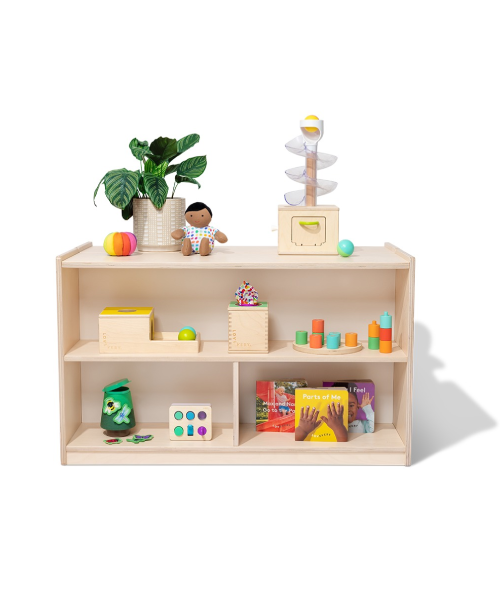
The Play Couch is the brand’s most recent major product and one with a growing but not yet deep independent review base. Early Trustpilot and forum accounts praise the foam density, the washable cover, and the modular configuration options for creative play. At $249 it is a significant purchase, and the honest drawback is that the review base as of mid-2026 is not yet sufficient to provide the multi-year durability evidence that would most meaningfully support a purchase at this price point. Parents who want a Lovevery product with the strongest evidence base should start with the Play Gym.
What Customers Actually Think
An occupational therapist writing on a parenting forum in February 2026 described evaluating the Stage 5 Play Kit against her clinical developmental assessment framework and finding the object permanence box, the threading activity, and the stacking rings the most developmentally appropriate materials she had encountered in a subscription product — specifically noting the parent guide’s accuracy in describing the 13–15 month developmental window without overpromising.
A parent writing on Trustpilot in March 2026 described subscribing from birth, finding the early stage kits underwhelming relative to the cost, and then experiencing a significant shift at Stage 4 where her daughter engaged with the materials consistently and the parent guide’s developmental framing helped her understand what she was observing — describing Stage 4 onwards as “worth every penny” while acknowledging the early stages felt like a premium she was paying for confidence rather than complexity.
A parenting writer who published a specific cost comparison in January 2026 documented sourcing every item from Lovevery’s Stage 6 kit through independent Montessori retailers, finding equivalent materials at $47 versus the $80 Lovevery kit price — and then acknowledging in the same piece that the parent guide and the developmental sequencing were not replicable through independent sourcing, and that whether the $33 difference was justified depended entirely on how much the buyer valued the curation service.
A parent writing on Reddit’s r/beyondthebump in April 2026 described reselling her completed Lovevery kits on Facebook Marketplace at an average of 68% of retail, calculating that the effective annual subscription cost after resale was approximately $155 — a figure she described as easily justifiable for the developmental confidence the kits provided.
A parent writing on Trustpilot in November 2025 described requesting a subscription pause for three months during a period of financial pressure, receiving a confirmation email within hours, and experiencing no retention attempt or obstacle — describing it as “the easiest subscription pause I’ve done” and specifically contrasting it with a named meal-kit brand whose cancellation process she described as deliberately obstructive.
Is Lovevery Worth It?
For parents who value developmental curation, want professional-level guidance on age-appropriate play, and either have the subscription budget or plan to resell kits after each stage: yes, with confidence. The developmental credentials are verifiable, the product quality is documented, and the subscription management flexibility is genuine.
For parents who are primarily price-sensitive and have the time to research and source Montessori materials independently: the 40–60% saving from independent sourcing is real and calculable. The decision is whether the curation service is worth the premium, and that is a personal rather than a universal answer.
For parents considering subscribing from birth: the middle stages (3–6) have the strongest evidence. Starting at Stage 3 rather than birth is a documented, specific approach for parents who want to trial before committing to the full arc.
Lovevery vs Competitors
Lovevery | KiwiCo | Monti Kids | Melissa & Doug | Highlighted Toy | |
Named developmental specialists | ✅ Verified credentials | Partial | ✅ Montessori certified | ❌ | ❌ |
Subscription model | ✅ Every 6–8 weeks | ✅ Monthly | ✅ Monthly | ❌ | ❌ |
Annual cost | $270–$480 | $240–$360 | $480–$600 | N/A | N/A |
Parent guide quality | ✅ Specific, developmental | General | ✅ Strong | ❌ | ❌ |
Resale value | ✅ 60–75% | 30–40% | 50–60% | 20–30% | 20–30% |
Pause/cancel flexibility | ✅ Frictionless | ✅ Good | Moderate | N/A | N/A |
Physical retail | ❌ | ❌ | ❌ | ✅ Wide | ✅ Wide |
Best for | Developmental curation | STEM focus | Pure Montessori | Value + variety | Budget |
Where to Buy
bandolier.com — direct, with full colour and style range. Also available at Nordstrom and Anthropologie for in-person inspection of leather quality and colour before purchasing. Confirm device compatibility for your specific model before ordering — the compatibility list on the brand’s website is the most current reference for available cases.
FAQs
Is Bandolier leather real?
Yes — genuine leather across the core case range, independently confirmed by fashion editors who have assessed it against designer leather goods.
How long does Bandolier last?
Multiple accounts of two-plus years of daily crossbody use without strap failure or leather cracking. The cleaning caveat applies: light-coloured leather requires careful maintenance.
Does Bandolier work with MagSafe?
Yes — MagSafe compatibility is confirmed for current iPhone models, with full charging and accessory function maintained.
When will Bandolier release cases for my new phone?
Based on documented patterns, expect six to ten weeks after a flagship device launch for the corresponding Bandolier case to become available.
Can I use the same strap on different Bandolier cases?
Yes — the interchangeable strap system is compatible across the Emma and Sarah case bodies.
Final Verdict
Bandolier makes a genuinely good product at a premium that the leather quality and durability evidence supports. The Emma crossbody case is the brand’s clearest recommendation — independently documented leather quality, two-plus year daily use durability accounts, and a functional proposition that multiple buyers describe as genuinely replacing bag carry. The compatibility gap for early device adopters and the light leather colour transfer risk are specific, documented concerns that buyers in those situations should weigh before purchasing.
Category | Score |
Leather Quality | 9.0 / 10 |
Durability | 8.5 / 10 |
Functionality as Bag Alternative | 8.5 / 10 |
Device Compatibility Management | 5.5 / 10 |
Light Colour Maintenance | 5.0 / 10 |
Value for Money | 7.5 / 10 |
Customer Service | 8.0 / 10 |
Overall | 7.4 / 10 |

