
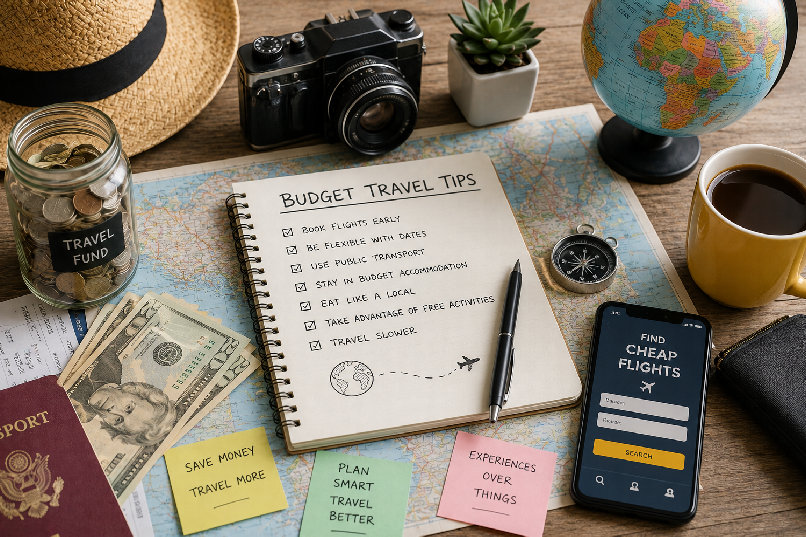
Budget travel is not the same as cheap travel, and the distinction matters. Cheap travel is travel optimized for minimum spending, which produces specific sacrifices — the accommodation too far from where you want to be, the overnight bus that saves hotel costs and costs a day of functioning, the meals that are inexpensive because they’re not good. Budget travel is travel that spends money where it matters and doesn’t spend it where it doesn’t — which requires knowing which is which.
The most consistent observation about travel spending is that people overspend in the categories that don’t matter (the souvenir that seemed important and isn’t, the expensive airport meal, the package deal with components that weren’t needed) and underspend in the categories that matter (the accommodation that’s slightly more expensive but better located, the one meal at the genuinely good restaurant instead of everywhere being a compromise).
Products
Nomatic Budget Travel Organizer
Nomatic’s organizational approach applied to budget travel is the system that makes financial management during travel practical rather than anxiety-inducing. The specific travel pouch for cash in different currencies, the organization for receipts and budget tracking, and the overall system that makes knowing where you are financially during a trip immediate rather than a calculation at the end.
- Available at: Nomatic (nomatic.com)
- Best for: Budget-conscious travelers who want practical financial organization during trips rather than end-of-trip calculation of what was spent
Halfdays Versatile Travel Clothing
Halfdays’ travel clothing is specifically worth mentioning in the budget travel context because versatile clothing that works across multiple trip contexts reduces the need to buy additional clothing at the destination — the specific travel spend that budget trips most commonly incur when the packed clothing turns out to be inadequate for the actual conditions encountered. Well-chosen, versatile clothing packed correctly eliminates this.

- Available at: Halfdays (halfdays.com)
- Best for: Budget travelers who want clothing versatile enough to handle the full range of conditions encountered during travel without requiring destination purchases
KastKing Portable Cooler for Budget Food
Already mentioned in the road trip section, the portable cooler in the budget travel context is the specific product that changes the economics of food during travel. The ability to carry food from supermarkets — which are typically five to ten times cheaper than restaurants for the same nutritional value — rather than eating every meal from the dining options at the destination changes the daily food budget significantly.
- Available at: KastKing (kastking.com), Amazon
- Best for: Budget travelers for whom food spending is a significant proportion of the travel budget — the cooler that allows supermarket-sourced food to replace restaurant meals for some trips
Balance of Nature Travel Supplements for Budget Health
Maintaining health during budget travel is the specific budget consideration that most people don’t account for — the cost of getting sick during or after a trip, in terms of missed days and medical costs, significantly exceeds the cost of the preventive health measures that travel disrupts (sleep, nutrition, exercise). Balance of Nature’s supplements are the specific preventive measure for the nutritional gap that budget travel’s reduced dietary quality creates.
- Available at: Balance of Nature (balanceofnature.com)
- Best for: Budget travelers who want to maintain their health during the nutritional disruption of budget travel — the specific investment that prevents the expensive outcome of getting ill
Where Budget Travel Actually Saves
The categories where reducing spending on travel produces little cost in experience:
Accommodation location over accommodation quality. The hotel that’s fifteen minutes from the center at half the price of the hotel at the center produces more budget travel value than the very cheap hotel near the center whose quality undermines the rest of the trip. Location and cleanliness are the two variables worth not compromising on; the specific amenities and finish quality of budget accommodation can be considerably below average without affecting the trip experience.
Transport within destinations. Cities with good public transport systems are significantly cheaper to navigate by public transport than by taxi or ride-share, and the experience of navigating local transit is itself part of the destination experience. The tourist-route hop-on hop-off bus is significantly more expensive per trip than the same city’s public bus serving the same sites.
Attractions. Most cities have a combination of paid attractions and free attractions, and the free attractions — the neighborhoods, the markets, the parks, the architecture, the specific public life of the place — are often more genuinely interesting than the paid equivalents. Research the free things before the paid things and you may discover that the paid list shortens significantly.
Where Budget Travel Doesn't Save
The categories where reducing spending on travel produces disproportionate cost in experience:

Accommodation safety and cleanliness. The accommodation that’s cheap because it’s unsafe or unclean costs more in energy spent managing the situation than the price difference saves. This is the specific budget travel error — the accommodation so cheap that the quality undermines the whole trip.
Sleep quality. The overnight bus that saves hotel costs sounds economically rational and produces a day of functioning significantly below what a night of sleep in accommodation would have produced. The budget calculation that excludes the day-quality cost of insufficient sleep is missing the most significant variable.
Food at genuinely good restaurants once per destination. The specific restaurant that’s the reason this place is worth eating at is worth the price for the one meal it represents. Budget travel that never eats anywhere that costs what food worth eating costs is travel that misses the specific food experience that’s part of the destination.
Conclusion
Budget travel worth doing is travel that spends money where it enhances the experience and declines to spend where it doesn’t. Nomatic’s financial organization keeps travel spending visible and manageable. Halfdays’ versatile clothing eliminates the destination clothing purchase that budget trips often incur. KastKing’s cooler changes the food economics of travel by enabling supermarket sourcing for some meals. And Balance of Nature’s supplements maintain the health that makes everything else during travel possible. The most consistent budget travel advice: spend on accommodation location and cleanliness, on the one genuinely good meal per destination, and on the sleep quality that makes every day of the trip functional. Save on the categories that don’t affect the experience — the unnecessary transport upgrades, the souvenirs that will be forgotten, and the attractions that a free alternative serves as well.

