

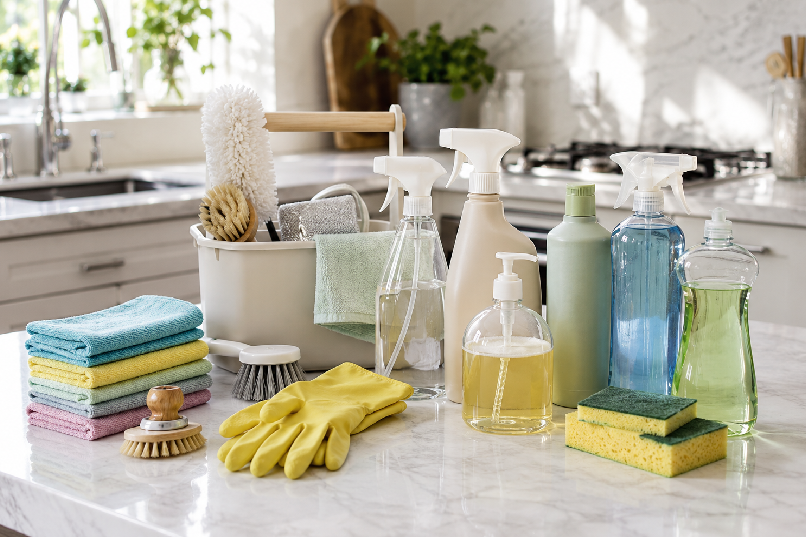
Home cleaning is the category most cluttered with products that address the same problem in slightly different ways and at slightly different price points — and where the simpler, more direct approach almost always outperforms the elaborate product range it’s competing with. A genuinely good multi-surface cleaner, a quality microfibre cloth, and a few targeted products for specific problems (limescale, grease, mould) covers 90% of domestic cleaning needs.
The products below are those that either perform significantly above alternatives in their specific category or simplify the cleaning routine in ways that make consistent cleaning more likely — because the most effective cleaning product is one that gets used.
The Cleaning Products Worth Having
The multi-surface cleaner. One good multi-surface cleaner applied with a quality microfibre cloth handles most daily cleaning tasks. The specific combination of a surfactant-based cleaner with a microfibre cloth that lifts rather than moves dirt produces results that most surface-specific cleaners don’t improve on for routine cleaning.
Microfibre cloths. The cloth is as important as the cleaner — a low-quality cloth moves dirt rather than lifting it, requiring the cleaning product to do more work and requiring more passes for the same result. Quality microfibre cloths (high filament count, tight weave) lift dirt, bacteria, and grease with less product and less effort.
Targeted products for specific problems. Limescale on taps and shower heads requires an acid-based cleaner (citric acid or white vinegar) that breaks the calcium carbonate structure of limescale — general cleaners don’t touch limescale chemistry. Grease in kitchen hoods and on hob surfaces requires an alkaline or solvent-based degreaser. Mould requires a fungicide. These aren’t general cleaners and are only needed for their specific problems.
The Best Cleaning Products Worth Buying
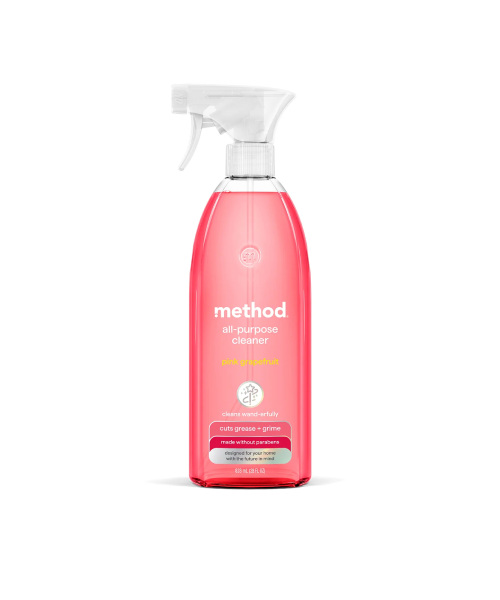
Available at: Sainsbury’s, Waitrose, Amazon, method cleaning (methodproducts.co.uk)
Best for: Daily multi-surface cleaning with a pleasant scent and a clean formulation without harsh chemicals.
Method produces plant-based multi-surface cleaners in formulations that are effective for daily cleaning tasks — kitchen counters, bathroom surfaces, dining tables — without the harsh chemical smell that conventional cleaners produce and without leaving a residue that requires rinsing. The specific Method advantage is the scent range — cleaning a kitchen with the Clementine or Pink Grapefruit variant is a significantly more pleasant experience than the clinical smell of conventional cleaners, which matters for the consistency of the cleaning habit.
The sustainable packaging — recycled plastic from ocean waste — and the biodegradable formula are additional factors for those who factor ingredient and environmental consideration into cleaning product buying.
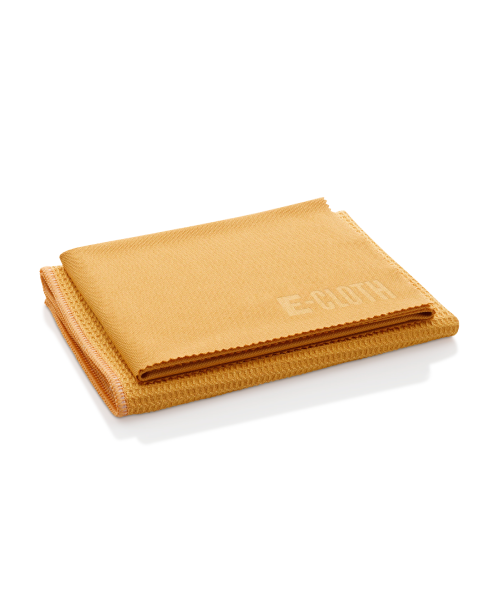
Available at: E-Cloth (ecloth.com), John Lewis, Amazon, Lakeland
Best for: Those who want reusable, high-quality microfibre cloths that reduce paper towel and chemical use while producing better cleaning results.
E-Cloth’s microfibre technology uses a fibre density and construction that physically removes bacteria, grease, and dirt with water alone — the specific microfibre quality that means many cleaning tasks require only water and the cloth rather than cleaning product. The cloths are machine washable at 60°C for sanitation and last hundreds of washes before the microfibre degrades.
The kitchen and glass cloths specifically are the starting recommendation — a damp kitchen cloth for surfaces and a dry glass cloth for windows, mirrors, and chrome produces streak-free results that conventional cloth-and-cleaner combinations don’t match.
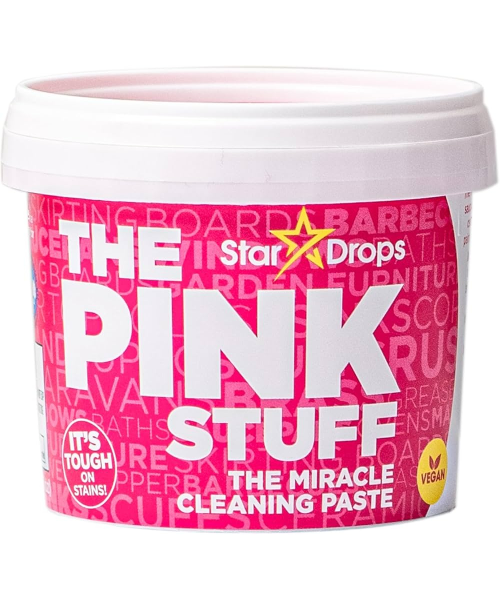
Available at: Amazon, Poundland, B&M, most supermarkets
Best for: Removing stubborn burnt-on residue from pans, limescale from taps, and general heavy-duty cleaning tasks that regular cleaners don’t address.
The Pink Stuff has become a cleaning cult product for genuinely good reasons — the abrasive paste (calcium carbonate as the abrasive element alongside a mild detergent) removes burnt-on pan residue, limescale deposits, and the specific type of surface discolouration that general surface cleaners don’t address. The specific applications where it consistently outperforms alternatives: cleaning glass hob surfaces, removing the brown residue from the inside of ovens (with effort), and cleaning white trainers.
At £2–3, the Pink Stuff is the lowest-cost high-performance cleaning product available and the one most likely to be in the cleaning routine of anyone who’s tried it.
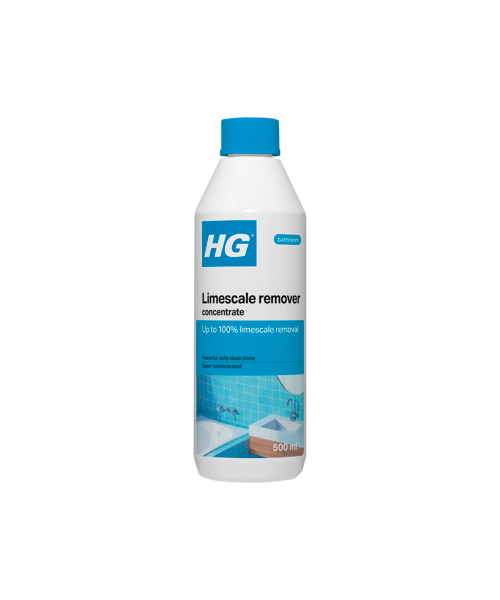
Available at: Amazon, B&Q, Lakeland, HG (hguk.com)
Best for: Those in hard water areas where limescale accumulates on taps, shower heads, and kettle elements.
HG’s Limescale Remover is the acid-based targeted cleaner for the calcium carbonate deposits that hard water produces on chrome taps and shower heads. The formulation strength is above consumer vinegar solutions and produces results in the fifteen to thirty minute application time that longer vinegar soaks don’t consistently achieve on heavy limescale buildup.
For hard water areas (London, the Southeast, the Midlands), limescale is a consistent cleaning challenge that general cleaners don’t address. HG provides the targeted chemistry that dissolves it.
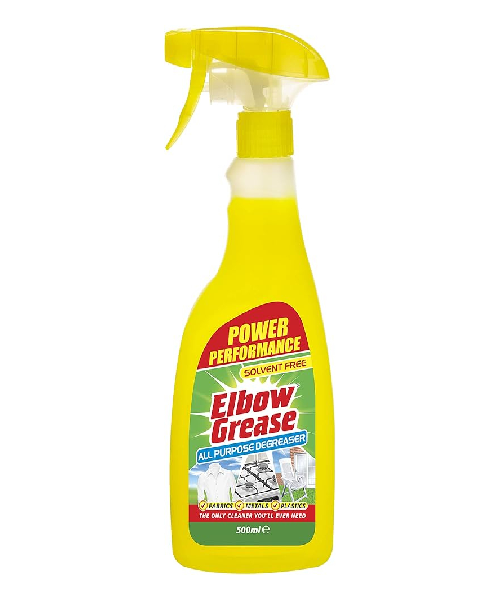
Available at: Amazon, B&M, Poundland, most supermarkets
Best for: Kitchen extractor hoods, hob grease, and any surface where cooking grease has accumulated.
Elbow Grease’s alkaline degreaser cuts cooking grease on kitchen surfaces — extractor hoods, behind the hob, oven interiors — at a price that makes the kitchen cleaning budget trivial. The specific formulation works on the molecular level of grease (alkaline cleaner breaks the fatty acid chains) rather than simply diluting or moving grease as water and general cleaner do.
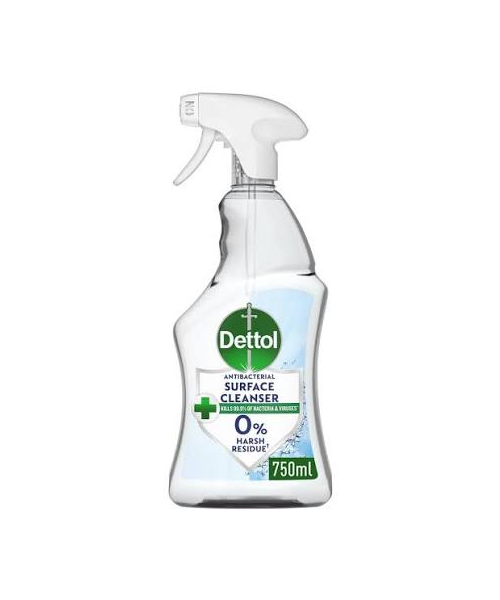
Available at: Boots, Amazon, Superdrug, most supermarkets
Best for: Specific sanitisation of high-touch surfaces — door handles, light switches, worktops after raw meat contact.
Dettol’s antibacterial spray is the targeted sanitisation product for surfaces where pathogen reduction is genuinely important — not for every surface daily, but for the specific situations where antibacterial action matters: after raw meat preparation, during illness in the household, and on high-touch surfaces during cold and flu season. Using antibacterial products consistently everywhere produces no additional sanitation benefit and contributes to the resistance concerns associated with antibiotic overuse; using them specifically where pathogen reduction matters is the appropriate approach.
Conclusion
Effective home cleaning requires fewer products used correctly rather than a full cleaning product arsenal used haphazardly. Method multi-surface cleaner for daily routine cleaning with a pleasant scent. E-Cloth microfibre for the reusable, high-quality cleaning surface that reduces product requirements. Stardrops Pink Stuff for the abrasive paste tasks that general cleaners don’t address. HG Limescale Remover for hard water areas specifically. Elbow Grease for kitchen grease. And Dettol antibacterial for targeted sanitation where it actually matters. Reduce the product range, invest in quality cloths, and use targeted products for the specific problems they’re designed for — this approach produces better results and a significantly simpler cleaning routine than the full cupboard of partially-used cleaners.

