

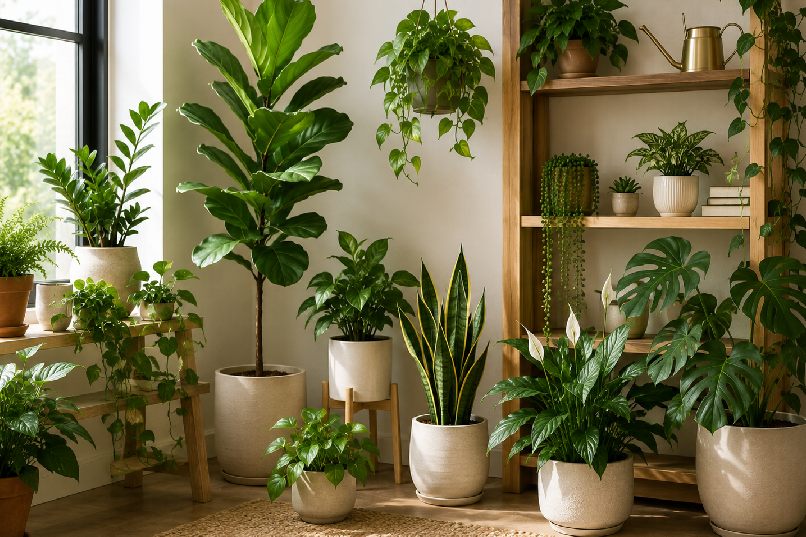
Indoor plants are the home addition that most people want, most people buy with good intentions, and a significant proportion of people kill within the first three months. The graveyard of plants that didn’t thrive is a familiar feature of most homes, and the reason is almost always the same: the plant was chosen for how it looked rather than for whether its light and watering requirements matched the specific conditions of the space it was going into.
Buying indoor plants that actually thrive requires matching plant requirements to actual conditions before the aesthetic choice is made. Here is how to do that — and which plants are worth buying specifically.
The Three Variables That Determine Whether A Plant Survives
Light. Most indoor plant failure is light failure. The plant that needs bright indirect light in a north-facing room with one small window. The cactus on an interior shelf. The fern in the south-facing window where the afternoon sun burns the fronds. Assess the light in the specific location before choosing a plant, not after. North-facing rooms suit shade-tolerant plants. South and west-facing rooms suit most plants including those needing bright indirect light. East-facing rooms suit plants that prefer morning light and afternoon shade.
Watering frequency. Overwatering is the most common plant killer — more plants die from overwatering than underwatering. The specific rule that prevents this: water when the top inch of soil is dry for most tropical houseplants, water when the soil is completely dry for succulents and cacti. The finger-test (insert a finger one inch into the soil — if it’s dry, water; if it’s moist, wait) is more reliable than any watering schedule.
Watering frequency. Overwatering is the most common plant killer — more plants die from overwatering than underwatering. The specific rule that prevents this: water when the top inch of soil is dry for most tropical houseplants, water when the soil is completely dry for succulents and cacti. The finger-test (insert a finger one inch into the soil — if it’s dry, water; if it’s moist, wait) is more reliable than any watering schedule.
The Best Indoor Plants Worth Buying
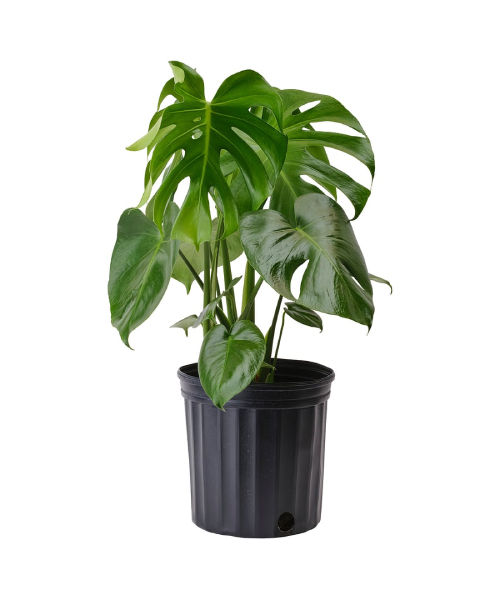
Available at: Nurseries, garden centres, IKEA, most supermarkets with plant sections
Best for: Those who want a large, architectural statement plant that’s genuinely easy to care for in a bright or medium-light room.
The specific care requirement worth knowing: wipe the large leaves with a damp cloth every few weeks to remove dust that accumulates on the leaf surface and reduces their ability to photosynthesize. This is the maintenance step that most Monstera care guides include and most Monstera owners skip, and the effect on leaf appearance is significant.
A large Monstera (60–80cm) fills a corner space more effectively and more expensively than any decorative alternative at the equivalent visual impact — and it’s living rather than decorative.
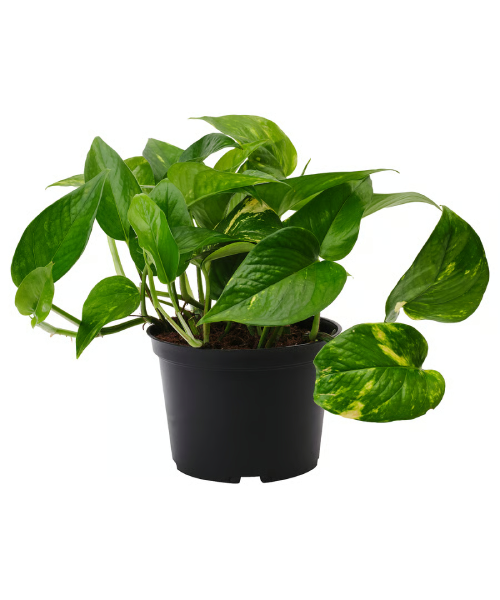
Available at: Garden centres, IKEA, Amazon, most supermarkets
Best for: Those who want a trailing plant for shelves or high surfaces with very low care requirements.
Pothos is the specific plant recommendation for those who have killed every plant they’ve previously owned — the most tolerant houseplant available to beginner plant owners. It tolerates low light (genuine low light, not the “low light” description applied to plants that actually need medium indirect light), tolerates inconsistent watering, tolerates being pot-bound, and recovers visibly from drought stress within a day of watering. It also trails beautifully from shelves and high surfaces, providing the cascading vine aesthetic that’s difficult to achieve with more demanding plants.
The golden pothos variety (variegated yellow-green leaves) is the most vigorous and the most forgiving. The marble queen pothos (white and green variegation) requires slightly more light to maintain the variegation. Both are among the most low-maintenance plants available.
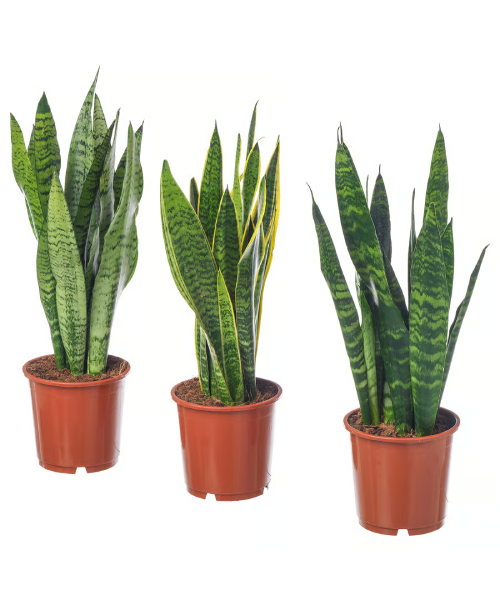
Available at: Garden centres, IKEA, Amazon, most nurseries
Best for: Those who want a genuinely architectural plant for low-light spaces with extremely low care requirements.
The Snake Plant is the specific recommendation for north-facing rooms, dark hallways, and any space where insufficient light has defeated previous plant attempts. Sansevierias genuinely tolerate low light — they grow slowly in low light conditions, which is appropriate; they don’t die. They also tolerate extreme watering neglect, preferring to dry completely between waterings and surviving without water for weeks in cool conditions.
The vertical, architectural form of the Sansevieria Laurentii or Sansevieria Trifasciata suits contemporary interiors specifically — the clean, upright leaves provide visual structure without the sprawling growth habit of trailing plants.
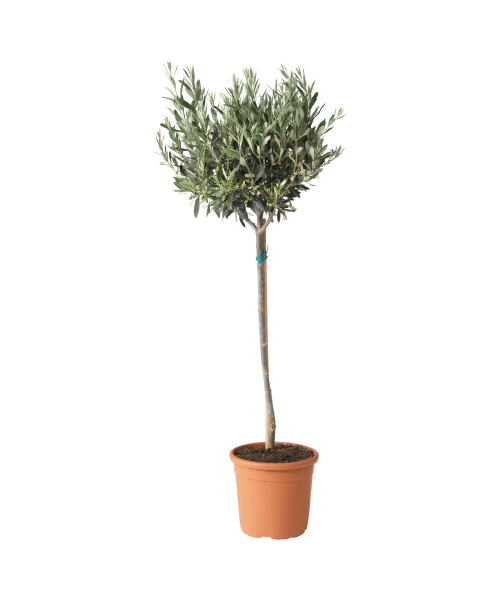
Available at: Garden centres, nurseries, specialist plant retailers
Best for: Those with south or west-facing windows who want a Mediterranean aesthetic with genuine longevity.
An indoor olive tree is the specific plant that reads as the most considered interior choice — the grey-green foliage, the gnarled trunk on mature specimens, and the Mediterranean association produce an aesthetic that works in contemporary, rustic, and minimal interiors. The olive requires the specific conditions it would receive in its natural habitat: full sun (a south or west-facing window), good drainage (never sitting in water), and significantly less water in winter than summer.
Olive trees grown indoors don’t typically produce fruit — they produce the aesthetic and the longevity (olive trees live for centuries) without the harvest. A well-maintained indoor olive tree improves year by year rather than requiring replacement.
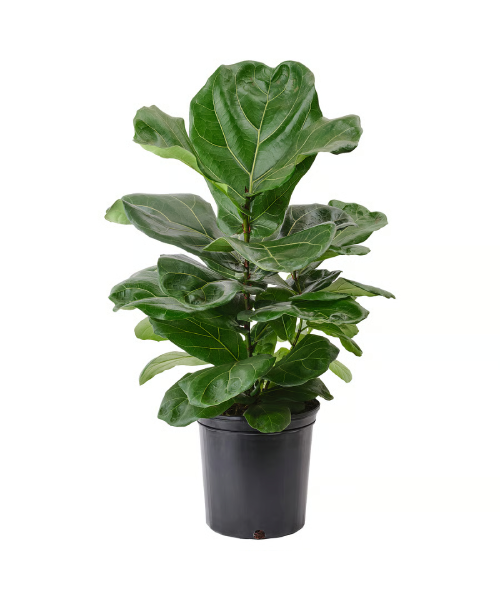
Available at: Garden centres, nurseries, specialist plant retailers
Best for: Those with bright, indirect light and the willingness to meet the specific care requirements that produce the spectacular result.
The Fiddle Leaf Fig is the indoor plant that appears in every aspirational interior — the large, glossy, fiddle-shaped leaves, the clean single trunk, the specific architectural quality that makes it instantly recognisable. It’s also the plant most often described as “difficult” — which is true compared to Monstera or Pothos, but is more accurately described as “specific.”
The Fiddle Leaf Fig needs: bright indirect light (south or east-facing window, not direct afternoon sun), consistent watering (not wet, not bone dry — the specific middle ground that requires attention), high humidity, warmth (no cold draughts or proximity to air conditioning), and the absence of being moved once it’s found a position it’s happy in. Given these specific conditions, it thrives spectacularly. Without them, it sulks visibly and dramatically.
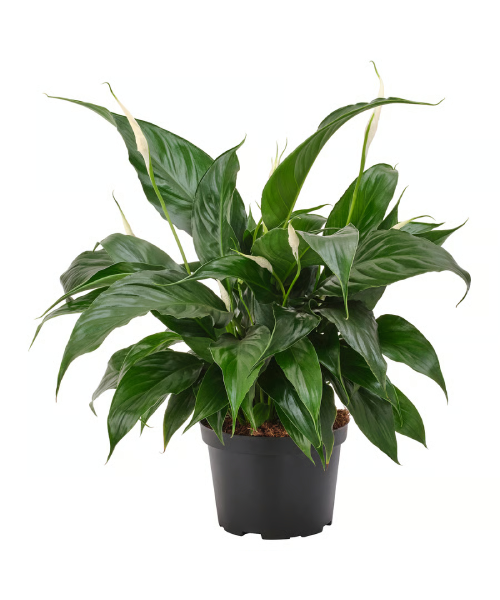
Available at: Garden centres, supermarkets, IKEA, Amazon
Best for: Those who want a shade-tolerant flowering plant with the most dramatic communication of its needs of any common houseplant.
The Peace Lily has two specific qualities that make it worth recommending. First, it tolerates genuine low light better than most flowering plants — it will grow and occasionally flower in north-facing rooms where most plants merely survive. Second, it communicates its watering needs with complete clarity: it droops dramatically when it needs water and recovers visibly within hours of being watered. For those who find plant care guesswork frustrating, the Peace Lily’s clear communication removes the guessing entirely.
How To Keep Indoor Plants Alive Longer
Choose the right pot size. Pots too large for the plant’s root ball hold excess soil that stays wet, promoting root rot. The pot should be approximately 2–5cm larger in diameter than the root ball — room to grow without excess moisture retention.
Use well-draining compost. Adding perlite (lightweight volcanic rock) to standard houseplant compost at a 25% ratio significantly improves drainage and prevents the compaction that produces the soggy-bottom soil conditions that kill tropical houseplants.
Feed consistently in growing season. A liquid houseplant fertiliser applied monthly from spring through early autumn provides the nutrients that exhausted potting compost stops supplying. Most houseplant decline after the first year is nutrient depletion rather than anything else.
Conclusion
Indoor plants thrive when they’re matched to the conditions of the specific space rather than bought for aesthetics and placed wherever the aesthetic demands. Monstera for the architectural statement in bright or medium light. Pothos for indestructible trailing in any light level. Sansevieria for low-light spaces with neglect-prone owners. Olive tree for sun-filled rooms with genuine longevity in mind. Fiddle Leaf Fig for those willing to meet its specific requirements for its spectacular result. And Peace Lily for shade-tolerant flowering with the most useful watering communication available. Whatever you buy — assess the light in the location first, match the plant to those conditions, and water by the finger test rather than the calendar.

