
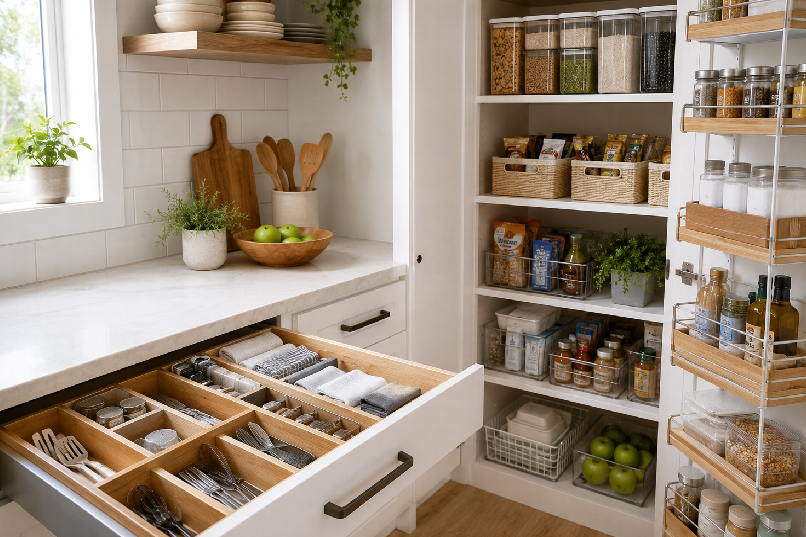
The kitchen is the room where disorganization has the most direct daily impact on life. When the pan you need is buried under three others, when the spice you’re looking for requires moving six things to reach, when the drawer you open most sticks and requires two hands — these frictions accumulate into a cooking experience that feels harder than it needs to be. And they’re almost entirely fixable with the right organization approach rather than a kitchen renovation.
What works in kitchen organization is simpler than the category’s products suggest. The underlying principle is that things you use frequently need to be immediately accessible, things you use occasionally need to be reachable without significant effort, and things you use rarely should be stored out of the way without occupying prime kitchen real estate. Everything else in organization — the drawer dividers, the pot racks, the pantry containers — is in service of that principle applied to specific kitchen realities.
Products
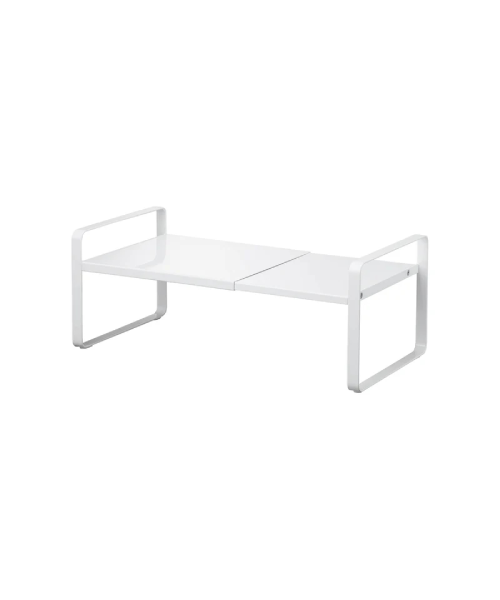
Yamazaki’s expandable cabinet organizer uses the same minimalist steel aesthetic across their range in a format specifically designed for the inside of kitchen cabinets — stackable, expandable to fit different cabinet widths, and able to create a second shelf level in a cabinet that currently holds everything in a single layer. The visual result of a Yamazaki-organized cabinet is a space where everything is visible and accessible rather than stacked and buried.
- Available at: Yamazaki Home (yamazakihome.com), Target, Amazon, The Container Store
- Best for: Creating organized, accessible storage in kitchen cabinets without any permanent installation — specifically good for dishes, spices, and canned goods
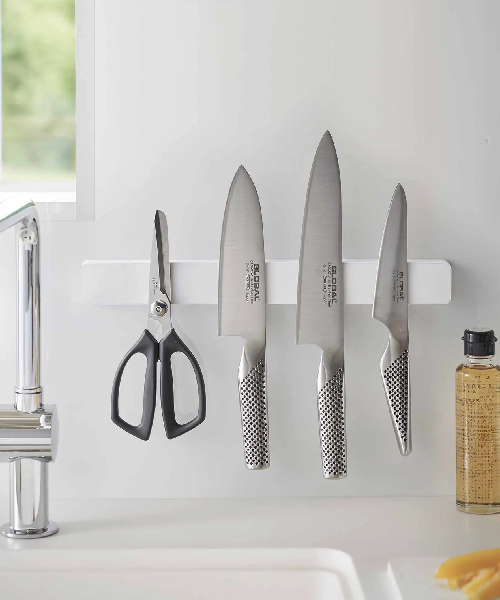
Yamazaki’s magnetic knife block mounts to a wall without the counter space footprint of a traditional knife block, using strong magnets to hold knives securely in a minimal, displayable format. The steel and wood combination is clean enough to be intentional rather than purely functional, and the counter space recovered by mounting knives on a wall is significant in any kitchen with limited surface area.
- Available at: Yamazaki Home (yamazakihome.com), Target, Amazon
- Best for: Recovering counter space and organizing knives in an accessible, displayable format — a kitchen upgrade that costs less than a new appliance and impacts daily cooking more
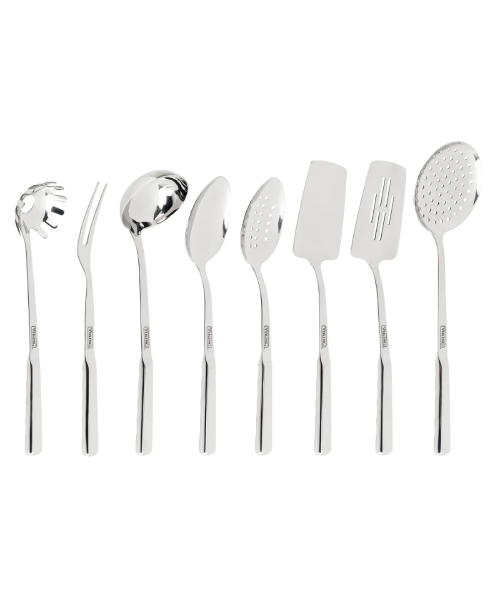
KastKing, primarily known for fishing gear, produces stainless steel cooking utensils that apply the same durability-first engineering philosophy they use for fishing equipment to kitchen tools. The result is kitchen utensils that are more robust and more specifically engineered for cooking performance than the standard kitchen utensil sets that prioritize aesthetics over function. The stainless steel construction doesn’t rust, doesn’t melt at cooking temperatures, and holds up to genuine cooking rather than gentle stirring.
- Available at: KastKing (kastking.com), Amazon
- Best for: Replacing kitchen utensils that have melted, warped, or worn out with a set built for durability and actual cooking performance
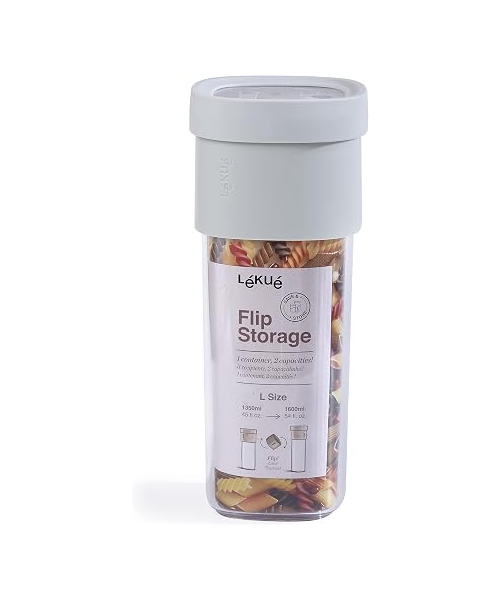
Luhxe extends their beauty-and-wellness brand into kitchen organization with storage containers that apply the same aesthetics to pantry organization that they bring to beauty storage. The containers are airtight, clearly labeled, and designed to be displayed rather than hidden — which is the specific requirement for pantry organization that genuinely works long-term, because storage that requires effort to access tends to get bypassed.
- Available at: Luhxe (luhxe.com)
- Best for: Pantry organization that looks as good as it functions — the storage containers worth displaying rather than hiding
The Kitchen Organization Principles That Actually Matter
Before buying any organization product, it’s worth applying a consistent principle to the kitchen: work out what’s used most frequently, what’s used occasionally, and what’s used rarely. Then arrange accordingly. The French cooking philosophy mise en place — everything in its place — is essentially the organizational principle that makes professional kitchens function. Cooking tools within reach of the cooking surface. Prep tools near the prep area. Serving pieces near the table end of the kitchen. Most home kitchens aren’t organized this way because the kitchen was either bought furnished or filled by habit rather than intention, and changing it requires thinking about how the kitchen is actually used rather than where things happen to live.
The most consistent kitchen organization win I know of: clearing the counter completely, putting everything that lives on the counter into a category (daily use, occasional use, aesthetic object), and then only returning the daily use items to the counter surface. The occasional use items go into a cabinet within reach. Everything else finds a different home or gets donated. The counter space that becomes available is immediately useful and the visual reduction in surface clutter changes how the kitchen looks and feels in a way that’s entirely free.
The Pan Storage Problem
Pan storage is one of the most consistently problematic aspects of kitchen organization because pans are heavy, oddly shaped, and can’t be stacked without either creating instability or scratching the surfaces of nonstick options. The standard solution — stacking them in a cabinet with the lids beside them — produces a situation where getting to the pan at the bottom of the stack requires moving everything above it, every time.
The solutions that work: a pot rack hung above the cooking area or island, which makes every pan immediately accessible and turns storage into display. Vertical pan organizers in a cabinet — the specific type with separate slots for each pan, allowing individual access without moving others. Or the simple approach of having fewer pans, specifically only the ones used regularly, which makes the stacking problem less significant.
Yamazaki’s cabinet organizers can be configured to create vertical division for pans in the same way they organize dishes — standing pans on their edges in divided slots is significantly more accessible than stacking them flat.
The Pantry System That Stays Organized
Pantry organization that stays organized — rather than looking great immediately after organizing and reverting to chaos within a month — has two requirements. First, everything needs a specific home that makes returning it to that home as easy as putting it anywhere else. If returning the flour to its labeled container requires more effort than leaving it on the counter, it will end up on the counter. The container needs to be positioned to make the right behavior the easiest behavior.
Second, the system needs to match the actual way the pantry is used rather than the theoretical ideal. A pantry organized for a cooking habit that doesn’t exist in the household will fail because the real habits won’t fit the theoretical containers. The containers should be chosen based on what’s actually stored and how often it’s accessed, not based on what looks impressive in pantry organization photos.
The Luhxe containers are worth the price specifically because they’re designed to be displayed — the clear sides make contents visible without needing to open them, and the consistent aesthetic makes the pantry look intentional rather than assembled.
Conclusion
Kitchen organization worth investing in is organization that makes cooking genuinely easier and that stays organized rather than requiring regular resetting to maintain. Yamazaki Home’s expandable cabinet organizer creates visibility and accessibility in cabinets that currently require excavation to find anything. The wall-mounted magnetic knife block recovers counter space while putting knives within immediate reach. KastKing’s cooking utensils replace the warped and melted tools that most kitchen drawers accumulate with something built to last. And Luhxe’s containers bring the organized pantry from aspirational to functional in a format designed to stay that way. The underlying principle is accessibility — what you use most should be reachable first, and organization that makes returning things to their place as easy as leaving them anywhere else is the organization that sticks.

