
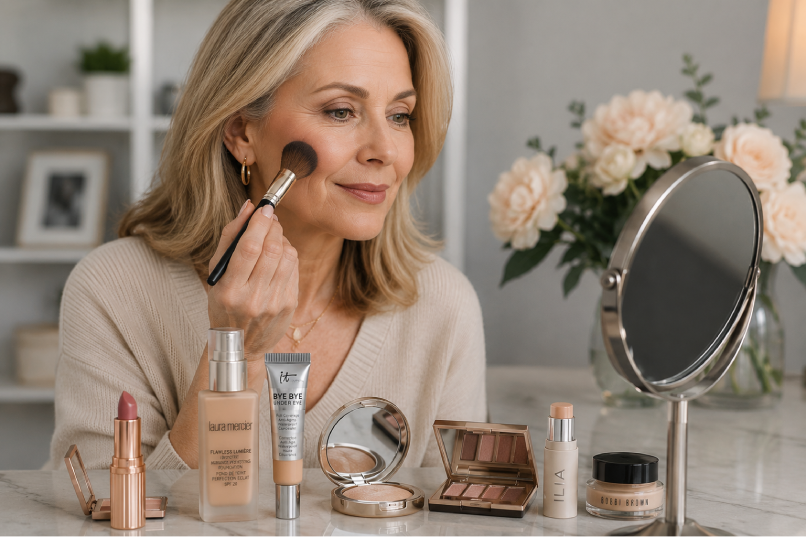
The makeup advice that was right for skin at 25 is not necessarily right for skin at 45 or 55. Not because the person wearing it has fundamentally changed, but because the skin itself has changed in specific ways that interact differently with makeup products and application techniques. The changes are real — less collagen means less plumpness and firmness, reduced cell turnover means texture builds more visibly, less sebum production means drier skin that holds powdery products differently — and the adjustments that address them are specific rather than general.
What I notice in most mature skin makeup advice is that it trends toward either “use less” (which is sometimes right and sometimes just a loss of the things you like) or “use these specific anti-aging miracle products” (which is almost always marketing). The more useful frame is: which products and techniques work with what skin is doing at this stage rather than trying to recreate what it was doing at an earlier one.
Products
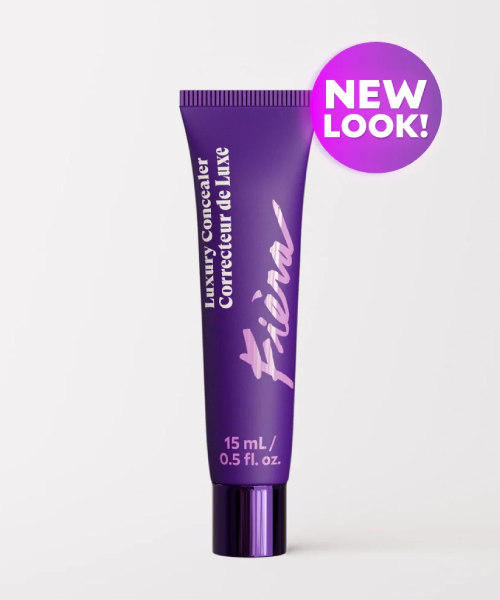
Fiera was specifically developed for mature skin with the primary brief of making a concealer that doesn’t settle into fine lines and creases. The formula is hydrating enough to stay comfortable throughout the day without the cakeing that most concealers develop in eye area creases and smile lines, and the coverage is buildable enough to conceal discoloration and dark circles without requiring a heavy application that exaggerates texture.
- Price: $49
- Available at: Fiera Cosmetics (fieracosmetics.com)
- Best for: Concealer for mature skin — specifically formulated to sit smoothly in areas with fine lines without settling or caking through the day
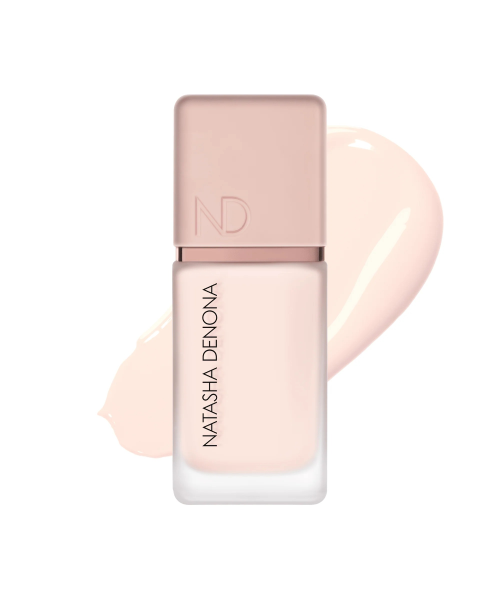
Natasha Denona’s skincare-first foundation reads as skin rather than coverage, which is what mature skin most consistently needs from a foundation product. Full coverage on mature skin with texture tends to emphasize the texture rather than hide it. The Hy-Gen’s sheer-to-medium coverage that reads as better skin addresses what most mature skin actually needs — even tone and hydration rather than blanket coverage.
- Price: $58
- Available at: Natasha Denona (natashadenona.com), Sephora, Space NK
- Best for: Foundation for mature skin that wants an even, luminous result without the cakey finish that full-coverage products produce on skin with texture
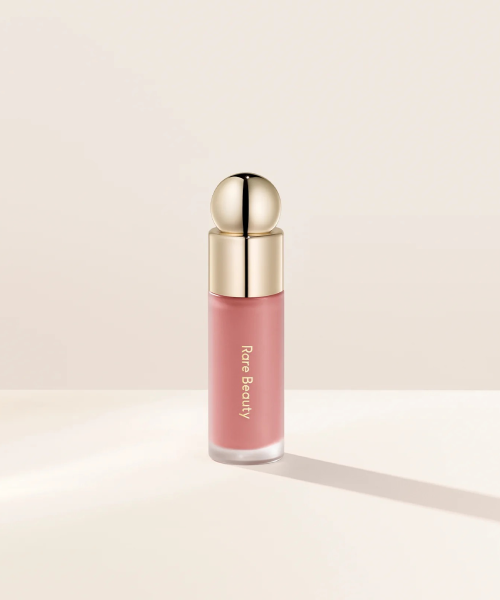
Cream blush works better on mature skin than powder blush almost universally, because the cream formula blends into the skin and moves with it rather than sitting on the surface in a way that emphasizes texture and dry patches. Rare Beauty’s cream blush formula is the most accessible high-pigmentation cream blush available — a tiny amount produces the natural flush that makes mature skin look healthy and alive rather than made-up.
- Price: $23
- Available at: Rare Beauty (rarebeauty.com), Sephora
- Best for: Blush for mature skin — the cream formula that blends into skin rather than sitting on top of it, with pigmentation that requires very little product for a natural result
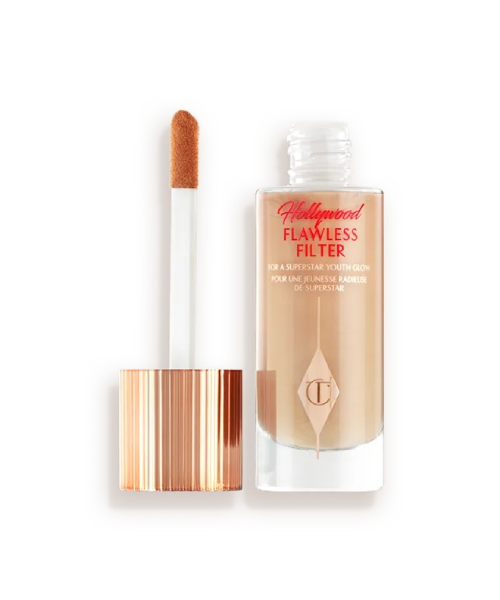
The Flawless Filter occupies a specific category — complexion highlighter or glow primer — that does something for mature skin that most other products don’t. Applied before or mixed into foundation, it adds luminosity that mimics the natural radiance that skin loses as it produces less sebum and the light-reflecting properties of collagen diminish. Not glitter, not shimmer — a soft radiance that photographs as “she looks great” rather than “she’s wearing highlighter.”
- Price: $45 / £38
- Available at: Charlotte Tilbury (charlottetilbury.com), Nordstrom, Boots, Selfridges
- Best for: Adding the radiance that mature skin often lacks to any base makeup application — works under foundation, mixed into foundation, or alone over moisturizer
Why Mature Skin Needs Different Products
The changes in skin that make makeup behave differently as we age are worth understanding clearly because they explain why the formulas that worked at 30 may not produce the same results at 50, and why the adjustments that help are the specific ones they are.
Less collagen and elastin means the skin has less structural support — it sits slightly differently, with more surface texture visible. Fine lines and creases in areas of repeated expression — around the eyes, between the brows, around the mouth — are more prominent. Matte powdery products emphasize these lines by settling into them and highlighting them. Hydrating, non-powdery products follow the skin’s contour rather than pooling in its creases.
Reduced sebum production means drier skin that holds powder differently. On oily or combination skin, powder helps control shine and extend makeup wear. On drier skin, powder adds a flatness that reads as dry and aged rather than matte and fresh. The shift is from powder-based products to cream and liquid formulations in most of the face makeup categories.
Thinner skin in some areas — particularly around the eyes — means concealer needs to be applied more carefully and in smaller amounts, because the same amount of product that looked natural at a younger age looks thick and heavy when the skin beneath it has less plumpness to absorb it.
Technique Adjustments That Matter More Than Products
Some of the most significant improvements in makeup for mature skin come from technique changes rather than product changes.
Primer under foundation — not a blanket primer applied everywhere, but a hydrating, luminosity-adding primer specifically in the areas where makeup tends to settle (the nose-to-mouth lines, the under-eye area, around the brows). This provides a slightly smoother surface for foundation to sit on and reduces the settling that happens in creases.
Application with fingers or a damp sponge rather than a brush for foundation. The warmth of the fingers and the bouncing motion of a damp sponge integrate foundation into skin rather than sitting on top of it, which is what mature skin needs from foundation. A brush can look more precise in application and produce a result that looks more applied on skin with texture.
Setting powder only where specifically needed — typically the T-zone if there’s any oiliness — rather than dusted everywhere. The areas with fine lines and creases — around the eyes, the smile lines — are better left un-powdered because the powder settles into these areas and emphasizes rather than minimizes them.
The Eye Makeup Question
Eye makeup on mature skin requires the most specific adjustments because the eye area changes most visibly — the skin thins, the eyelid area changes shape, and the space available for eyeshadow may be less than it was previously. The general principles that work: softer edges on eyeliner (smudged pencil rather than precise liquid liner, which emphasizes any wobbliness in the lash line), mascara on upper lashes with more restraint on lower lashes (heavy lower lash mascara on mature skin tends to emphasize under-eye area rather than making eyes look bigger), and eyeshadow with a subtle shimmer in the right places rather than matte everywhere (a touch of light shimmer on the inner corner and lower lid catches light and opens the eye in a way that matte alone doesn’t).
Conclusion
Makeup for mature skin works best when the products work with what skin is doing rather than trying to replicate what it was doing earlier. Fiera’s concealer was specifically formulated to solve the mature skin concealer problem and it does that with more success than most alternatives. Natasha Denona’s Hy-Gen foundation reads as skin rather than coverage, which is what mature skin most needs. Rare Beauty’s cream blush provides the natural flush that cream formula uniquely delivers on skin with texture. And Charlotte Tilbury’s Flawless Filter adds the radiance that mature skin produces less of naturally. The technique adjustments — fingers and damp sponge over brushes, powder only where needed, soft edges on eye makeup — matter as much as the products themselves.

