

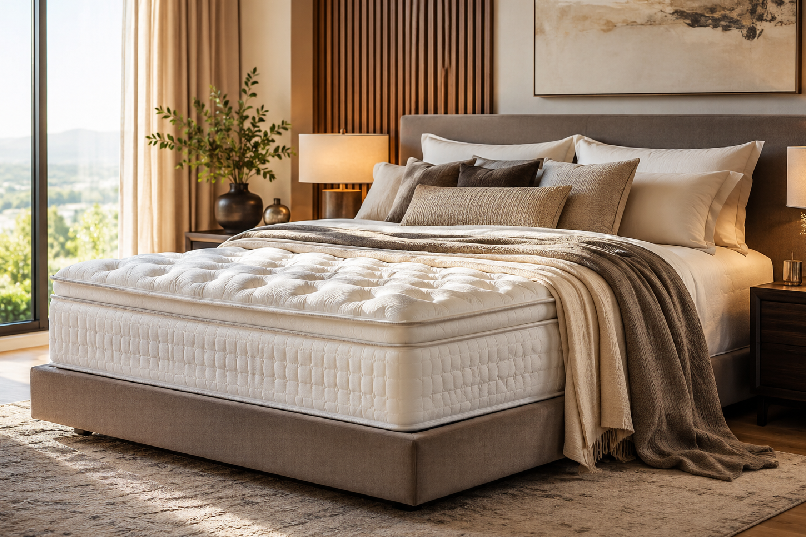
The mattress is the furniture purchase made least frequently and felt most consistently — once every eight to ten years for most people, across eight hours of every night in between. Getting it right has a disproportionate impact on daily wellbeing relative to how much deliberate attention it typically receives.
The mattress conversation is also the conversation most dominated by marketing language — terms like “orthopaedic,” “memory foam,” and “pocket sprung” carry specific technical meanings that are applied inconsistently across brands. Understanding what these terms mean and what they actually produce in sleep experience is the specific knowledge that makes the mattress decision more reliable.
What Mattress Types Actually Mean
Pocket sprung mattresses use individual fabric-encased springs that respond independently to weight — each spring compresses under the direct weight above it without affecting adjacent springs. Higher spring counts (1000+ in a double) provide more granular, responsive support. Pocket springs provide the specific support that allows different areas of the body to be supported differently, rather than the uniform support of a solid foam mattress.
Pocket sprung mattresses use individual fabric-encased springs that respond independently to weight — each spring compresses under the direct weight above it without affecting adjacent springs. Higher spring counts (1000+ in a double) provide more granular, responsive support. Pocket springs provide the specific support that allows different areas of the body to be supported differently, rather than the uniform support of a solid foam mattress.
Hybrid mattresses combine pocket springs with foam comfort layers — the support of springs and the pressure relief of foam together. Most contemporary quality mattresses are hybrids in some form.
The trial period is the most important commercial feature. Quality mattress brands offer 100–200 night trials because the genuine assessment of a mattress requires sleeping on it — three minutes in a showroom tells you almost nothing useful. The first two weeks of any new mattress involve adjustment and aren’t representative of the settled experience. Assessment at eight to ten weeks is the meaningful evaluation point.
The Best Mattresses Worth Buying
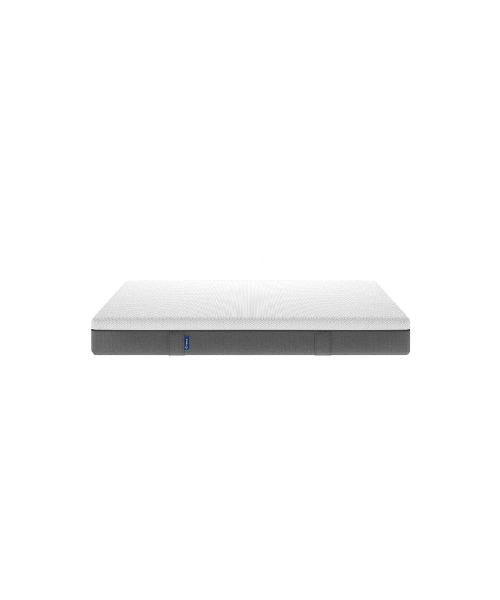
Available at: Emma (emma-sleep.co.uk), Emma website
Best for: Those who want a quality hybrid mattress at a genuinely mid-range price with an honest trial period.
The Emma Original Hybrid is the mattress recommendation for those who want a quality, genuinely hybrid construction at a price below the premium brands. The combination of pocket springs and the Emma Cold Foam top layer provides both support and pressure relief, the motion isolation is good (relevant for couples where one partner is a lighter sleeper), and the 200-night trial is genuinely the most generous in the mainstream market.
Emma’s customer service track record for the trial — the specific thing that determines whether the trial is a real offer or a theoretical one — is consistently positive in independent review. Returns are collected at home and donated to charity. This operational reality behind the promise is what makes the trial worth using.
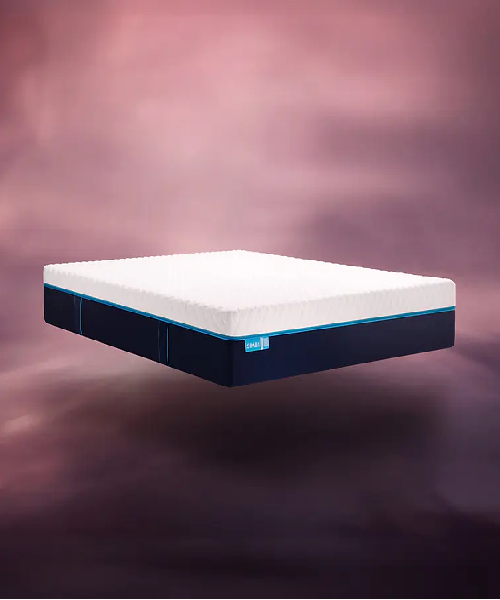
Available at: Simba Sleep (simbasleep.com)
Best for: Warm sleepers, those who’ve found memory foam mattresses uncomfortably warm, couples with different temperature preferences.
Simba’s Hybrid Pro uses their Simbatex foam — an open-cell material that manages temperature more actively than standard memory foam — alongside their Aerocoil micro-springs and titanium-reinforced coil layers. The result is a mattress that provides the pressure relief of foam with significantly better temperature management than conventional memory foam alternatives.
The specific Simba advantage for warm sleepers: the combination of open-cell foam and micro-springs allows more air circulation through the mattress structure than solid foam alternatives, producing measurably better temperature management across a full night of sleep. For those who’ve woken consistently on previous mattresses feeling too warm, the Simba’s construction addresses the specific material cause.
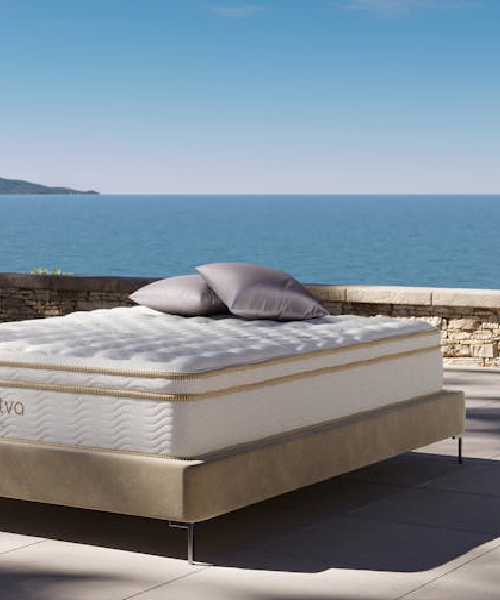
Available at: Saatva (saatva.com)
Best for: Those who want a traditionally constructed innerspring mattress at the premium quality level with white-glove delivery.
Saatva produces traditional innerspring mattresses with the construction quality of the hotel industry at retail prices. The dual coil system — tempered steel innersprings topped with individually wrapped coils — provides the specific support and responsiveness of a traditional innerspring with the pressure relief that a single spring layer doesn’t offer. The multiple firmness options (Plush Soft, Luxury Firm, Firm) allow genuinely matching the mattress firmness to sleep position and body type.
Saatva produces traditional innerspring mattresses with the construction quality of the hotel industry at retail prices. The dual coil system — tempered steel innersprings topped with individually wrapped coils — provides the specific support and responsiveness of a traditional innerspring with the pressure relief that a single spring layer doesn’t offer. The multiple firmness options (Plush Soft, Luxury Firm, Firm) allow genuinely matching the mattress firmness to sleep position and body type.
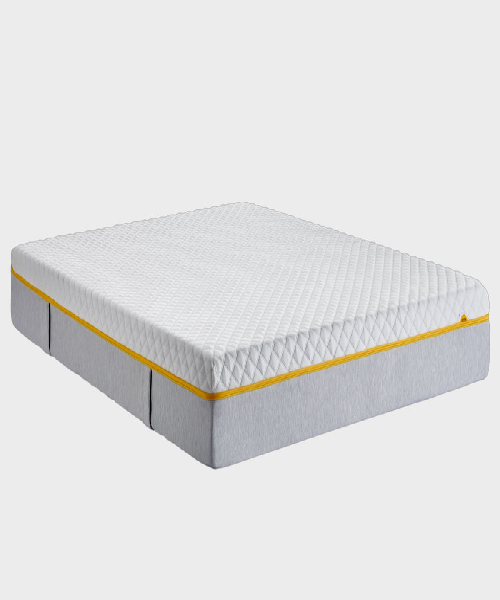
Available at: Eve Sleep (evesleep.co.uk)
Best for: UK buyers who want a quality hybrid mattress with an established UK brand and strong customer service track record.
Eve Sleep’s Premium Hybrid uses memory foam, reflex foam, and pocket springs in a construction that suits most sleep positions and preferences without requiring specific knowledge of which firmness suits which body type. The 100-night trial and Eve’s UK customer service track record make the purchase decision lower-risk than a comparable mattress from a less established brand.
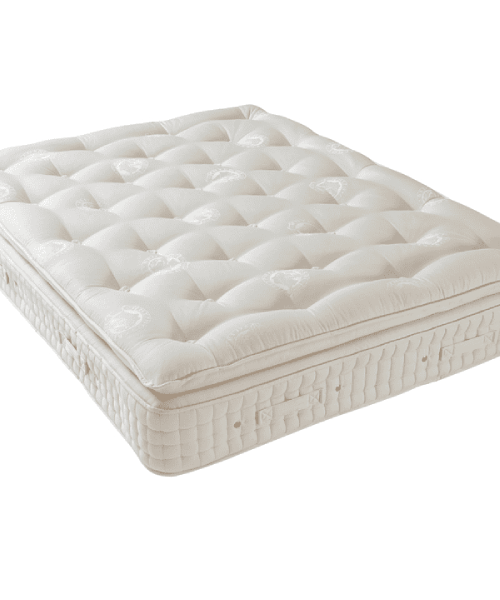
Available at: Hypnos (hypnosbeds.com), John Lewis, specialist bed retailers
Best for: Those who want genuinely crafted British pocket-sprung mattresses made to traditional specifications.
Hypnos supplies mattresses to the British Royal Family and to five-star hotels — the commercial credentials that indicate the quality level the brand consistently achieves. The pocket spring construction uses high-quality spring wire with a coil count appropriate for the size, and the pillow top comfort layer provides the specific softness-over-support combination that the hotel sleep quality experience represents.
The investment is significant and most justified for those who’ve found mid-range mattresses inadequate over multiple purchases — the Hypnos represents the specific quality ceiling available in the UK market.
How To Use A Mattress Trial Correctly
Use the full trial period. The instinct to return a mattress that feels different from the previous one in the first two weeks is almost always wrong — the body is adjusting to a different support pattern, not objectively assessing the new mattress. Make notes at day one, day fourteen, day thirty, and day sixty. The progression shows whether mornings are improving, stable, or declining. A mattress that produces progressively better mornings at week six was worth keeping despite a difficult week two.
Conclusion
The mattress investment pays back in daily wellbeing in a way that no other single furniture purchase matches. Emma Original Hybrid for quality mid-range with the most generous trial period. Simba Hybrid Pro for warm sleepers whose previous mattresses have produced temperature issues. Saatva Classic for the premium traditional innerspring with white-glove service. Eve Premium Hybrid for the UK mid-range with a strong customer service track record. And Hypnos for the British heritage investment at the quality ceiling of the domestic market. Use the trial fully, assess at week six rather than week two, and choose based on how you feel when you wake up rather than how the mattress feels in the showroom.

