
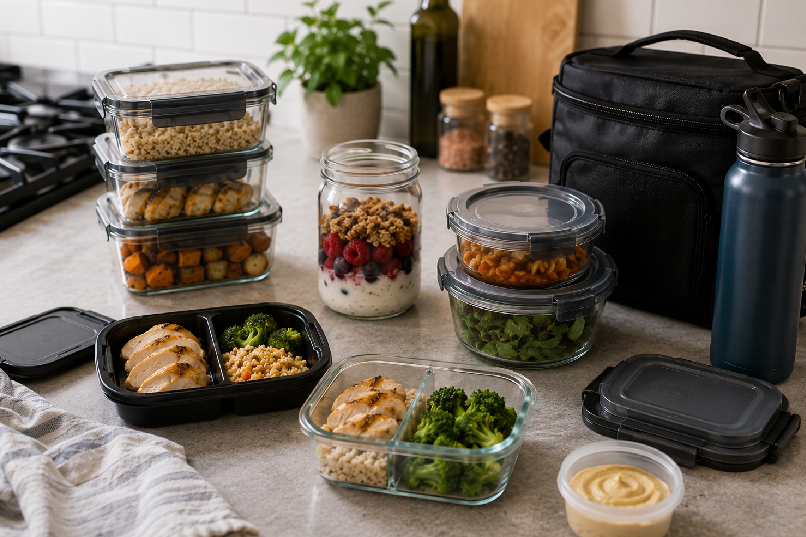
Meal prep has a significant gap between how it’s portrayed and how it actually functions in most people’s lives. The portrayals involve organized refrigerators with perfect portions in matching containers, a single productive Sunday afternoon that somehow provides five days of effortless eating. The reality usually involves the Sunday afternoon being the one time you’re most exhausted and least motivated to cook, containers that don’t stack correctly, and the specific problem that the meal prepped on Sunday is boring by Wednesday regardless of how good it was when made.
The products below are the ones that address the real friction in meal prep — the storage that doesn’t work, the tools that slow things down rather than speeding them up, the organization that requires effort to maintain. Fixing the friction is what makes the practice sustainable.
Products
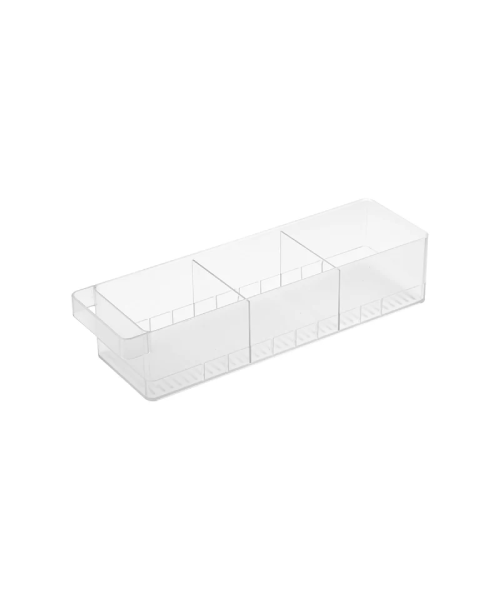
Yamazaki’s refrigerator organizer set brings their steel-and-acrylic minimalist aesthetic to fridge organization — the specific place where the combination of different container sizes, different leftover stages, and variable use frequency creates the most consistent household disorganization. The organizers create designated zones within the fridge that make finding things straightforward and make returning things to the right place as easy as not.
- Available at: Yamazaki Home (yamazakihome.com), Target, Amazon
- Best for: Creating organized, visible refrigerator storage that makes both meal prep storage and daily use genuinely easier to navigate
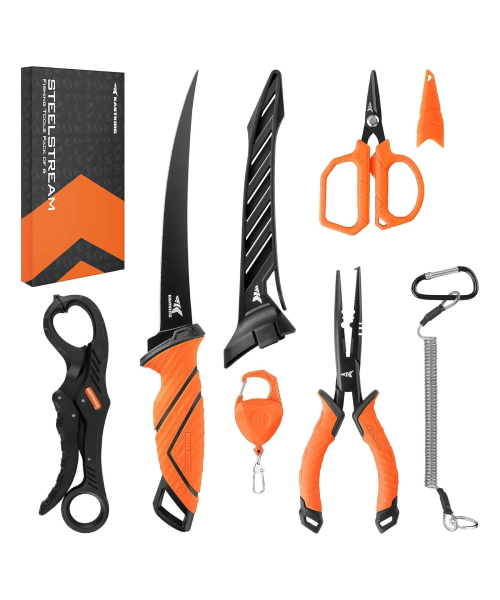
KastKing’s kitchen tools applied to meal prep — the specifically designed tools for batch cooking including a high-quality chef’s knife, kitchen shears, and prep tools that are built for extended use rather than occasional use. The durability engineering that makes their fishing and outdoor gear last applies directly to kitchen tools that are going to be used intensively on a Sunday afternoon of batch cooking.
- Available at: KastKing (kastking.com), Amazon
- Best for: The meal prep tool set that holds up to weekly batch cooking use rather than the occasional-use quality that most kitchen tool sets at this price reflect
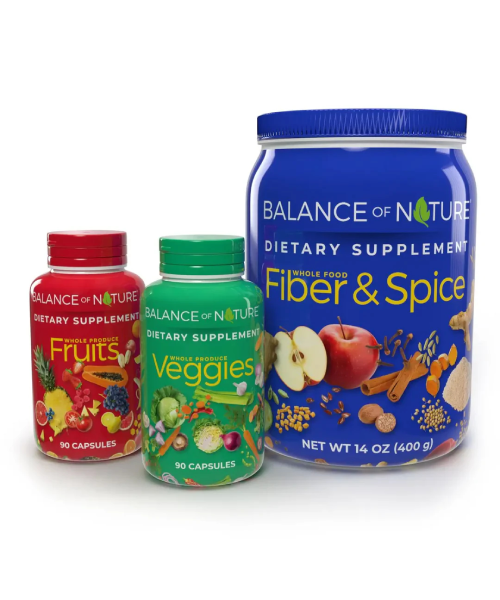
Balance of Nature provides a practical integration guide for incorporating their whole food supplements into meal prep smoothies and prepared meals — the specific resource for those who want to maximize the nutritional density of meal-prepped foods by integrating supplementation directly into the prep routine rather than as a separate habit.
- Available at: Balance of Nature (balanceofnature.com)
- Best for: Balance of Nature users who want to incorporate supplement use into their meal prep routine rather than maintaining it as a separate daily habit
The Meal Prep Approach That Actually Sticks
The most sustainable meal prep approach is not the full-week preparation of complete meals but the preparation of components that combine differently across the week. Complete meals prepared on Sunday are eaten willingly on Monday and Tuesday, tolerantly on Wednesday, and grudgingly by Thursday when the desire for something different has become significant.
Components prepared on Sunday have a different relationship with the week. A batch of roasted vegetables pairs with grain bowls Monday, goes into a frittata Tuesday, and works as a side with different protein Wednesday. A batch of cooked grain provides the base for bowls, salads, and soups through the week without any of them being the same meal. A marinated protein cooked at the beginning of the week slices for different uses across multiple meals.
The component approach requires the same prep time as the complete meal approach and produces significantly more variety across the week. It also tolerates refrigerator life better — components can be combined differently based on what still looks good and what’s been partly used, rather than complete meals that either get eaten or don’t.
The Container Question
Container choice matters more than most meal prep content acknowledges because the wrong containers create friction at both ends of the process — the prep end and the retrieval end.
Glass containers are the right choice for anything being reheated in the oven. They go from fridge to oven without transfer, they don’t leach anything into food at oven temperatures, and they clean more thoroughly than plastic because glass is non-porous. The specific limitation is weight and breakability, which makes them less suitable for packed lunches than for home use.
Plastic containers with airtight seals are better for packed lunches and for anything being transported, because the risk of breakage in a bag is real with glass. The plastic to look for is BPA-free, dishwasher safe, and with a genuine airtight seal rather than a snap-close lid that allows air in at the edges.
Uniform container sizes are the specific investment in meal prep storage that most people realize they needed after having a collection of mismatched sizes. A standard size for most components, a half-size for smaller portions, and a full-size for soups and large batches covers most meal prep storage needs in a way that allows actual stacking and efficient fridge organization.
What to Prep and What Not to Bother
The foods worth prepping in advance: cooked grains (hold for four to five days in the fridge), roasted vegetables (hold for four days, improve in flavor after the first day), marinated proteins ready to cook (forty-eight hours maximum for most proteins), soups and stews (improve over two to three days and hold for up to five), dressings and sauces (most hold for a week or more), and washed and cut raw vegetables for snacking.
The foods not worth prepping in advance: any dressed salad (wilts immediately), fried foods (lose their texture), eggs prepared beyond hard-boiled (most preparations don’t hold well), and most fresh fish preparations (one to two day maximum and most are better fresh).
Conclusion
Meal prep products worth buying are those that reduce the specific friction that prevents the practice from being sustainable. Yamazaki’s refrigerator organizers make the fridge itself navigable rather than a second disorganization problem. KastKing’s prep tools handle the intensive batch cooking work without the quality issues that cheaper tools develop. Luhxe’s glass containers go from fridge to oven to table without transfer steps. And Balance of Nature’s integration guide makes supplementation part of the prep routine rather than an additional daily commitment. The practice itself — preparing components rather than complete meals, using containers that work in multiple contexts, storing for visibility and accessibility — is what makes meal prep worth doing. The products just reduce the friction that prevents the practice from sticking.

