
Mental wellbeing is the health priority most people acknowledge as important and most underinvest in practically — partly because the category is harder to quantify than physical health, partly because the product and service market is saturated with claims that are difficult to evaluate, and partly because the genuinely effective interventions are sometimes the least commercially packaged.
The products and tools below are those that produce genuine, evidence-adjacent wellbeing improvement rather than wellness aesthetic. Some are digital, some are physical, some are habits more than products. All are worth knowing about.
What Wellbeing Products Can And Can't Do
Wellbeing products and tools can support the specific conditions that allow mental health to improve — better sleep, more movement, structured periods of quiet and reflection, connection with others, and the specific management of anxiety through technique and habit. They cannot replace professional mental health support when that’s what’s needed, and this distinction matters.
If you’re experiencing significant, persistent depression, anxiety, or other mental health concerns, the products below are supplements to professional support rather than alternatives to it. The tools that support wellbeing in the context of ordinary life stress and the tools that address clinical mental health concerns are different categories.
The Best Mental Wellbeing Products Worth Buying
Available at: Headspace (headspace.com), App Store, Google Play
Best for: Those who want a structured introduction to meditation practice with genuinely good content and evidence behind it.
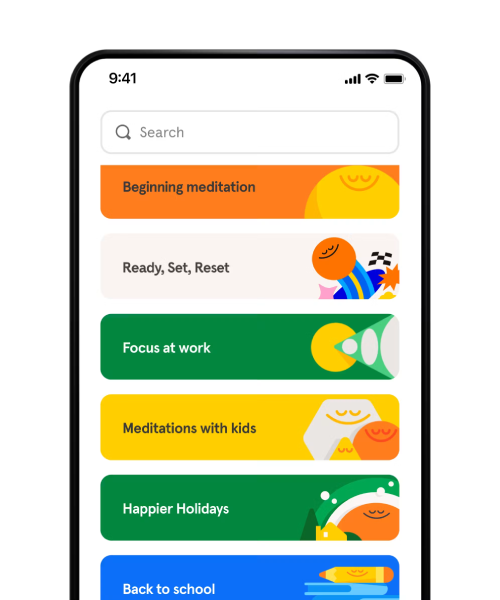
Headspace commissioned and published peer-reviewed research on the specific mental health outcomes of their guided meditation programmes — a level of clinical evidence investment that most wellness apps don’t make. The results: measurable reductions in anxiety, improvements in sleep onset, and increases in self-reported life satisfaction over four-week programmes.
The beginner course is the starting point — ten minutes per day for ten days, designed to establish the basic meditation practices before moving to more specific applications. The sleep content specifically (sleep casts, sleep music) is the Headspace category that most consistently produces the described improvement in sleep onset time.
The quality of the instruction is the specific Headspace advantage over free alternatives — the teaching approach is clear, the progression is logical, and the variety of practices prevents the stagnation that a single repeated practice produces when novelty decreases.
Available at: Calm (calm.com), App Store, Google Play
Best for: Those whose primary wellbeing concern is sleep quality or anxiety management.
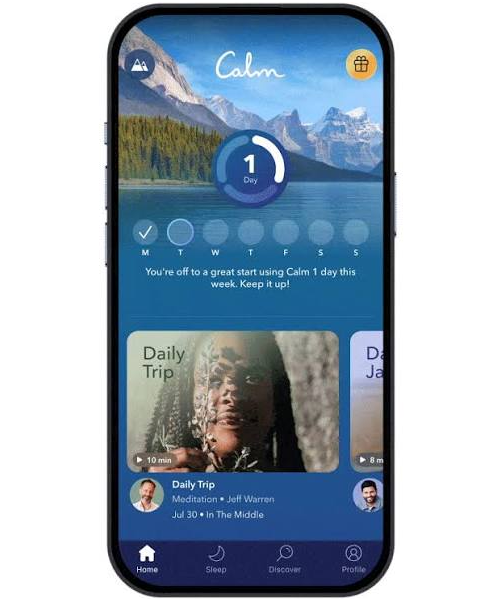
Calm focuses specifically on sleep and anxiety applications rather than the broader meditation curriculum that Headspace offers. The Sleep Stories — narrated stories designed to reduce pre-sleep mental activity — are the brand’s most distinctive content and the category where Calm genuinely does something no other app does as well. The breathing exercises and body scan meditations are the most consistent anxiety management tools in the app.
The Matthew McConaughey Sleep Story is genuinely funny — an unexpected quality in a sleep app — and genuinely effective for those whose sense of humour is a useful anxiety reduction tool.
Available at: App Store, Google Play
Best for: Those who want to track mood patterns and use CBT (cognitive behavioural therapy) techniques between professional support sessions.
Moodfit provides mood tracking with the specific additional layer of CBT-based thought challenging exercises — the tool for those who are in therapy and want to practise the techniques between sessions, or those who want to apply CBT principles without formal therapy. The mood log allows identifying patterns in emotional experience across days and weeks that single-day assessment doesn’t reveal.
The free version is comprehensive enough for most users. The premium version adds additional CBT worksheets and more detailed analytics.
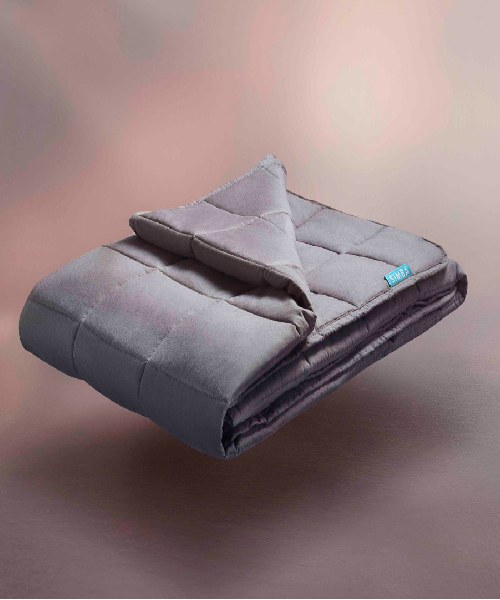
Available at: Simba Sleep (simbasleep.com)
Best for: Those with sleep anxiety or difficulty reaching sleep onset who want the evidence-adjacent benefits of deep pressure stimulation.
Weighted blankets apply gentle, distributed pressure across the body — the mechanism described as “deep pressure stimulation” — that has clinical support for reducing anxiety and improving sleep onset in both children and adults. The Simba Weighted Blanket uses a distributed fill that maintains even weight distribution without pooling at the edges that cheaper alternatives develop.
The weight selection matters: approximately 10% of body weight is the standard recommendation for effective deep pressure stimulation. A blanket too light produces no perceptible effect. The correct weight produces the specific settling, calming quality that those who benefit from weighted blankets describe as feeling held rather than covered.
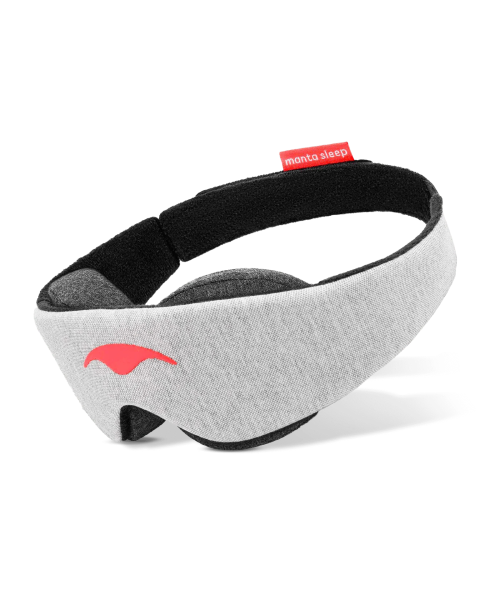
Available at: Manta Sleep (mantasleep.com), Amazon
Best for: Those who can’t control bedroom light levels and want complete darkness during sleep.
The sleep science on light exposure during sleep is clear: even low levels of light affect sleep architecture by suppressing melatonin production and shifting sleep toward lighter stages. Complete darkness during sleep produces measurably better sleep quality for most people.
The Manta Sleep Mask is the specific sleep mask recommendation because the contoured design prevents any pressure on the eyelids — the pressure that makes most sleep masks uncomfortable enough to be removed during the night. The adjustable strap fits most head sizes without the elastic that becomes uncomfortable after a few hours. At $29–45, it’s the sleep quality improvement with the highest return on investment available.
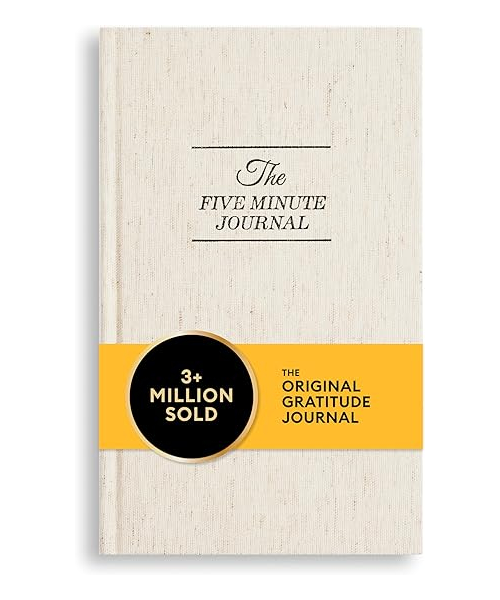
Available at: Five Minute Journal (intelligentchange.com), Amazon
Best for: Those who want to establish a daily gratitude and intention-setting practice with a structured format that takes minimal time.
The Five Minute Journal applies the research on gratitude practice to a physical journal format — three prompts in the morning (what will make today great, three things to be grateful for, a daily affirmation) and two in the evening (what went well, what could have been better). The structured brevity is the specific quality that makes the practice sustainable — five minutes is achievable consistently in a way that an open-ended journaling practice often isn’t.
The physical format — pen on paper rather than typing — is a deliberate design choice that the research on physical versus digital note-taking supports: the slower, more deliberate process of handwriting produces better retention and more considered reflection than typing.
The Non-Product Wellbeing Interventions Worth Knowing
Exercise is the most evidence-backed wellbeing intervention available that doesn’t require prescription. Multiple meta-analyses demonstrate antidepressant-comparable effects from regular moderate exercise. The mechanism is established — exercise produces neuroplasticity, reduces inflammation, and regulates stress hormones in measurable ways. No supplement, no app, and no product produces comparable evidence for comparable benefits.
Sleep quality and quantity are the two variables most directly and consistently connected to daily mood and emotional regulation. The wellbeing improvement from consistently getting seven to nine hours of quality sleep is larger than the improvement from most active interventions. The sleep products elsewhere on this site address this directly.
Social connection is the variable most consistently identified by wellbeing research as predictive of long-term mental health. It’s not a product. It’s a lifestyle priority that products and tools can support (communication apps, activities that create connection contexts) but can’t replace.
Conclusion
Mental wellbeing products work when they support the conditions for genuine improvement rather than providing a wellness aesthetic alongside unchanged underlying patterns. Headspace for a structured, evidence-supported meditation practice. Calm for sleep and anxiety applications specifically. Moodfit for mood tracking and CBT tools. Simba Weighted Blanket for sleep anxiety. Manta Sleep Mask for complete darkness during sleep. And The Five Minute Journal for a sustainable daily gratitude practice. Whatever you use — prioritise sleep, movement, and connection as the foundations. The products support the foundations; they don’t replace them.

