
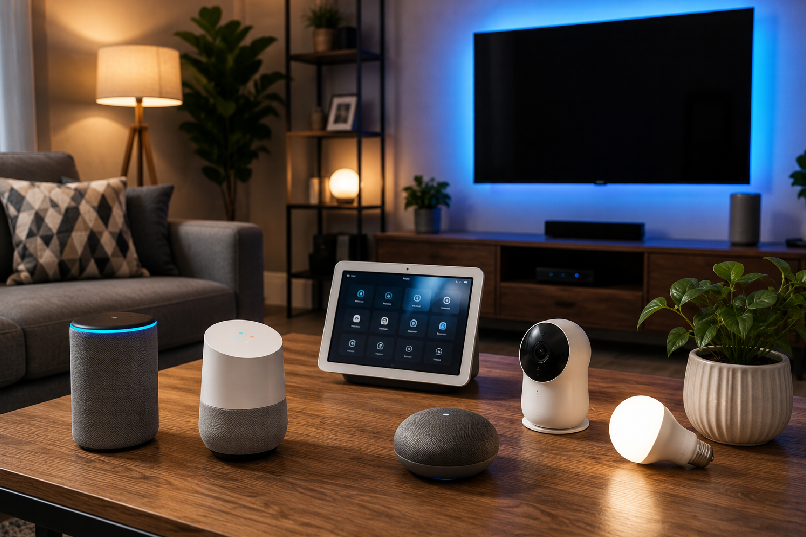
Smart home technology falls into two distinct categories: the kind that genuinely improves daily life in ways you notice and appreciate, and the kind that sounds useful in a product description and turns out to require more attention to maintain than it would have taken to just do the thing manually. The voice-activated gadget that only understands you when you speak a specific way. The smart lock that requires a firmware update every time you want to go through the door. The home system that relies on everything being on the same platform when you’ve already bought things from three different ones.
The devices below are in the first category. They do things that genuinely change the daily experience of being at home — the kind of changes you notice within a week and miss when you go somewhere without them.
Products
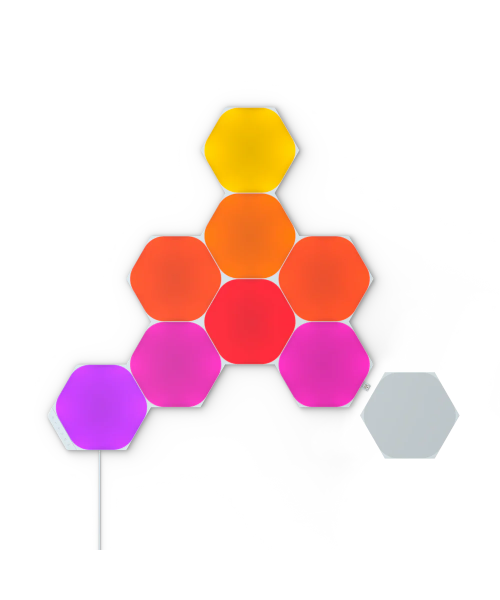
Nanoleaf’s hexagon panels are the specific Nanoleaf product that balances visual impact with flexibility of installation. The hexagons tile in more configurations than square or triangular panels, the light quality is among the best in the smart lighting category, and the Matter compatibility means they connect with Apple HomeKit, Google Home, and Amazon Alexa without requiring the Nanoleaf ecosystem exclusively. The installation is adhesive-backed and repositionable, which matters for those who want flexibility.
- Available at: Nanoleaf (nanoleaf.me), Best Buy, Amazon, Apple Store
- Best for: Modular smart lighting that functions as wall art and as functional ambient light simultaneously — genuinely improves how a bedroom or living room feels at different times of day
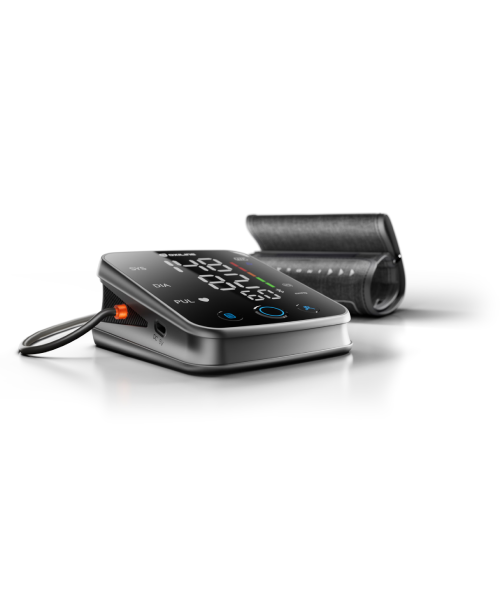
Oxiline produces medical-grade accuracy health monitoring devices for home use, and the Pulse X Pro represents the specific category of smart health devices that are genuinely useful at home rather than just convenient — the accuracy of the device is clinically validated, the app integration provides meaningful data over time, and the portability makes it the alternative to regular pharmacy blood pressure monitoring for those who need to track cardiovascular health consistently.
- Available at: Oxiline (oxiline.com)
- Best for: Those who need regular blood pressure monitoring — clinical-grade accuracy in a home device that tracks data over time for health management or medical reporting
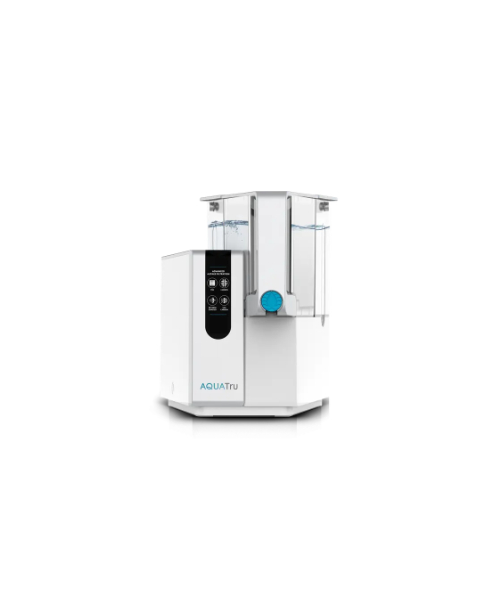
AquaTru uses reverse osmosis filtration to remove contaminants from tap water at a level that standard pitcher filters don’t achieve. The countertop format means no plumbing installation required, the filter life is transparent through the app and indicator, and the four-stage reverse osmosis removes chlorine, lead, PFAS, and other contaminants that pitcher filters leave. Independent testing has consistently verified the purification claims rather than just the marketing.
- Available at: AquaTru (aquatru.com), Williams Sonoma, Amazon
- Best for: Those who want genuinely purified drinking water at home without the cost and environmental impact of bottled water — the reverse osmosis system with independently verified performance
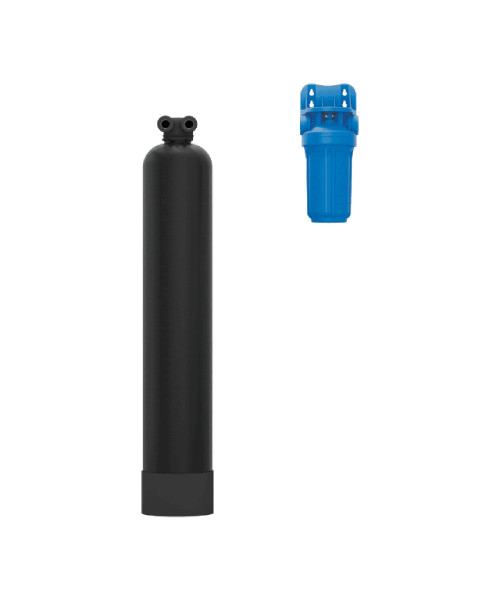
SpringWell produces whole-house water filtration for those who want purification at every water outlet rather than just at the drinking water tap. The system addresses chlorine, chloramines, PFAS, and other common municipal water treatment byproducts across every tap in the house — useful for skin and hair health as well as drinking water quality, since chlorine in shower water affects both.
- Available at: SpringWell (springwellwater.com)
- Best for: Whole-house water filtration for those who want clean water at every outlet — particularly valuable for those with skin or hair sensitivity to chlorinated water
The Smart Home Devices Worth Prioritizing
The smart home category has enormous breadth and genuinely uneven quality. The devices that consistently improve life are those where the automation or information they provide addresses a genuine friction point or health concern rather than just adding connectivity to something that worked fine without it.
Lighting automation is the smart home category with the most consistent positive impact on daily quality of life. The specific benefit is not control through a phone — that’s a novelty that becomes less interesting quickly. The benefit is automatic behavior: lights that gradually brighten in the morning to support waking up, lights that shift from cool daylight temperature during the day to warm amber in the evening to support the body’s natural reduction in cortisol and production of melatonin. This happens automatically, at the times you set, without any daily input. Nanoleaf’s Matter compatibility makes their panels the current best option for those who want this without committing to a single platform.
Water quality technology is another category where the smart home investment produces tangible health benefits rather than just convenience. AquaTru’s reverse osmosis system and SpringWell’s whole-house filtration represent two different scales of the same intervention — removing the contaminants that municipal water treatment leaves behind and that standard pitcher filters don’t address. The evidence that these contaminants affect health is not trivial and the independence of AquaTru’s testing verification is worth noting in a category where many claims are made without verification.
What to Avoid in Smart Home Tech
The category that most consistently produces buyer’s remorse in smart home technology: devices that solve problems you don’t actually have. The smart refrigerator with a screen when you already have a phone. The voice-controlled appliances in a household where the voice activation adds a step rather than removing one. The connected devices that require maintaining another app, another subscription, or another account.
Smart home technology is most useful when it automates genuine repetitive friction rather than when it adds connectivity for its own sake. The test worth applying before any smart home purchase: what specific thing will this do automatically that I’m currently doing manually, and does doing it manually actually take enough time or attention to justify what this costs? If the answer to both parts is clear and honest, the purchase makes sense. If either answer is uncertain, the device will probably end up doing nothing more than looking interesting for the first week.
The Water Quality Conversation
Water quality is the home wellness topic that gets significantly less mainstream attention than air quality despite the evidence being equally clear that municipal water contaminants affect health over long-term exposure. The specific contaminants of concern that standard pitcher filters don’t address: PFAS (per- and polyfluoroalkyl substances, the “forever chemicals” associated with multiple health concerns), lead (present in many older water distribution systems and indoor plumbing), and the chlorine compounds that municipalities use for treatment but that have their own health effects at chronic exposure levels.
Reverse osmosis is the only filtration technology that reliably removes all three of these categories at meaningful levels. AquaTru’s independent testing verification is what distinguishes it from many other reverse osmosis systems that make similar claims with less rigorous verification.
Conclusion
Smart home technology worth buying in 2026 is the technology that automates genuine daily friction or addresses real health concerns rather than adding connectivity to things that worked fine without it. Nanoleaf’s hexagon starter kit changes how a room feels at different times of day through automation that requires no daily input. Oxiline’s blood pressure monitor provides clinical-grade accuracy for those who need regular health monitoring at home. AquaTru’s countertop reverse osmosis system removes contaminants that standard filtration doesn’t address with independently verified performance. And SpringWell extends that benefit to every water outlet in the house for those who want whole-home filtration. The through-line is technology that does something meaningful rather than just adding a screen or a voice interface to an existing product.

