

Sunglasses are the accessory that most dramatically changes a face and an outfit with the least effort, and they’re the one that most people treat as either completely disposable or dauntingly expensive with nothing considered in between. The $10 pair from a market stall that provides negligible UV protection and breaks at the hinge within a month. The $600 designer pair that requires levels of care and anxiety disproportionate to wearing something on your face. Between those two extremes is where the best sunglasses actually live, and finding them is mostly a question of knowing what the variables are.
The variables are simpler than most sunglasses content makes them appear: UV protection quality, lens quality, frame construction that lasts through daily use, and a shape that works with your specific face rather than a generic one. Everything else is aesthetic preference, which is genuinely subjective and can’t be prescribed from here.
Products
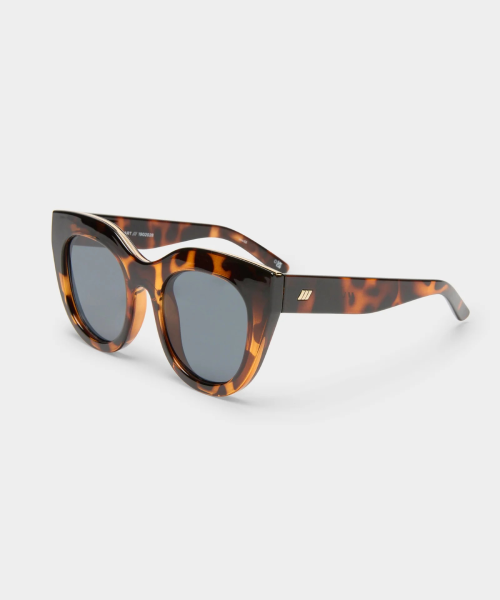
Le Specs produces genuinely quality sunglasses — real UV400 protection, quality lens that doesn’t distort, frames that hold up — at prices that make daily wear without anxiety possible. The Air Heart is the slightly oversized cat-eye silhouette that works across face shapes and photographs beautifully. One of the most wearable shapes in the range.
- Price: $59–$79
- Available at: Le Specs (lespecs.com), ASOS, Revolve, Urban Outfitters
- Best for: The everyday sunglasses that look good, protect properly, and don’t require precious treatment because the price makes replacement non-traumatic
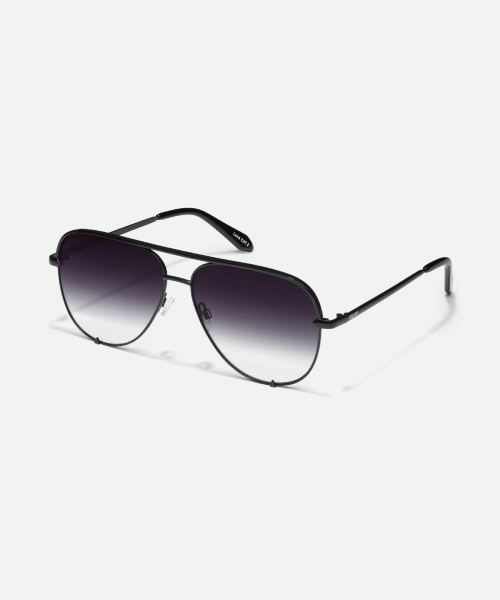
Quay produces accessible sunglasses with lens quality and UV protection above what the price would suggest, in designs that are genuinely considered. The High Key Mini is the small, square-frame version of the oversized style — works better on smaller faces than many of the currently fashionable oversized options.
- Price: $55–$75
- Available at: Quay (quayaustralia.com), ASOS, Urban Outfitters
- Best for: Quality accessible sunglasses in a slightly smaller frame for those who find oversized styles overwhelming
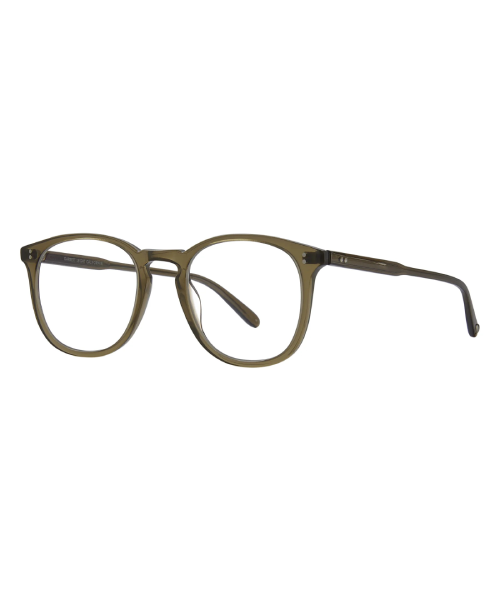
Garrett Leight produces made-in-the-US acetate sunglasses with optical-quality lenses and frame construction that genuinely holds up through years of daily use. The Kinney is the slim, slightly vintage-influenced oval frame that works across face shapes and reads as considered without being overtly fashionable.
- Price: $295
- Available at: Garrett Leight (garrettleight.com), Selfridges, Net-a-Porter
- Best for: The investment sunglasses that last indefinitely through daily use and develop a specific character through wear that cheaper frames don’t
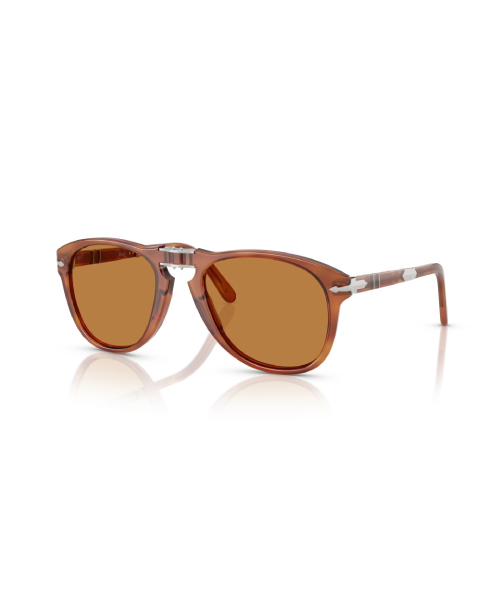
Persol is the Italian eyewear brand whose heritage dates back to the 1930s and whose lens quality and frame craftsmanship set a benchmark that most sunglasses at any price point don’t reach. The folding 714 is the most iconic Persol model and the one that has looked right across every decade since it was designed.
- Price: $315–$350
- Available at: Persol (persol.com), Sunglass Hut, Net-a-Porter
- Best for: The investment sunglasses for those who want Italian optical quality and a design that has proven over decades that it doesn’t need a trend to look right
Why UV Protection Actually Matters
The UV protection question in sunglasses is one that gets less attention than the style question and matters significantly more for long-term eye health. Sunglasses that don’t adequately filter UV radiation are in some ways worse than no sunglasses at all — because the tinted lens causes the pupil to dilate (letting in more light and therefore more UV), while the lens itself filters inadequately.
Adequate UV protection means UV400 — filtering all UV radiation up to 400 nanometers, which covers both UVA and UVB. This is not expensive to achieve. Le Specs, Quay, and most modern sunglasses at above very cheap price points achieve UV400. What you’re looking for is the label confirmation rather than an assumption based on price.
Polarization is a separate variable that’s often conflated with UV protection but isn’t the same thing. Polarized lenses reduce glare from horizontal surfaces — particularly useful when driving or near water. They don’t inherently provide better UV protection than non-polarized lenses at the same UV400 rating. Whether polarization is worth paying for depends on whether glare reduction is meaningful for how you use sunglasses.
Frame Shapes and Face Shapes
The face shape and frame shape relationship is the most talked-about subject in sunglasses advice and also the most over-complicated. The broad principle that’s actually useful: look for a frame shape that provides some contrast to your natural face shape. Round faces look more defined with angular frames. More angular faces are softened by rounder or oval frames. Oval faces are the most versatile — most frame shapes work.
The bigger practical variable for most people is face size relative to frame size. A very large frame on a small face is overwhelming. A very small frame on a large face looks undersized. The Quay High Key Mini exists specifically to serve those who find the currently fashionable oversized frames too much — it’s the smaller version of the same proportional balance.
Beyond those broad principles: try things on rather than deciding purely from photos. The same frame looks completely different on different faces and the way a frame works with your specific features is something you can only really assess in a mirror.
The Case for One Nice Pair and One Casual Pair
The sunglasses wardrobe that actually works for most people is not one expensive pair you’re afraid to wear every day for fear of losing or scratching them, and not a collection of cheap pairs you cycle through as they break. It’s two pairs: one that you’re genuinely happy wearing every day without anxiety, and one that’s the investment piece for occasions when you want something that looks more deliberate or for activities where the better lens quality matters.
The Le Specs or Quay are the everyday pair. UV400 protection, quality lens, designs that are genuinely good, price that makes replacement when they’re inevitably lost or scratched non-traumatic. The Garrett Leight or Persol are the investment pair for when you want something that will still be in your possession in five years, that develops character through use rather than just wearing out, and that sits a level above the everyday pair in both lens quality and material longevity.
Lens Color and What It Affects
The color of a sunglass lens affects both how things look through the lens and how the sunglasses look on the face.
Brown and amber lenses enhance contrast and warm up the light — particularly good for driving and outdoor activities in variable light because they make details sharper. They also read as warmer and more vintage-influenced on the face.
Grey and black lenses provide the most accurate color perception — things look the way they actually are, just darker. This is the most neutral option both visually and aesthetically.
Green lenses, which Persol is particularly known for, provide excellent contrast and color accuracy in bright light, with a specific quality to the visual experience that many people find superior to grey for long outdoor wear.
Mirrored lenses are purely about the exterior aesthetic rather than the internal optical quality — the mirroring doesn’t change how you see out, only how others see in.
Conclusion
Sunglasses worth buying start with UV400 protection — this is the non-negotiable and it’s achievable at accessible prices — and then balance lens quality, frame construction, and shape against what you actually need from the accessory and what you’re prepared to invest. Le Specs and Quay deliver genuine quality at prices that make everyday use without anxiety possible, which is the more practical approach for the sunglasses that are going to be on your face every sunny day. Garrett Leight and Persol represent the investment tier where made-in-the-US acetate and Italian optical craftsmanship produce sunglasses that improve with use and last indefinitely. The right combination for most people is both — one everyday pair in the accessible tier, one investment pair that lasts. The eyes are worth the investment in genuine UV protection regardless of which aesthetic tier you’re in.

