
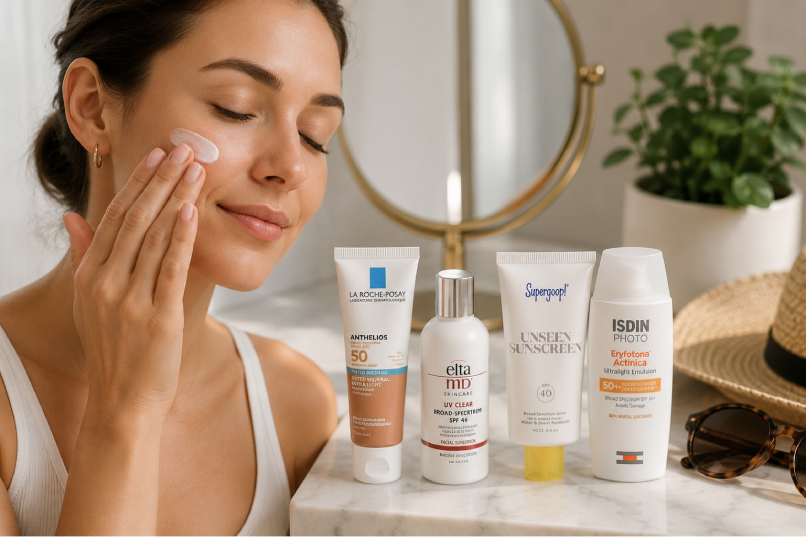
Daily sunscreen is the single most evidence-backed skincare decision anyone can make, and it’s also the one that the most people skip the most consistently. The reason it gets skipped is usually practical rather than philosophical — most people understand that SPF matters, but the experience of most face sunscreens involves white cast, pilling under makeup, a greasy finish that sits on top of the skin rather than absorbing, or a feeling that adds a step and a texture that makes the morning routine worse rather than better.
The formula problem is real and it’s getting better. The range of face sunscreens that provide meaningful protection without significant aesthetic compromises has grown considerably over the past few years, and the products below represent the current best of that expanding category.
Products
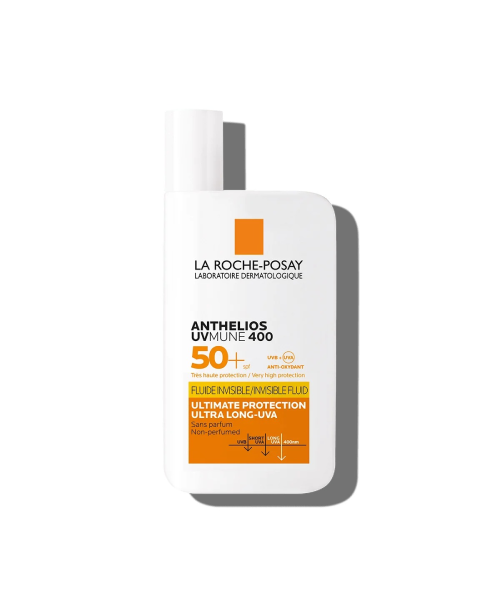
La Roche-Posay is the sunscreen brand that dermatologists recommend most consistently across both European and American markets, and the UVMune 400 is their most technically advanced formula — using Mexoryl 400 to filter UVA rays at wavelengths that most sunscreens don’t reach. The finish is lightweight enough to wear under makeup without pilling, the formula absorbs without the greasy residue that many chemical SPF products leave, and the SPF 50+ protection covers the full UV spectrum.
- Price: $39.99 / £19.99
- Available at: La Roche-Posay (laroche-posay.co.uk), Boots, Superdrug, Target, pharmacies
- Best for: Daily face SPF that works under makeup, provides genuine broad-spectrum protection, and doesn’t compromise the rest of the skincare routine with a difficult texture
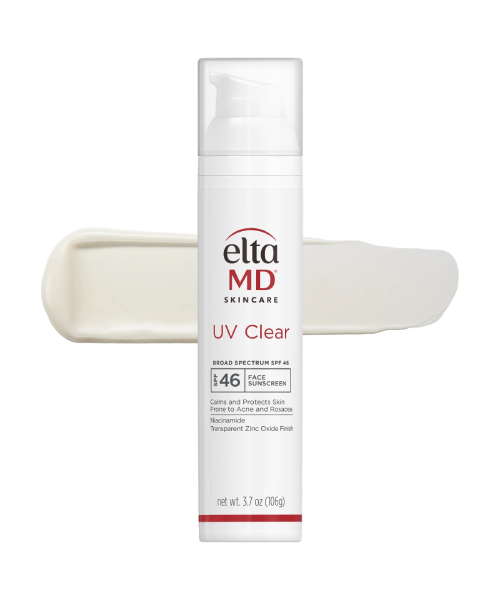
EltaMD is the dermatologist-recommended mineral-chemical hybrid SPF that’s particularly popular for acne-prone and sensitive skin because the zinc oxide in the formula calms inflammation while the other UV filters provide broad-spectrum coverage. The formula is one of the lightest-feeling in the mineral-inclusive category and doesn’t leave the white cast that pure mineral SPFs often do in standard concentrations.
- Price: $39 / available in US primarily
- Available at: EltaMD (eltamd.com), Dermstore, SpotLyte
- Best for: Acne-prone or sensitive skin that benefits from zinc oxide’s calming properties alongside genuine broad-spectrum SPF coverage
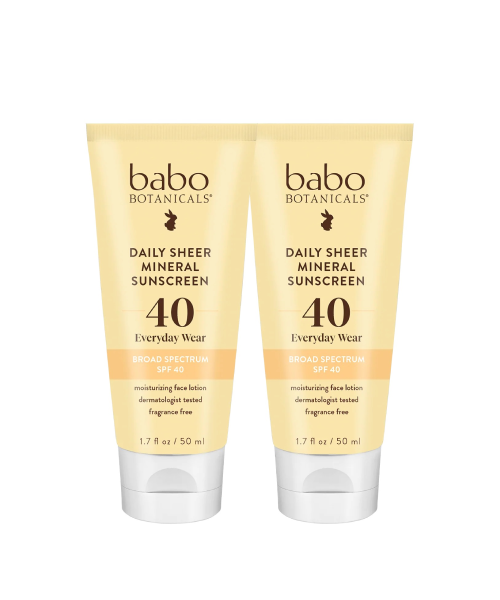
Babo Botanicals produces the mineral SPF that most successfully addresses the white cast problem while maintaining the clean formulation standard that makes mineral sunscreen the recommended option for those who want to avoid chemical UV filters. The sheer finish is achieved through micronized zinc oxide particles that provide less visible residue than standard zinc oxide, and the clean formulation makes it suitable for sensitive skin and pregnancy.
- Price: $25.99
- Available at: Babo Botanicals (babobotanicals.com), Target, Amazon
- Best for: Those who want clean, mineral-only SPF without significant white cast — particularly suitable for pregnancy and sensitive skin
Why SPF 30 Is the Minimum and SPF 50 Is Better
The SPF number refers to the filter’s ability to block UVB rays specifically — the rays primarily responsible for sunburn and skin cancer. SPF 30 blocks approximately 97% of UVB rays. SPF 50 blocks approximately 98%. This sounds like a small difference in percentage terms but represents a meaningful practical difference in how much UV reaches the skin, particularly because application in real life is almost always thinner than the laboratory conditions used to test SPF ratings.
In laboratory testing, SPF ratings are determined by applying 2mg per square centimeter of sunscreen. In real-world use, most people apply approximately 0.75mg per square centimeter — about a third to a half of the tested amount. This means the actual SPF delivered in real use is significantly lower than the number on the bottle. A product rated at SPF 50 applied at real-world thickness provides meaningful protection. An SPF 15 applied at real-world thickness is providing very limited protection.
The practical recommendation: SPF 50 or higher, applied generously, reapplied after two hours of direct sun exposure. The reapplication is the step most people skip that has the most impact on actual protection.
Chemical vs Mineral SPF — The Practical Considerations
The chemical versus mineral sunscreen debate has specific practical dimensions worth understanding.
Chemical UV filters (oxybenzone, avobenzone, octinoxate, and others) work by absorbing UV radiation and converting it to heat. They tend to have better cosmetic formulations — lighter weight, no white cast, easier to apply uniformly. Some have raised questions about hormone disruption and environmental impact (particularly coral reef damage from oxybenzone), which is why some people prefer to avoid them, particularly during pregnancy.
Mineral UV filters (zinc oxide and titanium dioxide) work by physically reflecting UV radiation rather than absorbing it. They’re considered safer for those with concerns about chemical absorption, are the recommended option for pregnancy, and are gentler on sensitive and reactive skin. The trade-off is cosmetic — white cast in higher concentrations, sometimes heavier texture. Micronized mineral particles reduce the white cast significantly, as Babo Botanicals demonstrates.
The choice between them is personal and contextual. For sensitive skin, pregnancy, or those with concerns about chemical filters, mineral is the recommendation. For those who want the best cosmetic formulation and have no specific chemical filter concerns, chemical or hybrid formulas like EltaMD provide better wearability for most people.
Application — The Step That Determines Whether SPF Actually Protects
Applying sunscreen correctly is the variable that most affects how much protection it actually provides. The common application errors: not using enough (a teaspoon for the face, not a few drops), applying too early and not reapplying (SPF degrades with UV exposure, so reapplication every two hours in direct sun matters), and missing areas (the ears, the back of the neck, the hands).
For daily urban use with limited direct sun exposure, a single morning application of a well-formulated SPF 50 provides meaningful protection for the day. For extended outdoor time, the beach, or gardening — any situation with significant sustained UV exposure — reapplication is not optional.
Conclusion
Daily face SPF is the single most impactful skincare habit available and the one most consistently skipped because the experience of most SPF products makes the morning routine worse. La Roche-Posay Anthelios offers the most technically advanced UVA protection available in a cosmetically elegant formula that works under makeup. EltaMD UV Clear provides the zinc oxide calming benefit for acne-prone and sensitive skin in the lightest-feeling mineral-inclusive formula. Babo Botanicals achieves mineral-only SPF without significant white cast for those who want clean formulation without chemical filters. And Studs’ daily moisturizer with SPF combines two steps for those prioritizing simplicity. Whichever you choose, apply enough of it, apply it as the last step in the morning routine, and reapply if you’re going to be in significant sun. The protection it provides compounds across years in a way that no treatment product can replicate.

