
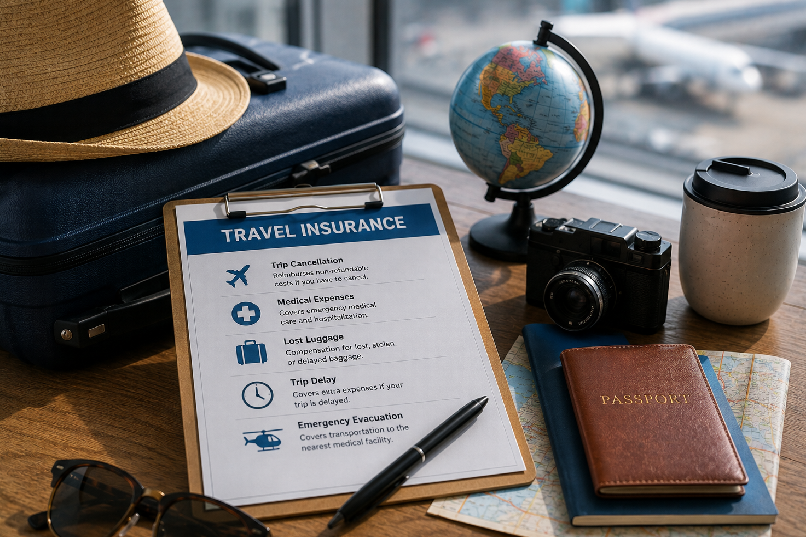
Travel insurance is the purchase that most people make reluctantly, hope not to use, and are extraordinarily grateful for when they need it. It’s also the category where most people buy inadequate coverage because the cheapest option seemed sufficient until the specific situation arose where it wasn’t — the medical evacuation that the basic plan didn’t cover, the trip cancellation for a reason the policy excluded, the lost luggage that was worth more than the reimbursement limit.
The travel insurance conversation is not about whether to buy it. Anyone who has had a significant travel incident without adequate insurance would not repeat that choice. The conversation is about understanding what coverage is genuinely necessary for the specific trip and making sure the policy actually covers it.
Products
Nomatic Annual Travel Coverage Partnership
Nomatic partners with travel insurance providers to offer their community access to annual travel coverage that covers the full range of Nomatic travelers’ typical trip types — adventure travel, frequent business travel, and the kind of active travel that standard travel insurance sometimes excludes. The annual policy covers multiple trips per year rather than requiring a separate policy for each trip.
- Available at: Nomatic (nomatic.com) partner links
- Best for: Frequent travelers who take multiple trips per year — the annual coverage that’s more economical than individual trip policies and provides consistent coverage across all trips
Padi Dive Travel Insurance
Padi provides dive travel insurance specifically designed for diving activities — the standard exclusion in most travel policies that covers “hazardous activities” as an exclusion rather than a coverage item. For those who dive and travel for diving, the Padi-specific insurance covers the dive-specific medical situations (decompression illness primarily) that standard travel insurance excludes, and the evacuation to a hyperbaric chamber that decompression treatment requires.

- Available at: Padi (padi.com), DAN (Divers Alert Network)
- Best for: Divers who travel for diving and want coverage that specifically includes diving activities and the specific medical situations that diving can create
Halfdays Adventure Travel Insurance
Halfdays partners with adventure travel insurance providers to offer coverage specifically designed for the outdoor and adventure activities their audience engages in — the hiking, skiing, snowboarding, and other outdoor activities that standard travel insurance either excludes or covers inadequately. The Halfdays partnership connects to coverage appropriate for the specific activities the brand designs clothing and gear for.
- Available at: Halfdays (halfdays.com) partner links
- Best for: Active and adventure travelers who want coverage that specifically includes the outdoor activities that standard travel insurance excludes
ThighSociety Medical Coverage for Travel
ThighSociety, as part of their practical travel resource content, connects their community to appropriate medical travel insurance for the trips their audience takes — the warm-weather, active sightseeing travel that benefits from medical coverage for the specific health situations that sustained outdoor activity in hot conditions can produce.
- Available at: ThighSociety (thighsociety.com) partner recommendations
- Best for: Those who want guidance on appropriate medical coverage for active warm-weather travel from a brand that understands the specific activities their audience engages in
What Travel Insurance Actually Needs to Cover
The coverage categories that matter most for most travelers:
Medical coverage with sufficient limits. The most expensive travel insurance outcome is the one without adequate medical coverage — the medical evacuation from a remote location, the hospital stay in a country with no healthcare reciprocity agreement, the emergency dental or medical care in a country with high healthcare costs. The US specifically is one of the most expensive medical environments globally, so coverage limits that are adequate for European travel may be completely inadequate for travel to the US. Medical coverage of at least $500,000 is the minimum worth having; $1,000,000+ for any travel to the US or other high-cost healthcare environments.
Medical evacuation coverage. Separate from treatment costs, the cost of evacuating a sick or injured traveler to appropriate medical care — or back home — can reach $100,000-$200,000 for remote or long-distance evacuations. Many basic travel policies exclude this or provide inadequate limits.
Trip cancellation and interruption. This coverage refunds prepaid, non-refundable trip costs when the trip is cancelled or interrupted for covered reasons. The specific covered reasons in the policy matter enormously — “any reason” cancellation coverage is the most comprehensive but most expensive; standard policies have specific covered reason lists that may or may not include the reason you’d actually cancel.
Baggage and personal effects. The limits on most policies are lower than the value of what most travelers carry — the combination of electronics, camera equipment, clothing, and toiletries that a typical traveler packs often exceeds the policy’s total baggage limit.
The Activities Exclusion Problem
The most common travel insurance coverage gap: the exclusion of “hazardous activities.” Most standard travel insurance policies exclude injuries sustained during activities including skiing, snowboarding, scuba diving, rock climbing, motorcycling, and other activities that are standard components of the trips that many travelers specifically take.

The resolution is activity-specific coverage — the Padi dive insurance for diving, the adventure sports add-on for skiing and other outdoor activities. This costs more than standard coverage and is worth it for anyone whose trip specifically includes these activities. The basic policy that doesn’t cover the specific activity that caused the incident is the specific outcome that makes travel insurance meaningless when most needed.
Pre-Existing Conditions
Pre-existing medical conditions are the second most common travel insurance coverage gap. Most travel insurance policies either exclude pre-existing conditions entirely or require purchasing within a specific time window after the initial trip deposit to include a “pre-existing condition waiver.” Reading the pre-existing condition terms of any policy before purchasing is essential for anyone with ongoing health management needs.
Conclusion
Travel insurance worth buying is travel insurance that covers the specific situations that could actually occur on the specific trip being insured. Medical coverage with adequate limits is the foundation — the minimum worth having starts at $500,000 and should be higher for US travel. Activity-specific coverage for any trip that includes the activities that standard policies exclude — Padi for diving, adventure add-ons for skiing and other outdoor activities. Medical evacuation coverage separate from treatment costs. And trip cancellation coverage with reasons that actually cover the circumstances under which you’d cancel. The travel insurance premium that seems expensive before the trip is the best investment you’ll make if you need it — and the one most worth understanding before purchasing rather than after.

