
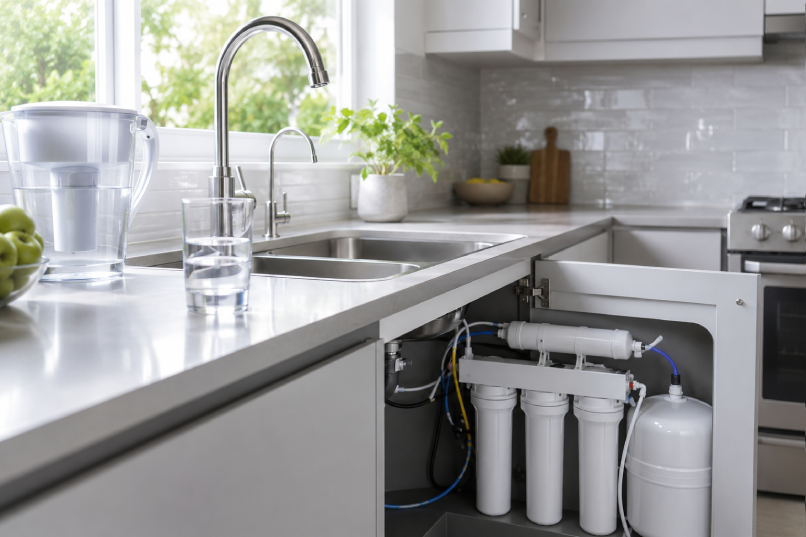
The water filtration category is one where the difference between what most people use (a standard pitcher filter or nothing at all) and what the evidence suggests is genuinely useful is significant, and where the marketing has both exaggerated some claims and undersold others in ways that make the real picture hard to find.
The baseline reality: municipal tap water in most developed countries is safe in the sense of meeting the regulatory standards for waterborne pathogens. It is not uncontaminated in the sense of being free from the range of chemical compounds that those regulatory standards either don’t cover or cover at levels that some researchers consider too lenient. PFAS — per- and polyfluoroalkyl substances, the “forever chemicals” that have been found in water supplies across the developed world — are the most discussed of these currently, and standard pitcher filters do not remove them.
Understanding what’s in your specific water and which filtration technology addresses those specific compounds is the foundation of making a useful filtration purchase.
Products
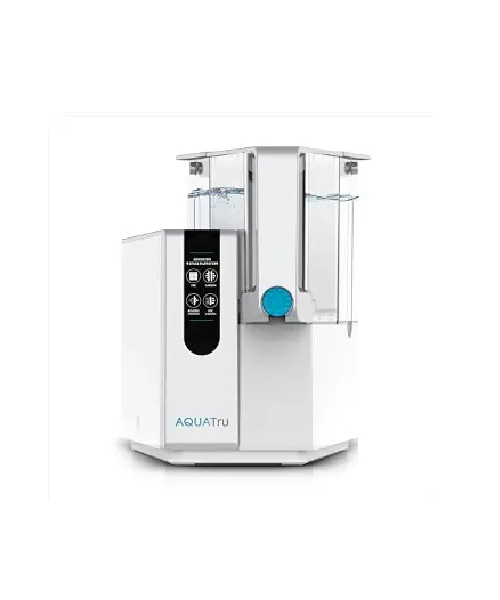
AquaTru’s reverse osmosis system is the countertop filtration option with the strongest independent verification credentials in the category. The NSF/ANSI Standard 58 certification covers the removal of contaminants including PFAS, lead, chlorine, chloramines, and other municipal water treatment byproducts at documented removal rates. The countertop format means no plumbing modification, the filter change is straightforward with app reminders, and the four-stage filtration produces water that tastes genuinely different — cleaner, without the chlorine smell that most people have normalized in their tap water.
- Available at: AquaTru (aquatru.com), Williams Sonoma, Amazon
- Best for: Genuinely purified drinking water at home with independently verified performance — the countertop solution for those who want the full picture on what they’re drinking
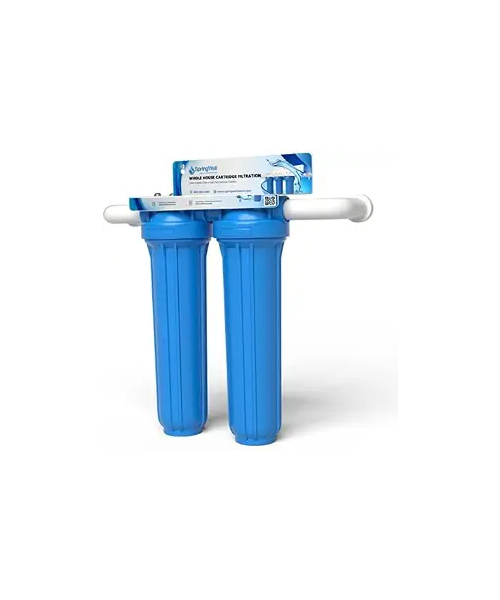
SpringWell’s CF1 uses a catalytic carbon filtration system to remove chlorine, chloramines, herbicides, pesticides, and haloacetic acids across every water outlet in the house — not just the drinking tap. The specific benefit beyond drinking water: chlorine in shower water has documented effects on skin and hair health (the specific reason hair color fades faster in swimming pools than elsewhere), and removing it whole-house addresses this. The installation requires a plumber but is a one-time modification.
- Available at: SpringWell (springwellwater.com)
- Best for: Whole-house water filtration for those who want clean water at every outlet, particularly those with skin or hair sensitivity to chlorinated water
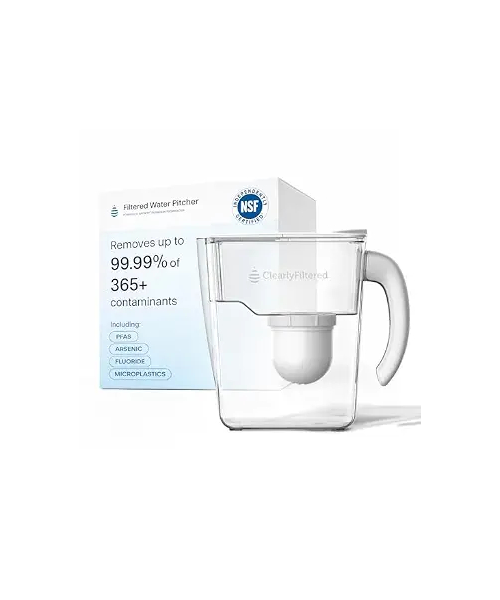
For those who want significant filtration improvement over a standard Brita without the commitment of a countertop or whole-house system, Clearly Filtered’s pitcher removes 365+ contaminants including PFAS, lead, chlorine, and fluoride at filter efficiencies the company publishes and that NSF testing has verified. The filtration technology is genuinely above standard activated carbon pitcher filters.
- Available at: Clearly Filtered (clearlyfiltered.com), Amazon
- Best for: Significant filtration improvement at a pitcher price point — genuinely better than standard activated carbon pitchers at documented removal rates
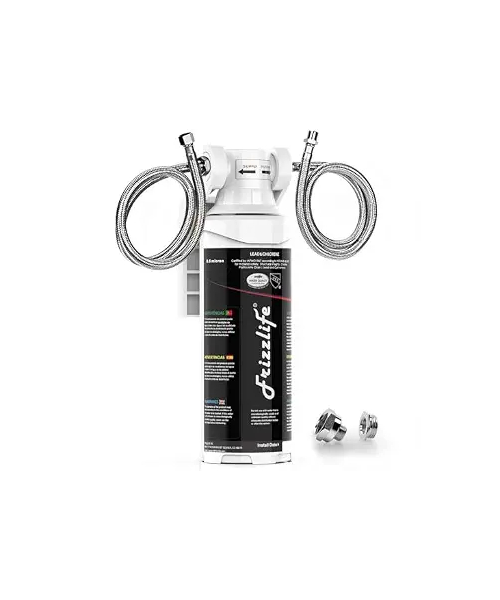
Frizzlife produces under-sink filtration that connects directly to the existing cold water supply line without requiring a dedicated faucet installation. The three-stage carbon block filtration removes chlorine, lead, and most common contaminants in a compact under-sink format that doesn’t occupy counter space. The filter life is longer than pitcher filters and the system is significantly less expensive than countertop reverse osmosis.
- Available at: Frizzlife (frizzlife.com), Amazon
- Best for: Significant filtration improvement over a pitcher filter with the convenience of direct tap integration — the middle option between a pitcher and a full reverse osmosis system
What Standard Pitcher Filters Don't Remove
Standard Brita and similar activated carbon pitcher filters are genuinely effective at improving water taste and removing chlorine, some heavy metals at low concentrations, and certain volatile organic compounds. They are not effective at removing PFAS, fluoride, nitrates, many pharmaceuticals, and the full range of heavy metals at higher concentrations.
This matters most in specific geographic contexts. If you live in an area with known PFAS contamination — a military base, industrial area, or community where this has been identified in water testing — a standard pitcher filter provides a false sense of security against the specific contaminant of concern. Reverse osmosis (AquaTru) or the high-performance pitcher filtration (Clearly Filtered) are the technologies with documented PFAS removal rates.
The Environmental Working Group (EWG) tap water database is a useful starting point for understanding what your specific municipal water supply contains — it maps utility water testing data across the US and identifies contaminants present at levels above EWG’s (more conservative than EPA) guidelines. This gives you specific information about your water rather than requiring a general filtration decision based on average municipal water quality.
The Difference Reverse Osmosis Makes
Reverse osmosis is the filtration technology that produces the most comprehensive contaminant removal available in a home system. The process forces water through a semipermeable membrane at pressure, removing particles, dissolved contaminants, and chemical compounds that other filtration methods leave behind. The result is water that’s essentially demineralized — which is why most reverse osmosis systems add minerals back in a fourth stage, or why reverse osmosis water is sometimes remineralized before drinking.
The AquaTru’s specific advantage over under-sink or whole-house reverse osmosis is the countertop, no-plumbing format. It functions independently of the plumbing, can be moved when you move house, and doesn’t require any installation commitment. The tradeoff is counter space — it’s a countertop appliance roughly the size of a coffee maker.
The Whole-House Case
The case for whole-house filtration — SpringWell’s approach — is different from the case for point-of-use filtration like AquaTru. Point-of-use filtration improves drinking water. Whole-house filtration improves all the water that comes in contact with the body, including shower and bath water, water used for cooking, and water used for laundry.
The skin and hair effects of chlorinated water are genuinely documented. The skin’s microbiome is affected by regular chlorine exposure. Hair color fades faster in chlorinated water because the chlorine oxidizes the color molecules in much the same way it oxidizes everything else. For those with skin conditions like eczema or psoriasis, which are sometimes exacerbated by water chlorination, whole-house filtration can be relevant to symptom management.
The investment is higher than point-of-use — the unit cost and the professional plumbing installation — but the comprehensive benefit across all household water use changes the calculation compared to just improving drinking water.
Conclusion
Water filtration worth investing in is filtration that addresses the specific contaminants in your specific water at the level your health priorities require. AquaTru provides the most comprehensive drinking water purification in a no-plumbing countertop format with independently verified performance. SpringWell addresses chlorine and chloramines at every water outlet in the house for those who want the skin, hair, and cooking water benefits beyond just drinking water. Clearly Filtered’s pitcher provides significantly better filtration than standard activated carbon pitchers at a more accessible price point. And Frizzlife’s under-sink system is the middle option for those who want filtered tap water without a full reverse osmosis system. Check the EWG database for your specific area first, then choose the technology that addresses what’s actually in your water.

