

The coat is the most important cold-weather purchase in a woman’s wardrobe and consistently the one that gets the least thought relative to that importance. Everything else you wear in winter goes under it. The coat is what the outside world sees when you walk through any door from outside. It’s on your body for every commute, every outdoor lunch, every walk, every errand run from November through March. It shapes how your entire winter wardrobe reads to other people more than any individual piece beneath it, and yet most people either grab it quickly from wherever is convenient or hold onto the same one for a decade because replacing it feels like too much of a decision.
There’s a logic to buying a coat well. A coat worn every day for five months of the year and kept for five years accumulates 750 individual wearings from a single purchase. At that use density, spending more per wearing is more economical than it looks at purchase, and the difference in how you feel wearing something well-made versus something that was a compromise is felt every single day. These are the coats worth actually considering.
Products
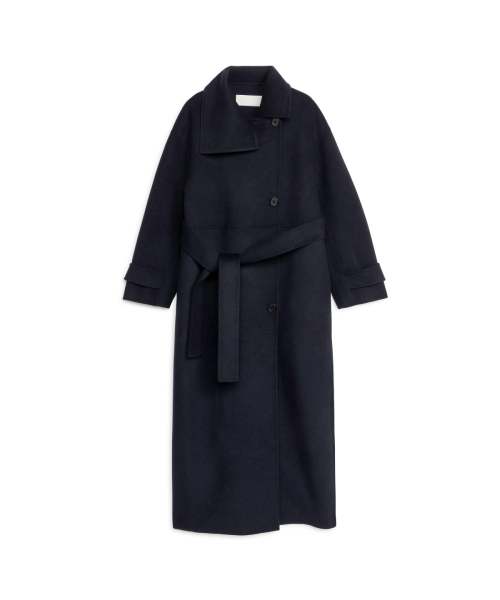
Made from a double-faced wool that has genuine weight and warmth without the bulk that cheaper wool alternatives develop. The construction quality throughout — lining, seams, button weight — is above what the price would suggest at most comparable brands. Camel and charcoal are the colorways worth buying.
- Price: $350–$420
- Available at: Arket (arket.com), in stores
- Best for: An investment wool coat that reads as considerably more expensive than it is and provides genuine warmth in real cold weather

Toteme’s signature oversized silhouette in a heavy wool-cashmere blend. Drapes correctly, warms properly, and looks as relevant now as it did three or four years ago when it first started being referenced as the quiet luxury outerwear benchmark.
- Price: $895
- Available at: Toteme (toteme.com), Net-a-Porter, Selfridges
- Best for: Spending once on a coat that won’t need replacing for a very long time
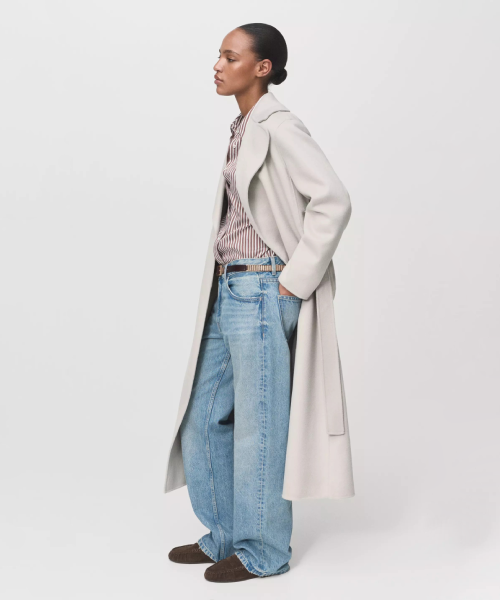
Mango’s winter coats consistently exceed their price point in this category. Wool blend fabric with real weight, a belted silhouette that creates actual shape rather than just hanging from the shoulders, construction that holds up through a real winter season.
- Price: $169
- Available at: Mango (mango.com), in stores
- Best for: A genuinely stylish winter coat at a price that doesn’t require much justification
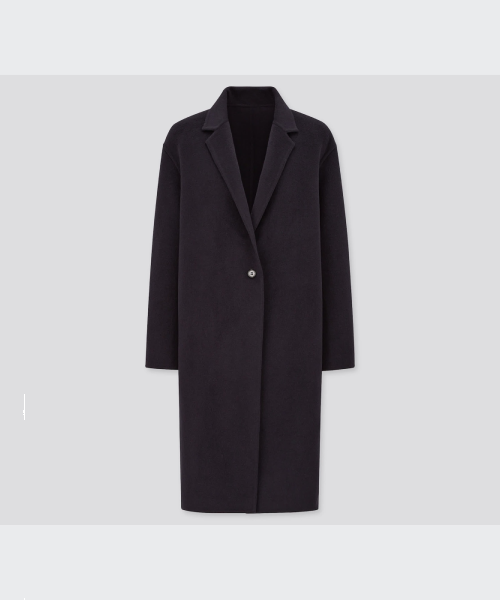
Uniqlo approaches outerwear the way they approach everything — fabric and function over trend. The cocoon coat is warm, properly structured, and cut in a silhouette that works across proportions without requiring a specific body type to make it work.
- Price: $149
- Available at: Uniqlo (uniqlo.com), in stores
- Best for: A reliable, warm, well-made winter coat at the most accessible price point on this list
Why the Coat Deserves More Thought Than Most People Give It
The logic of thinking carefully about a coat purchase becomes clear when you work through the numbers. A coat worn every day from November through March — five months, approximately twenty-two weeks — gets used roughly 150 times per season. Over five years that’s 750 individual wearings from a single garment. At that frequency, the cost-per-wearing of a $420 coat that lasts five years is around $0.56. The cost-per-wearing of a $120 coat that needs replacing every two seasons because the construction gives out is around $0.40. The numbers are closer than the upfront price suggests, and the $420 version is going to make every outfit it covers look better for the entire period.
The other reason to think carefully: the coat is visible in a way that almost nothing else in your wardrobe is. Other people see your coat. They see it before they see anything underneath it. They see it when you arrive somewhere and when you leave. The impression your winter wardrobe makes on the outside world is shaped more by the coat you’re wearing than by anything you spent twice as much time choosing to wear under it. Treating it as the afterthought in the purchase order is exactly backwards.
What Makes a Coat Worth Buying
Fiber content is the first variable worth understanding because it’s not always obvious from a product page and it determines almost everything about how warm and how durable a coat will be. A wool coat and a wool blend coat are not the same thing, and within blends the percentage matters enormously. A coat that’s 80% wool and 20% nylon behaves completely differently from one that’s 40% wool and 60% polyester. Higher wool content means better natural insulation, better drape that improves with wear, and better longevity through years of use. Polyester-heavy blends pill faster, hold their shape less consistently over time, and lack the temperature-regulating properties that make wool the right material for outerwear.
The lining is the second variable that most people don’t check but should. An unlined coat or a poorly lined coat is uncomfortable to wear over knitwear — it catches, it bunches, it creates static in a way that’s annoying every single time you put it on or take it off. A properly lined coat — silk or a quality synthetic satin — slides over layers easily and makes a real daily difference that compounds across every wearing over five months. The lining is worth checking in person before buying if at all possible.
Button quality is the third thing, and it sounds minor until your third button falls off in February and you can’t find a replacement that matches. Cheap plastic buttons look fine when new and start to look tired within a season. Horn, resin, or heavy metal buttons maintain their appearance through years of use and fasten properly every day in a way that matters more than the aesthetic when you’re rushing out the door on a cold morning.
The Case for Neutral
Every season there are coat trends. Red coats. Statement textures. Unusual silhouettes. Unexpected colorways. And every season I watch people buy the trend-specific version and then encounter the specific problem of a coat they loved in November feeling wrong by February when it’s still cold and they still need to wear it every day.
The coats on this list are in neutral colorways for a specific reason. Camel, charcoal, navy, stone, black — these sit outside trend cycles entirely. A camel wool coat bought in 2020 looks exactly as right in 2026 as it did the day it was purchased. The same coat in whatever was the statement color of that particular season does not. If you’re buying one coat and planning to wear it for the next five years, the neutral is almost always the more useful choice. The statement coat can be a fun second coat. It’s not the right first coat.
Warmth and What Actually Provides It
A coat that looks warm and a coat that is warm are not the same thing, and this distinction is worth making clearly because product photography is very good at making the former look like the latter. Warmth in a coat comes from two things primarily: fiber content and fabric weight. Wool and cashmere have natural insulation properties that synthetic alternatives don’t replicate. A double-faced wool — where both sides of the fabric are finished and there’s no separate lining, creating a particularly thick and dense material — is among the warmest coat constructions available short of down insulation.
Down-filled coats are the warmest option for extreme cold but they operate in a different aesthetic and practical category from the structured wool options on this list. For a cold winter that involves outdoor commuting and daily walks in temperatures down to around zero Celsius, a quality double-faced wool or heavy wool-cashmere blend coat is sufficient. For genuinely extreme cold — the kind that comes with extended outdoor time in sub-zero temperatures — down insulation or a down-lined shell is a different conversation.
How Long a Coat Should Last
The expected lifespan of a well-made wool coat with reasonable care is ten to fifteen years. This isn’t aspirational — it’s the actual lifespan of a quality wool garment when it’s stored properly and cared for consistently. Dry-cleaned once or twice a season rather than machine-washed. Hung on a proper shaped hanger rather than folded on a shelf. Stored with cedar blocks to deter moths in the off-season. Treated for any stains promptly rather than left to set and become permanent.
Most people replace coats more frequently than they need to. A coat that still fits and functions is worth maintaining rather than replacing for the sake of newness. Pilling on the sleeves can be removed with a fabric shaver. A broken button can be replaced with one that matches or with a full set swap if a match can’t be found. A loose lining can be repaired at any dry cleaner. These are small, inexpensive interventions that extend the life of a garment that took significant resources to make and can give significant value in return across many more years of use.
Conclusion
The winter coat is the wardrobe purchase that rewards more thought than almost anything else you’ll buy for cold weather, because it’s what you wear every day and what shapes how every other outfit reads to the outside world for five months of the year. The Arket double-faced wool is the investment piece at the most accessible end of that category — genuinely warm, genuinely well-constructed, and reads as considerably more expensive than it is. Toteme’s Original Coat is the benchmark for those who want to spend once on something that removes the coat decision from their life for the next decade. Mango delivers above-expected tailoring and genuine style at a price that’s hard to argue with. And Uniqlo provides reliability and warmth at the most accessible price point on the list. What all four have in common is that they’re designed in silhouettes that don’t require a specific trend context to look right, which means they work not just this season but the seasons after it. Buy the coat well and you won’t need to think about it again for a long time.

