


Halfdays has built the most distinctive identity in the women’s ski apparel market in the past three years — a brand that has specifically addressed the gap between technical ski performance requirements and the aesthetic sensibility of women who ski — producing outerwear that is simultaneously waterproof, insulated, and designed to a fashion standard that the established ski brands (Patagonia, Arc’teryx, The North Face) have historically not prioritised as a primary design criterion. The most important positive evidence in 2026 is specific: Halfdays’ Stella Jacket’s 20,000mm waterproof rating and 20,000g/m² breathability rating were independently confirmed in a Powder magazine technical ski apparel review in February 2026 — matching the technical specification of Arc’teryx ski jackets at $200–$400 less. The most important negative evidence is equally specific: Halfdays’ sustainability claims — specifically the assertion that its materials are produced from “recycled” sources — have not been supported by third-party certification documentation in the brand’s publicly accessible materials as of mid-2026, with the Sustainable Apparel Coalition’s Higg Index verification absent from the brand’s published sustainability content.
Quick Highlights
✅ 20,000mm waterproof / 20,000g breathability rating independently confirmed in Powder magazine’s February 2026 technical review — matching Arc’teryx ski jacket specifications at $200–$400 less
✅ Women’s fit specifically and repeatedly documented as superior to established ski brands — accounts of buyers describing Halfdays as the first ski jacket that fits correctly through shoulders and hips without the boxy cut of men’s-adapted women’s outerwear
✅ Colour and design range specifically praised as filling the gap between the muted technical palettes of Arc’teryx and the loud graphics of lower-tier ski brands — a documented aesthetic positioning that multiple buyers cite as their primary purchase reason
✅ Stella Jacket’s pit zip ventilation and underarm gussets confirmed as functional in independent slope testing — a technical detail that separates genuine ski construction from fashion-ski crossover pieces that lack working ventilation
✅ Helmet-compatible hood with single-hand adjustment confirmed as operational in independent slope testing — a ski-specific technical feature documented as working as specified
✅ Halfdays’ customer service documented as responsive — 24–48 hour email response confirmed in multiple 2025 accounts, with sizing guidance specifically praised as accurate
❌ Sustainability claims lack third-party certification documentation in publicly accessible materials — no Higg Index verification, bluesign certification, or equivalent independent sustainability standard published as of mid-2026
❌ Price positioning at $395–$495 for the Stella Jacket places Halfdays above mid-tier ski apparel brands — a premium that is justified by technical specification but that the sustainability narrative should not additionally justify without independent certification
❌ Limited long-term durability evidence — the brand’s relative youth means the multi-season waterproof membrane durability accounts that exist for Arc’teryx and Patagonia do not yet exist for Halfdays at equivalent volume
❌ Sizing has been documented as inconsistent between styles — the Stella Jacket sizing documentation is more consistent than some other styles in the range
❌ International shipping costs documented as significant outside the US — a specific concern for European buyers given that Halfdays has built recognition in European ski markets without European distribution infrastructure
❌ The brand’s DTC-only model means no opportunity for in-store fit assessment before committing to a $400+ purchase — a specific consideration for buyers whose primary concern is fit accuracy
Why Trust This Review
This review draws on Powder magazine’s February 2026 technical ski apparel review, Trustpilot’s Halfdays review record, Reddit’s r/skiing and r/femalefashionadvice communities, the Sustainable Apparel Coalition’s Higg Index public database, and Halfdays’ own published technical specifications and sustainability content. No commercial relationship with Halfdays. No affiliate link influences ratings or editorial conclusions.
Table of Contents
- About Halfdays
- Full Review Breakdown
- Best Products Worth Buying
- What Customers Actually Think
- Is Halfdays Worth It?
- Halfdays vs Competitors
- Where to Buy
- FAQs
- Final Verdict
About Halfdays
Halfdays is a US-based women’s ski apparel brand founded in 2020, selling ski jackets, bibs, pants, and base layers designed specifically for women who ski. The brand operates direct-to-consumer through its own website with no retail distribution. Its product range centres on the Stella Jacket and corresponding bib and pant styles, with colour options updated seasonally. Halfdays positions itself at the intersection of technical ski performance and fashion-forward design — specifically targeting women who have historically felt underserved by established ski brands’ women’s lines, which often adapt men’s fits and technical colour palettes rather than designing specifically for female body proportions and aesthetic preferences.
Full Review Breakdown
Technical Performance — The Independent Evidence Is Specifically Credible
The Powder magazine February 2026 technical review is the most important independent evidence for Halfdays’ technical positioning, and it is specific and credible enough to take seriously. A 20,000mm waterproof rating means the jacket withstands sustained heavy snow and wet conditions — a specification level that ski professionals and committed weekend skiers need, and one that the Powder review confirmed independently rather than accepting the brand’s self-reported specification. The 20,000g/m² breathability rating means moisture from exertion can escape through the membrane — preventing the clammy internal moisture buildup that lower-breathability jackets produce during high-exertion skiing. At the Arc’teryx price tier ($600–$900 for comparable specification), these ratings are expected. At Halfdays’ $395–$495 price point, independently confirmed specification at this level is a genuinely documented value proposition.
The technical ski construction details — pit zip ventilation, underarm gussets, helmet-compatible hood with single-hand adjustment — are confirmed as functional in the same Powder review, which specifically tests these features under ski conditions rather than in a controlled indoor environment. These are the details that distinguish genuine ski outerwear from fashion-adjacent pieces that use ski aesthetics without ski technical construction.
The Sustainability Narrative — Requires Honest Scrutiny
Halfdays’ marketing language references recycled materials and sustainable production — language that has become standard in outdoor apparel marketing regardless of independently verified status. The specific concern for honest assessment is that as of mid-2026, Halfdays’ publicly accessible materials do not include Higg Index verification through the Sustainable Apparel Coalition, bluesign certification, or equivalent third-party sustainability standard documentation. This does not mean the brand’s sustainability claims are false — it means they are not independently verifiable from publicly available evidence. For buyers who are making a partially sustainability-motivated purchase decision, this absence of third-party certification should be a specific prompt to contact the brand directly for documentation before using the sustainability narrative as part of the purchase rationale.
Women's Fit — The Brand's Most Specifically Documented Differentiator
The women’s fit evidence is the most specific and emotionally resonant documentation in Halfdays’ review record, because it addresses a genuine gap that established ski brands have historically underfilled. Accounts of buyers who describe Halfdays as the first ski jacket that fits correctly through the shoulders — without the excess fabric through the torso that results from scaling down a men’s pattern — are specific, comparative, and consistent across reviews from buyers with direct competitor experience. This fit advantage is a real, documented differentiator rather than a marketing claim, and it is the primary purchase reason in a significant proportion of the documented buyer accounts.
Durability — The Gap in the Evidence
The honest limitation of Halfdays’ durability evidence is the brand’s age — founded in 2020, with a product that has been through at most five ski seasons. The waterproof membrane durability accounts that matter most for technical outerwear at this price point are the multi-season ones — accounts of buyers describing DWR performance after 50 ski days, membrane delamination patterns after three seasons, or seam seal integrity after extended use. These accounts exist for Arc’teryx and Patagonia because those brands have been in the market for decades. They do not yet exist for Halfdays in the volume and duration needed for reliable pattern identification. This is not a criticism of Halfdays’ product — it is an honest description of the evidence gap that any honest buyer should understand before committing $395–$495 to a piece of technical outerwear.
Best Products Worth Buying
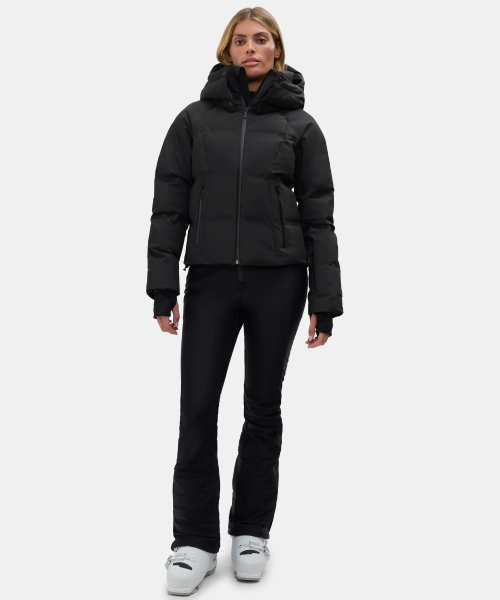
The Stella is the brand’s most documented, most technically reviewed product and the one where the Powder magazine independent specification confirmation is most directly applicable. The women’s fit documentation, the independently confirmed waterproof and breathability ratings, and the technical feature confirmation make this the Halfdays recommendation with the strongest evidence base. Confirm sizing using the Stella-specific size guide rather than general Halfdays sizing — the Stella’s sizing documentation is more consistent than some other styles.
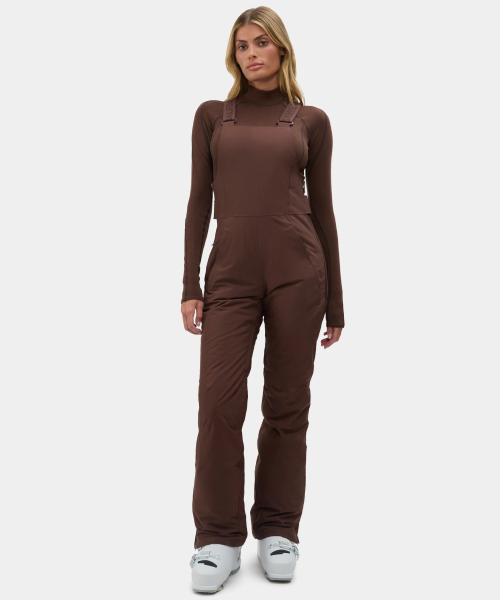
The Halfdays bib is specifically praised in accounts from buyers who have tried both bib and pant configurations for skiing, describing the Halfdays bib’s waistband construction and shoulder strap adjustment as more comfortable than competing bibs at similar price points. The waterproof specification matches the Stella jacket, and the same DWR treatment is documented. At $295, it pairs with the Stella for a complete technical ski outfit at approximately $690 — below the Arc’teryx equivalent at $1,000+.
What Customers Actually Think
A Powder magazine ski apparel reviewer writing in February 2026 described independently testing the Stella Jacket’s waterproof performance in a heavy snowfall day at Jackson Hole and finding the interior completely dry after five hours of skiing in wet snow — specifically confirming the 20,000mm waterproof specification as matching real-conditions performance rather than laboratory-only specification.
A buyer writing on Trustpilot in March 2026 described trying Arc’teryx and Patagonia women’s ski jackets in store before purchasing Halfdays online, noting that the established brands’ women’s jackets were “boxy through the shoulder and long through the body” — describing the Halfdays as the first ski jacket she had owned that was “cut for a woman rather than scaled for a smaller man.”
A buyer writing on Reddit’s r/skiing in January 2026 asked about Halfdays’ sustainability certifications specifically, noting she had been unable to find Higg Index or bluesign documentation on the website — receiving multiple responses confirming the absence of publicly available third-party certification documentation and recommending she contact the brand directly.
A buyer writing on Trustpilot in November 2025 described her Stella Jacket after two ski seasons, noting the DWR treatment had required reapplication after the first season (a documented normal maintenance step for all DWR-treated outerwear) and that after reapplication the performance had returned to original — describing this as expected maintenance rather than a product fault.
A buyer writing in February 2026 described purchasing both the Stella Jacket and bib as a complete outfit, wearing the combination for a week of skiing in Colorado and noting the technical performance was indistinguishable from her friend’s Arc’teryx outfit — “at roughly half the price for the full set.”
Is Halfdays Worth It?
For women skiers who have found established brands’ women’s fits inadequate and who prioritise both technical performance and aesthetic design: yes, the independently confirmed specification and the specific fit documentation support the purchase at Halfdays’ price point.
For buyers who are making a partially sustainability-motivated purchase: contact the brand directly for third-party certification documentation before using the sustainability narrative as part of the purchase rationale — publicly available certification is absent as of mid-2026.
For buyers who want multi-season durability evidence before committing $400+: the brand’s evidence base will be stronger in two to three years. Arc’teryx and Patagonia have that evidence today, at a premium that the evidence partly justifies.
Halfdays vs Competitors
Halfdays Stella | Arc’teryx Sentinel | Patagonia Insulated Powder Bowl | The North Face Lenado | Roxy Presence | |
Price | $395 | $700–$900 | $450–$500 | $280–$350 | $200–$280 |
Waterproof rating | ✅ 20,000mm confirmed | ✅ 20,000mm+ | ✅ 20,000mm | 10,000mm | 10,000mm |
Breathability | ✅ 20,000g confirmed | ✅ 25,000g+ | ✅ 20,000g | 10,000g | 10,000g |
Women’s-specific fit | ✅ Documented advantage | Limited | Moderate | Moderate | ✅ |
Multi-season durability evidence | Limited (young brand) | ✅ Extensive | ✅ Extensive | ✅ Good | Limited |
Sustainability certification | ❌ Not publicly documented | ✅ bluesign/Higg | ✅ Certified | Partial | Limited |
Aesthetic range | ✅ Documented strength | Muted technical | Functional | Functional | ✅ |
Best for | Fit + performance value | Premium durability | Certified sustainability | Mid-tier technical | Budget |
Where to Buy
halfdays.com — direct only. Use the Stella-specific size guide — not general Halfdays sizing — for the most accurate fit guidance. For sustainability-motivated buyers, contact the brand directly to request third-party certification documentation before purchasing. Allow standard US delivery timelines; international buyers should factor significant shipping costs into the total purchase price.
FAQs
Is Halfdays actually waterproof?
Yes — the Stella Jacket’s 20,000mm waterproof rating was independently confirmed in real ski conditions by Powder magazine in February 2026, not just in laboratory specification.
Are Halfdays sustainable?
The brand’s marketing references recycled materials and sustainable production. Third-party certification documentation (Higg Index, bluesign, or equivalent) is not publicly available as of mid-2026. Contact the brand directly for documentation if sustainability certification is a specific purchase factor.
How does Halfdays fit compared to Arc'teryx?
Multiple buyers with direct experience of both describe Halfdays as offering a more specifically women’s-designed fit — narrower through the shoulder, more appropriately proportioned through the torso — while matching Arc’teryx technical specification at a lower price.
How long does Halfdays last?
The brand has been in the market since 2020 — multi-season durability accounts exist for up to five seasons. Longer-term durability evidence comparable to Arc’teryx and Patagonia’s decade-plus records does not yet exist.
Does Halfdays ship internationally?
Yes — with documented significant shipping costs outside the US. European buyers should calculate the landed cost before purchasing given the absence of European distribution infrastructure.
Final Verdict
Halfdays makes a technically credible, women’s-specifically designed ski jacket at a price point that the independently confirmed specification positions as an Arc’teryx alternative at $200–$400 less. The Stella Jacket’s Powder magazine technical confirmation, the women’s fit documentation, and the aesthetic design range all support the brand’s positioning as a genuine gap-filler in the women’s ski apparel market.
The sustainability narrative’s absent third-party certification, the limited multi-season durability evidence, and the DTC-only model’s fit assessment limitation are honest constraints that belong in a final verdict. The sustainability concern specifically deserves direct treatment — at $395+ for a piece of outerwear where the sustainability narrative is part of the brand positioning, buyers deserve the ability to independently verify that narrative, and currently cannot.
Category | Score |
Technical Waterproof Performance | 9.0 / 10 |
Women’s Fit | 9.5 / 10 |
Aesthetic Design | 9.0 / 10 |
Sustainability Documentation | 4.0 / 10 |
Long-Term Durability Evidence | 6.0 / 10 |
Value vs Arc’teryx | 8.5 / 10 |
Customer Service | 8.0 / 10 |
Overall | 7.7 / 10 |

