

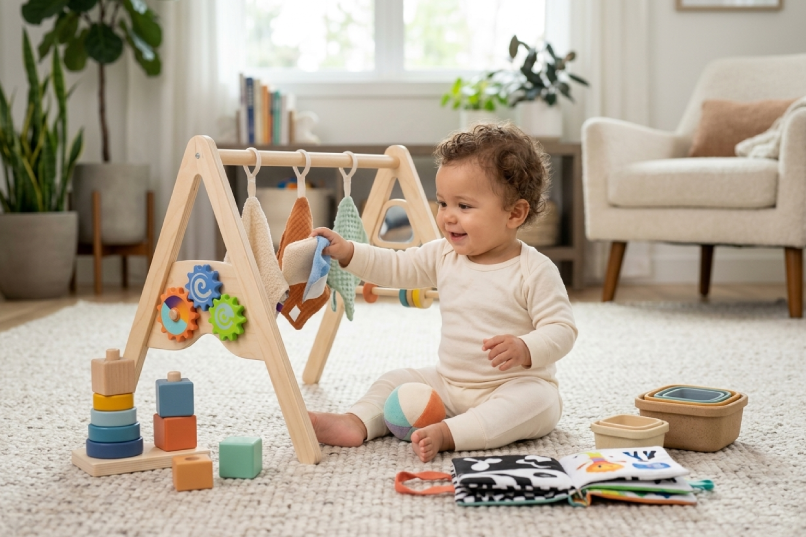
Most baby toys are either cheap plastic that breaks immediately or expensive branded items that have more marketing than developmental thought behind them. Lovevery spent their first years as a brand trying to occupy a specific third position: genuinely developmental toys at a premium price, backed by child development research rather than trend-following.
The question most parents ask before subscribing is whether the subscription is worth $80–$120 per box for toys their child will outgrow.
Quick Highlights
- ✅ Child development research informs every kit — Montessori-aligned, stage-specific design
- ✅ High-quality materials — sustainably harvested wood, non-toxic fabrics, safe for chewing
- ✅ Play Guide included — tells parents what developmental milestones the toys support and how to use them
- ✅ Items hold up through multiple children — documented by parents who used the same kits for second and third kids
- ✅ Reduces toy clutter — curated selection rather than random toy accumulation
- ✅ Play Gym is genuinely excellent for newborns through approximately 7 months
- ❌ Price is significant — individual kits start around $80, subscription model
- ❌ Some toys may be too advanced or underused depending on the specific child’s pace
- ❌ Play Gym has limited longevity — mobile babies outgrow it around 7 months
- ❌ Subscription is box-based, not individual kit selection — inflexibility is a documented frustration
- ❌ Occasional durability issues on specific items reported
Best for: First-time parents who want developmental guidance alongside quality toys, parents who want to reduce toy clutter without reducing play quality, households where the same toys will serve multiple children.
About Lovevery
Lovevery was founded in 2017 in Boise, Idaho by Jessica Rolph, who started the company after wondering why so many baby toys felt more decorative than helpful for real development. The founding question: what does a child actually need at each developmental stage, and can those needs be met by beautiful, safe, durable objects?
The answer became the Play Kit subscription — boxes delivered every 2–3 months containing developmentally appropriate toys, books, and a detailed Play Guide. Each kit corresponds to a specific age range from birth through year five.
The brand has received Good Housekeeping Parenting Awards and consistent editorial recognition from parenting publications. The parenting community recommendation rate — the number of parents who tell other new parents about Lovevery before being asked — is among the highest I’ve seen in this category.
Lovevery Review: Full Breakdown
Developmental Thoughtfulness
This is where Lovevery genuinely earns its price premium over standard toy brands. Each item in each kit is designed with specific developmental milestones in mind, and the Play Guide explains which milestone each toy supports and how to use it to encourage development.
One first-time parent who tried Lovevery describes having no idea what toys were best for his son at different developmental stages before finding the kits. The boxes consistently delivered items that engaged his son at exactly the right level — neither too simple to hold attention nor too complex to be frustrating.
For parents who’ve researched child development and know what they’re looking for, the Lovevery approach validates the developmental research consistently. For parents who haven’t done that research, Lovevery does it for them — which is arguably the brand’s most valuable function.
The Play Guide specifically gets consistent praise for its honesty about what each item is designed to develop and how to incorporate it into daily play rather than leaving toys scattered without purpose.
Material Quality
The materials are genuinely premium. Sustainably harvested wood on larger items. Non-toxic, bite-safe fabrics. Colors and patterns that are both visually stimulating for developmental purposes and aesthetically appropriate for adult-inhabited spaces — the toys don’t look like primary-colored plastic chaos.
Multiple parents specifically describe the durability holding up for second and third children using the same kits. One parent who has three children describes Lovevery products surviving multiple rough tiny humans and still holding up remarkably well — advising new parents to skip cheaply-made plastic toys in favor of a Lovevery subscription that delivers durable items every few months.
The Subscription Model — Value and Limitations
The subscription delivers a box every 2–3 months at approximately $80–$120 per kit. The kits are not individually selectable — you receive what’s designed for your child’s current age range.
The inflexibility is the most documented frustration. If your child specifically needs one item from a kit but not others, you’re buying the whole box. If you miss a kit due to travel or budget constraints, catching up means buying back kits separately at higher prices.
The value argument that most long-term subscribers make: the cumulative investment in curated, developmental-quality toys across the first year to two years is comparable to or less than the random toy accumulation that happens when parents buy items individually without a coherent framework — and the Lovevery items hold up longer and engage the child more consistently.
The Play Gym — The Most Purchased Single Item
The Lovevery Play Gym is the brand’s most reviewed standalone product and the most consistent entry point for parents discovering the brand. Multiple parents describe it as excellent for babies from newborn through approximately 7 months — when mobility begins to make the gym less engaging.
That 7-month lifespan is the acknowledged limitation. Parents who buy the gym specifically need to understand that the longevity is bounded. It’s genuinely excellent within that window. It doesn’t extend past it.
Best Lovevery Products Worth Buying
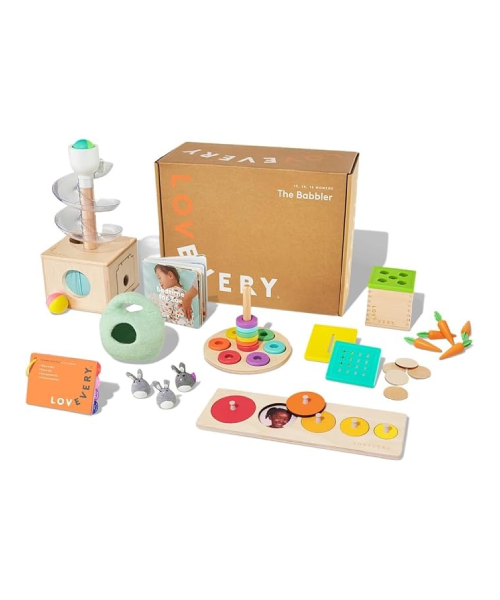
Best for: First-time parents who want developmental guidance alongside quality toys without having to research what’s appropriate at each stage.
Top Features:
- Age-appropriate developmental toys curated by child development experts at each stage from birth to age 5
- Play Guide with each kit explains what milestones each item supports and how to use them effectively
- Materials quality that survives multiple children — documented by parents with 2–3 kids using the same kits
One Honest Drawback: Box subscription model offers no individual item selection. You receive what’s curated for that age range, not what you specifically want.
Verdict: The complete Lovevery experience. Worth the subscription for parents who want developmental framework alongside the toys — not just the toys themselves.
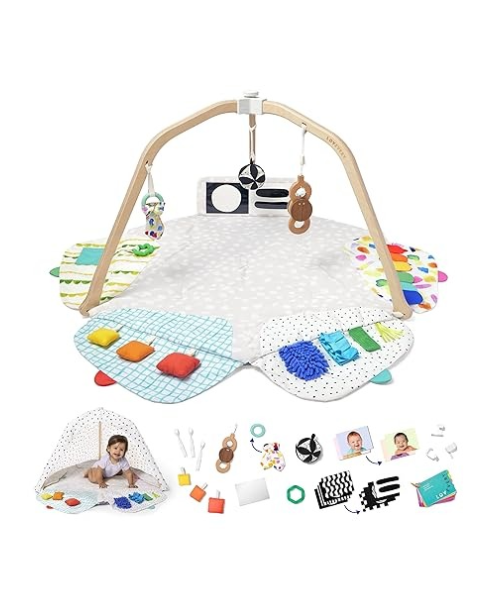
Best for: New parents who want an engaging, beautiful play structure for the first 7 months of a baby’s life.
Top Features:
- High-contrast patterns for visual stimulation in newborn months, evolving to more complex engagement as the baby develops
- Sustainably harvested wood and organic cotton fabrics — aesthetically appropriate for any room
- Multiple attachment points for developmental items at different stages
One Honest Drawback: Longevity ends around 7 months when mobile babies outgrow it. A significant purchase for less than a year of use.
Verdict: Worth it for parents who want the best newborn-through-crawling play structure available. Understand the timeline before purchasing.
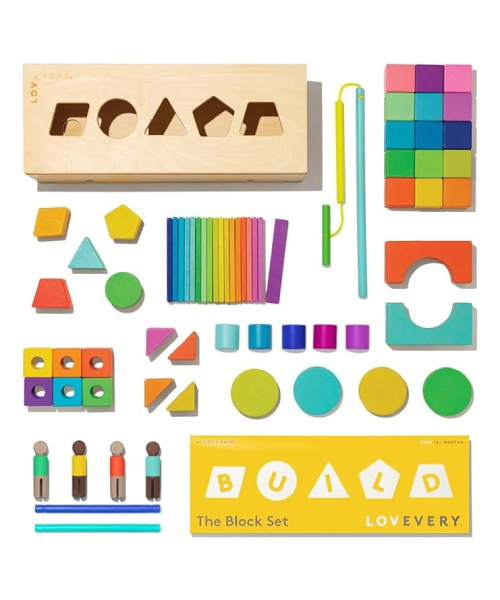
Best for: Toddlers at the block play developmental stage, and households where a quality block set will be used across multiple children.
Top Features:
- Natural wood blocks in proportionally correct sizes for developmental purposes — not identical sizes
- Storage bag included — the toy management detail that experienced parents specifically appreciate
- Durable enough to survive rough toddler play and still be usable for a second child
One Honest Drawback: Expensive for blocks. Comparable quality wooden blocks exist from other brands at lower prices.
Verdict: The quality and developmental thoughtfulness are real. Compare with Melissa & Doug wooden blocks before deciding if the Lovevery premium is justified for this specific item.
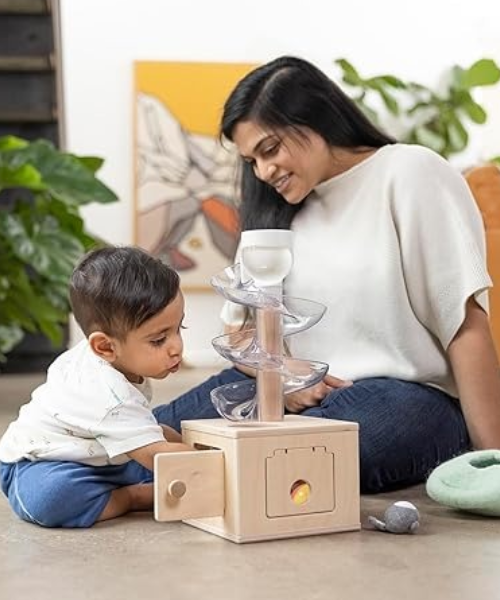
Best for: Toddlers in the cause-and-effect developmental stage — 12–24 months — where watching things move and drop holds sustained engagement.
Top Features:
- Natural wood construction with colored balls — visually stimulating without overwhelming
- Cause-and-effect learning embedded in a simple, durable design
- Multiple parents describe it as the most consistently engaging Lovevery item their toddlers returned to repeatedly
One Honest Drawback: The engagement window for this specific toy is narrower than the block set — more specific to the cause-and-effect developmental stage.
Verdict: One of the most consistently praised standalone Lovevery purchases for the target age range.
What Customers Actually Think
The Good Trade editor who tested Lovevery describes the Play Kit as a wonderful way to introduce developmentally intentional play without adding clutter. The quality, safety, and thoughtful design genuinely impressed someone approaching the review with professional standards for home goods quality.
Thingtesting’s aggregated assessment describes strong reviews overall with occasional notes about specific items being too advanced or underused — the inevitable outcome of developing for an average developmental pace rather than individual child variation.
Multiple parents describe the brand as reducing their mental load by taking the “what does my baby need right now” decision off their plate — which is as much a parenting service as a toy company.
Real accounts paraphrased:
- “Lovevery takes the worry out of buying toys for your kids. A bit pricey but we rely on it and don’t buy random toys anymore.”
- “All our Lovevery products have held up with both kids no matter how rough our tiny humans are. Worth skipping cheap plastic toys.”
- “The Play Kit has been a wonderful way to introduce developmentally intentional play without adding clutter. Quality, safety, and thoughtful design genuinely impress.”
- “It’s very nice for babies, good quality, didn’t smell, many possibilities to learn and play. The design is sweet.”
- “Some toys in the kit were a bit advanced for where my daughter actually was developmentally. Not every item in every box hits.”
Is Lovevery Worth It?
For parents who want developmental framework alongside quality toys: yes.
For parents who just want durable, safe toys without the developmental curation: Melissa & Doug and similar quality toy brands provide comparable material quality at lower prices.
For households where kits will pass to second and third children: the long-term value proposition becomes stronger with each additional child.
Final Verdict
Lovevery does something genuinely useful: takes the research burden off new parents who don’t know what their child needs at each developmental stage and delivers it in beautiful, durable, thoughtfully designed objects.
The price is real. The developmental thoughtfulness is also real. For first-time parents specifically, the combination of toys and Play Guide is more valuable than toys alone would be.
Overall Rating: 8.5 / 10
Category | Score |
Developmental Thoughtfulness | 9.5 / 10 |
Material Quality | 9 / 10 |
Play Gym (within its window) | 9 / 10 |
Subscription Flexibility | 6.5 / 10 |
Value for Money | 7.5 / 10 |
Multi-Child Durability | 9.5 / 10 |
Overall | 8.5 / 10 |

